



- Home
- /
- High Courts
- /
- Rajasthan High Court
- /
- Rajasthan High Court Reinstates...
Rajasthan High Court Reinstates Employee Terminated Over Non-Disclosure Of Conviction, Says Probation Benefit Protects Against Disqualification
Nupur Agrawal
16 Oct 2026 12:40 PM IST
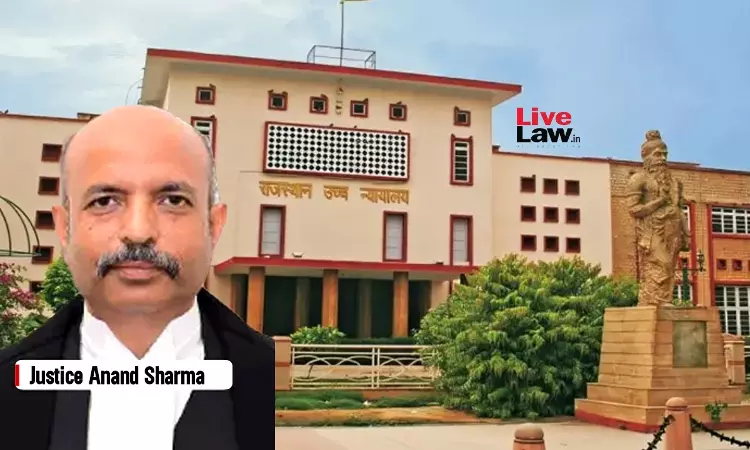
The Rajasthan High Court has set aside the termination of an employee who was dismissed from service for allegedly concealing a past conviction in a criminal case, holding that the benefit of probation under Section 4 of the Probation of Offenders Act, 1958, protects against disqualification arising from the conviction under Section 12 of the Act.The bench of Justice Anand Sharma observed...
This is a premium content
Available exclusively to
Our subscribers
Subscribe Premium 
INR 1099+GST
Your support helps us to bring you more content at
an affordable subscription scheme !!!
All payment options available
The Rajasthan High Court has set aside the termination of an employee who was dismissed from service for allegedly concealing a past conviction in a criminal case, holding that the benefit of probation under Section 4 of the Probation of Offenders Act, 1958, protects against disqualification arising from the conviction under Section 12 of the Act.
The bench of Justice Anand Sharma observed that non-disclosure of a past conviction does not automatically warrant termination. It held that an employer must objectively consider the relevant circumstances, including the employee's age at the time, the nature and outcome of the criminal case, and whether the alleged non-disclosure materially affected the employee's eligibility for service.
“The decisive consideration is whether the information was specifically required to be disclosed whether its non-disclosure was deliberate and attributable to the employee, the nature and gravity of the criminal case, its ultimate outcome, the age and circumstances of the employee at the relevant time, the nature of the post and whether the antecedent has any rational bearing upon his suitability.”
For context, the petitioner was working as a probationer trainee at the post of Helper with the respondent department, and was terminated without any effective opportunity of hearing, on the ground that he suppressed the fact of being criminally convicted earlier.
It was the case of the petitioner that at the time of his implication, followed by his conviction, he was a minor. Ultimately, he was released after being granted the benefit under the Act, and was informed by his counsel of his release. Further, at the time of applying for compassionate appointment for the concerned post too he was a minor.
Hence, at the time of such application, he was not in a position to understand the nature of conviction and the circumstances in which he was released. Hence, he had filed a bona fide affidavit that disclosed no past convictions.
Further, it was submitted that as per Section 12 of the Act, once a benefit was granted under Section 4 to any convict, any disqualification attached to such conviction could not come in the way of that person getting service benefits.
On the contrary, the State argued that grant of benefit of probation was not relevant, but the fact that the information of conviction was suppressed was relevant. Based on this suppression his character was doubtful and unsatisfactory, and hence, it was employer's discretion to terminate petitioner's services.
After hearing the contention, the Court highlighted that at every material stage, the petitioner was a minor and did not possess requisite understanding of legal distinction between a conviction simplicitor and a conviction with benefit of probation. Hence, the alleged non-disclosure could not be examined in isolation, separated from petitioner's age and consequences of that order of conviction.
Further, the Court opined that the intent of enacting the Act was rehabilitation and reintegration of an offender in the society, and depriving him of appointment would defeat the purpose. Hence, where a person was granted the benefit of Section 4, respondents could not treat such conviction as a subsisting disqualification.
The Court observed,
“Even if the petitioner had disclosed the fact of his conviction and the subsequent grant of benefit of Section 4 of the Act of 1958, such disclosure, by itself, could not have rendered him disqualified in view of the statutory protection contained in Section 12 of the Act of 1958. Thus, the alleged non-disclosure did not result in the petitioner obtaining any appointment or service benefit to which he was otherwise legally disentitled. The essential element of material suppression, therefore, is conspicuously absent.”
It was held that suppression of information could be a ground for termination where the suppressed fact was legally relevant and capable of materially affecting entitlement of such employment.
In this background, the Court held that the respondents did not examine these circumstances and proceeded solely based on past conviction of the petitioner. Such order suffered from violation of principles of natural justice, non-application of mind, and non-consideration of statutory protection under Section 12 of the Act.
Accordingly, the order of termination was set aside, and the State was directed to reinstate the petitioner.
Tags


