



- Home
- /
- High Courts
- /
- Rajasthan High Court
- /
- SC's Jospeh Shine Judgment Which...
SC's Jospeh Shine Judgment Which Decriminalized Adultery Not Prospective, Nullified Pending Prosecutions Also: Rajasthan High Court
Nupur Agrawal
12 Nov 2025 11:10 AM IST
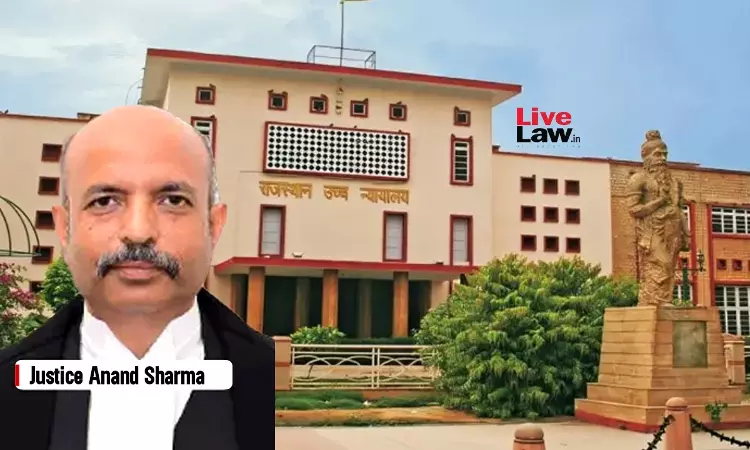
The Rajasthan High Court held that the decriminalization of adultery by the Supreme Court in Joseph Shine v Union of India shall not just apply prospectively but, it will apply retrospectively to all pending and ongoing cases, which is necessary to uphold the constitutional guarantees of equality, dignity and privacy.The bench of Justice Anand Sharma held that when Section 497 IPC (Adultery)...
This is a premium content
Available exclusively to
Our subscribers
Subscribe Premium 
INR 1099+GST
Your support helps us to bring you more content at
an affordable subscription scheme !!!
All payment options available
The Rajasthan High Court held that the decriminalization of adultery by the Supreme Court in Joseph Shine v Union of India shall not just apply prospectively but, it will apply retrospectively to all pending and ongoing cases, which is necessary to uphold the constitutional guarantees of equality, dignity and privacy.
The bench of Justice Anand Sharma held that when Section 497 IPC (Adultery) was struck down for being unconstitutional, there was no qualification restricting its operation prospectively. Once a provision was declared unconstitutional, it became void ab initio and could not be the basis of any prosecution thereafter or even in respect of any pending matters.
“…declaration of unconstitutionality of Section 497 IPC by the Hon'ble Supreme Court operates retrospectively, nullifying all pending prosecutions based solely on that provision. However, the proceedings already culminated in the cases by concluding the trials prior to the judgment in the case of Joseph Shine (supra) cannot be reopened.”
A complaint was filed against the petitioner alleging that he had developed physical relations with the wife of the complainant, who was the petitioner's teacher.
Based on this complaint the Court of Metropolitan Magistrate took cognizance against the petitioner under Section 497, IPC. A revision petition was filed against this, during the pendency of which the aforementioned ruling was passed and Section 497 was held to be unconstitutional.
Irrespective, the Court of Additional Sessions Judge upheld the cognizance, and dismissed the revision petition. Hence, petition was filed before this Court challenging these orders.
It was argued by the public prosecutor that the Joseph Shine ruling only had prospective effect, and did not affect the cases already instituted in light of doctrine of prospective ruling.
This argument was rejected by the Court with an opinion that Section 497, IPC was struck down by the Supreme Court for being violative of fundamental rights, and thus unconstitutional. Such a ruling meant that the law was void ab initio and prosecutions under it could not legally stand. In this light, it was held that,
“Unlike prospective overruling, retrospective effect here is necessary to fully uphold constitutional guarantees of equality, dignity and privacy, which would resultantly invalidate past and present pending prosecutions under the abolished law…Once a provision is declared unconstitutional, it becomes void ab initio and cannot be the basis of any prosecution thereafter or even in respect of pending proceedings.”
The Court also made reference to consistent rulings by many High Courts like the Telangana High Court; Punjab & Haryana High Court; Bombay High Court; Patna High Court; and Delhi High Court.
The Court also highlighted that since the investigation resulted in negative final report, the allegations were merely suspicions, lacking evidentiary foundation. Allowing prosecution under these circumstances, that too under a provision held void, would amount to gross abuse of process of law and miscarriage of justice.
Accordingly, the petition was allowed, and the proceedings against the petitioner were quashed.
Title: Anuj Sharma v State of Rajasthan & Anr.
Citation: 2025 LiveLaw (Raj) 377


