



- Home
- /
- High Courts
- /
- Rajasthan High Court
- /
- 'Higher Education Campuses Not...
'Higher Education Campuses Not Fungible': Rajasthan High Court Issues Guidelines To ECI On Use Of Universities During Elections
Nupur Agrawal
20 Dec 2025 11:15 AM IST
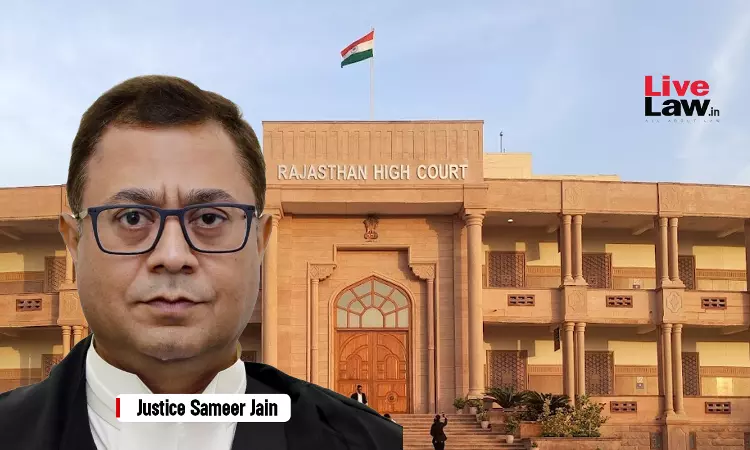
The Rajasthan High Court has issues directions to the Election Commission of India (“ECI”) to the effect that as far as practicable, universities and colleges, imparting higher education should not be used as polling stations or for any other election-related purposes during general elections.The bench of Justice Sameer Jain observed that while the conduct of general elections was...
This is a premium content
Available exclusively to
Our subscribers
Subscribe Premium 
INR 1099+GST
Your support helps us to bring you more content at
an affordable subscription scheme !!!
All payment options available
The Rajasthan High Court has issues directions to the Election Commission of India (“ECI”) to the effect that as far as practicable, universities and colleges, imparting higher education should not be used as polling stations or for any other election-related purposes during general elections.
The bench of Justice Sameer Jain observed that while the conduct of general elections was a constitutional necessity, it could not be effectuated at the disproportionate cost of academic disruptions in institutions of higher learning, especially in the regime of National Education Policy, 2020.
These observations came in the background of the hearing on the petitions challenging inaction on the part of the State for the conduct of Student Union elections for the academic year 2025-26.
While dismissing the petitions for lacking locus stand and being filed at a pre-mature stage, the Court opined that balance had to be maintained between student participation and academic discipline. In this background, certain directions were issued for prospective student union elections for all stakeholders.
The Court highlighted the arguments made during the hearing regarding repeated exposure of the university campuses to frequent and prolonged electoral processes.
It was argued that such instances not only adversely affected the academic atmosphere but also politicized the campus environment, diverting students from their primary role as learners and undermining educational objectives of universities.
In this background, the Court considered it necessary to address the routine usage of university and college infrastructure for the conduct of parliamentary, assembly and local body elections by the ECI and allied civil authorities.
“It is observed that institutions imparting higher education, particularly State-funded Universities and affiliated Government Colleges, constitute specialized academic ecosystems meant exclusively for teaching, research, innovation, and holistic student development. The infrastructure of such institutions is not fungible in nature, and once academic continuity is disrupted, the loss caused to students, especially in a semester-based system cannot be adequately restituted.”
In this light, the following prospective directions were issued to the ECI and concerned civil authorities:
- As far as practicable, not to requisition universities and colleges of higher education as polling stations, counting centers, storage facilities or for any other election related purposes when such usage was likely to impede teaching schedules, exams, research activities or academic administration.
- ECI to evolve and adopt alternate arrangement, in advance, for conduct of elections, like community halls, government officers or other public infrastructure.
- Election planning and logistical arrangements should factor in academic calendars of universities and colleges to ensure minimal interference.
While underscoring that the above directions were issued in larger public interest, to further the objectives of NEP, and to balance constitutional governance & academic integrity, it was stated,
“the underlying object of these directions is to ensure that students pursuing higher education are not repeatedly deprived of instructional hours, academic continuity, or access to essential learning facilities, which constitute the very core of the right to education.”
Title: Jai Rao v State of Rajasthan and Other connected petitions
Citation: 2025 LiveLaw (Raj) 423


