



- Home
- /
- High Courts
- /
- Rajasthan High Court
- /
- Compassionate Appointment Can't Be...
Compassionate Appointment Can't Be Granted For Disabilities Beyond Categories Enumerated In Rules: Rajasthan High Court
Nupur Agrawal
16 July 2026 10:00 AM IST
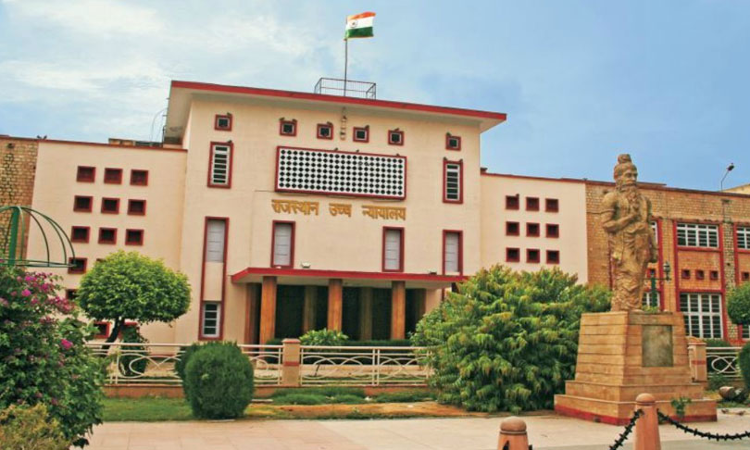
Court, "with a heavy heart", denied relief to son of a govt employee who suffered 75% disability due to brain stroke.
The Rajasthan High Court has upheld the denial of compassionate appointment to the son of a government employee who suffered 75% disability following a brain stroke, holding that compassionate appointment cannot be extended to disabilities falling outside the eight categories exhaustively enumerated under the Rajasthan Compassionate Appointment of Dependents of Permanent Total Disabled...
This is a premium content
Available exclusively to
Our subscribers
Subscribe Premium 
INR 1099+GST
Your support helps us to bring you more content at
an affordable subscription scheme !!!
All payment options available
The Rajasthan High Court has upheld the denial of compassionate appointment to the son of a government employee who suffered 75% disability following a brain stroke, holding that compassionate appointment cannot be extended to disabilities falling outside the eight categories exhaustively enumerated under the Rajasthan Compassionate Appointment of Dependents of Permanent Total Disabled Government Servants Rules, 2023. [2026 LiveLaw (Raj) 281]
A Division Bench of Dr. Justice Pushpendra Singh Bhati and Justice Sandeep Shah observed that although welfare legislations ordinarily merit liberal interpretation, courts cannot rewrite statutory provisions or introduce categories consciously omitted by the legislature.
“A conjoint reading of Rules 2(b) and 2(f) indicates that the Legislature has consciously restricted the benefit of compassionate appointment to cases where permanent total disability arises solely and directly from an accident while on duty and is of the nature specifically enumerated under Rule 2(f)... Such legislative drafting manifests a conscious policy choice to confine this exceptional benefit only to those situations expressly contemplated by the Rule,” the Court held.
The petitioner's father, a Personal Assistant in the State Insurance and Provident Fund Department, suffered a brain stroke in April 2023, resulting in 75% permanent disability in the form of hemiplegia. Claiming that his father had become medically unfit to continue in service, the petitioner sought compassionate appointment under the 2023 Rules. His claim was rejected on the ground that the disability suffered by his father did not fall within the statutory definition of “Permanent Total Disability.”
Before the Court, the petitioner argued that the Rules constituted beneficial welfare legislation and therefore deserved the widest possible interpretation. It was contended that the brain stroke, allegedly caused by the strain and stress of service, ought to be treated as an “accident” within the meaning of the Rules, entitling him to compassionate appointment.
The State, on the other hand, submitted that the benefit of compassionate appointment was consciously restricted to employees who suffered specified disabilities solely and directly due to an accident while on duty. It argued that Rule 2(f) exhaustively enumerated eight categories of injuries and occupational accidents and that the petitioner's father did not fall within any of them.
Agreeing with the State's submissions, the Court held that compassionate appointment is a statutory concession and not a matter of right, and must therefore be confined to the conditions prescribed under the Rules.
“The common thread running through these categories is the existence of a direct and objectively ascertainable nexus between an accident sustained during the discharge of official duties and the resulting permanent incapacity. The legislative emphasis, therefore, is not merely upon the percentage of disability suffered by an employee but equally upon the source, nature and cause of such disability,” the Bench observed.
Rejecting the petitioner's plea for a broader interpretation, the Court noted that Rule 2(f) employs an exhaustive, rather than inclusive, definition. It pointed out that the provision does not use expressions such as “includes” or contain any residuary clause capable of covering disabilities beyond the eight specified categories.
The Bench further held that even if the expression “accident” under Rule 2(b) were to be construed broadly, the petitioner's claim would still fail because Rule 2(f) independently limits “Permanent Total Disability” to the enumerated categories.
“The disability suffered by the appellant's father, though undoubtedly grave and unfortunate, does not fall within any of those enumerated categories. To hold otherwise would render the legislative enumeration redundant and amount to introducing, by judicial interpretation, a residuary category which the Legislature has consciously chosen not to enact,” the Court said.
Observing that it was “not insensitive” to the hardship faced by the petitioner and his family, the Court nevertheless concluded, “with a heavy heart,” that no interference with the Single Judge's order was warranted. Accordingly, the appeal was dismissed.
Title: Harshit Solanki v State of Rajasthan & Ors.
Citation: 2026 LiveLaw (Raj) 281
Tags


