



- Home
- /
- High Courts
- /
- Telangana High Court
- /
- Courts Can't Decide Feasibility Of...
Courts Can't Decide Feasibility Of Highway Projects Or Road Alignments Unless Illegality Or Mala Fides Shown: Telangana High Court
Sebin James
17 Nov 2026 12:20 PM IST
The Telangana High Court dismissed a plea challenging acquisition of land for the Kalwakurthy bypass on NH-167K, observing that courts are not equipped to decide the viability and feasibility of a particular project or to examine whether a particular alignment would serve the larger public interest. The court also held that the objections raised by the landowner had been duly considered by...
This is a premium content
Available exclusively to
Our subscribers
Subscribe Premium 
INR 1099+GST
Your support helps us to bring you more content at
an affordable subscription scheme !!!
All payment options available
The Telangana High Court dismissed a plea challenging acquisition of land for the Kalwakurthy bypass on NH-167K, observing that courts are not equipped to decide the viability and feasibility of a particular project or to examine whether a particular alignment would serve the larger public interest.
The court also held that the objections raised by the landowner had been duly considered by the competent authority, and that the Section 3D notification under the National Highways Act, 1956 was rightly issued, vesting the land in the Central Government.
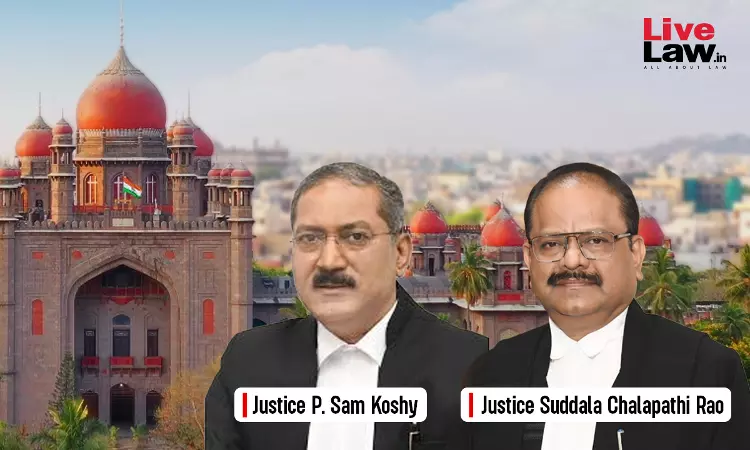
“…. Courts are not equipped to decide the viability and feasibility of a particular project or to examine whether a particular alignment would serve the larger public interest, and that the scope of judicial review in such matters is limited, and interference is warranted only in exceptional cases where violation of the mandate of law or mala fides is established…”, the Division Bench of Acting Chief Justice P. Sam Koshy and Justice Suddala Chalapathi Rao said.
It also rejected the appellant's contention that the road alignment had been changed contrary to the final map, warranting interference.
“….Respondent No.4 [Revenue Divisional Officer] , in the counter affidavit, has specifically explained that three alignment options were prepared and placed before the Ministry of Road Transport and Highways, Government of India, and the Ministry approved the third alignment option, under which the road commences from CH 76/100, the alignment commencing from CH 76/100 was proceeded with, and accordingly, the objections raised by the petitioner were considered and rejected by the competent authority. Thereafter, the notification under Section 3D(1) of the National Highways Act, 1956, was issued…”, the court noted in the order.
To recap, the appellant had challenged the acquisition of his one-acre land in Nagarkurnool District, for the Kalwakurthy bypass. According to the plea, as per the final map, the bypass was meant to commence from CH 76/400, whereas the authorities had later gone forward by commencing it from CH 76/100. According to him, if the alignment had commenced from the original CH 76/400, his land would not have been required at all.
The appellant had further said that the objections he filed in October 2022 had not been decided by the Revenue Divisional Officer [ Competent Authority for Land Acquisition]. Instead, the appellant was claiming he was only redirected to approach other authorities. Hence, the appellant argued that the Section 3D notification, published in Namasthe Telangana on 13.04.2023, was illegal to the extent it included his plot.
The respondent state authorities, however, argued that the objections had been duly considered, and then, rejected through endorsements from October to December in 2022.
The state explained that out of the three alignment options prepared, the Ministry of Road Transport and Highways approved the third alignment option, according to which the bypass gradually diverts from CH 76/100. In 2022, this detail was also communicated to the appellant as an RTI reply, it was added.
Pursuant to the Section 3D notification dated 09.03.2023, the award for land acquisition was passed on 20.09.2023, the state added.
The counsel for the state also informed the court that the bypass work was in progress, with 95% of the work already nearing completion. The state also told the court that the road could not be put to public use due to non-availability of a 200-metre stretch.
On the issue that the appellant's grievance was not duly considered, the Court found that the objections had been duly considered, and then rejected by the competent authority through the endorsements.
“…it is evident that the objections raised by the petitioner were duly considered and rejected by respondent No.4[RDO], who is the competent authority, through the endorsement in File No.E/268/2022, dated 21.10.2022, and the subsequent endorsement dated Nil/10/2022. It is also evident that certain further objections were raised by the petitioner, which were also considered by the competent authority. Therefore, the contention that the objections raised by the petitioner were not considered cannot be accepted…”, the court said.
The court, therefore, finding that there was no violation of the 1956 Act nor any malicious intent, dismissed the writ appeal accordingly.
“The Writ Appellant/Writ Petitioner has failed to make out any grounds for interference with the well-considered order passed by the learned Single Judge, and the appeal is devoid of merits and liable to be dismissed,” the Court concluded.
Tags

Sebin James
Sebin James is a Correspondent with LiveLaw, covering the Telangana High Court

