- Home
- /
- High Courts
- /
- Telangana High Court
- /
- Delay In Grant Of Sanction Within 4...
Delay In Grant Of Sanction Within 4 Months By Itself Not Enough To Quash Prosecution In Corruption Case: Telangana High Court
Ananya Tangri
6 April 2026 11:05 AM IST
The Telangana High Court refused to quash disproportionate assets case against a public servant, holding that mere delay in grant of sanction by itself is not enough to abort a corruption case. This, when the Anti-Corruption Bureau had consistently pursued sanction and the accused had not invoked available remedies at the relevant time.Referring to Supreme Court's decision in Vijay Rajmohan v...
This is a premium content
Available exclusively to
Our subscribers
Subscribe Premium 
INR 1099+GST
Your support helps us to bring you more content at
an affordable subscription scheme !!!
All payment options available
The Telangana High Court refused to quash disproportionate assets case against a public servant, holding that mere delay in grant of sanction by itself is not enough to abort a corruption case.
This, when the Anti-Corruption Bureau had consistently pursued sanction and the accused had not invoked available remedies at the relevant time.
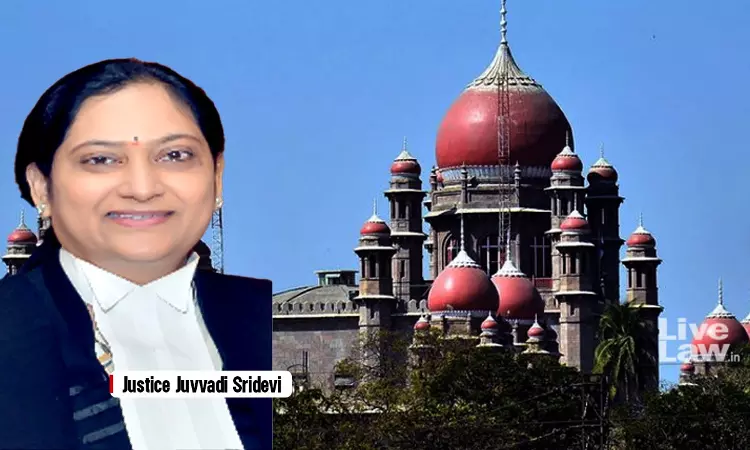
Referring to Supreme Court's decision in Vijay Rajmohan v CBI (2023) where it was held that that the sanctioning authority is required to grant sanction within 3 months along with an additional period of 1 month and upon expiry the complainant, accused or victim is entitled to approach the appropriate Writ Court to seek appropriate remedies, Justice Juvvadi Sridevi observed:
"In the instant case, the petitioner failed to challenge the legality of the delay, neither before the trial Court nor before the High Court to seek necessary directions. This inaction constitutes a neglect of the remedy explicitly made available under law and a failure to utilize the statutory and judicial safeguards designed to address such delays. While the judgment in Vijay Rajmohan's case was expressly relied upon by the learned Senior Counsel for the petitioner, no attempt was made to invoke the remedies available, thereby undermining the petitioner's reliance on the delay in granting sanction. Hence, in view of the law laid down by the Hon'ble Supreme Court in the aforesaid judgment, mere non-compliance with the mandatory requirement of granting sanction within four (4) months cannot, by itself, constitute a ground to quash the proceedings against the petitioner. The delay, in the absence of any other substantive illegality, does not entitle the petitioner to the relief claimed.”
The Court further held that the petitioner's exoneration in departmental proceedings did not assist him, since the material on record showed that the departmental enquiry had not culminated in a clean exoneration on merits and could not conclude the criminal case at the threshold.
The Court held that “there was no delay or inaction on the part of the ACB” and that the chronology showed it had “exercised due diligence and consistently pursued the matter with the competent authorities.”
The delay in obtaining sanction and filing the charge sheet, the Court said, appeared to be “purely administrative in nature” and could not be attributed to negligence or dereliction on the part of the ACB.
For context, the Supreme Court in Vijay Rajmohan had held that period of 3 months (extendable by one more month for legal consultation) under Section 19 PC Act, for the Appointing Authority to decide upon a request for sanction is mandatory.
However, the consequence of non-compliance with this mandatory requirement shall not be quashing of the criminal proceeding for that very reason, it had added.
Background
The petitioner, Sri Azmeera Kailas, had approached the High Court seeking quashing of proceedings pending before the Special Judge for offences under Sections 13(2) read with 13(1)(e) (criminal misconduct) of the Prevention of Corruption Act.
As per the prosecution case, the ACB had initially registered a disproportionate assets case in 2010 against one Dheeravathu Koteswara Rao, an Assistant Divisional Engineer.
During that investigation, the petitioner's house was searched on 22.12.2010 on the allegation that he was a friend and colleague of the said officer and had jointly purchased certain assets with him.
The ACB alleged that during the check period from 25.01.2002 to 22.12.2010, the petitioner had acquired assets in the form of a residential building and agricultural land worth over Rs.67 lakh, later reflected in the charge sheet at Rs.70.26 lakh, while his likely savings were far lower. It was alleged that he was in possession of disproportionate assets of Rs.47,03,453/-, later reflected in the charge sheet at Rs.40,04,034/-, for which he could not satisfactorily account.
The petitioner argued that though his house search was conducted in December 2010 and a case was registered against him in June 2011, the investigation made no real progress for years. He contended that after he submitted explanations in 2013 and 2014, the authorities remained silent, and only after he approached the High Court in 2024 was sanction obtained on 15.10.2024 and the charge sheet hurriedly filed. He also argued that the sanction order had been passed mechanically, without application of mind, and that he had been exonerated in departmental proceedings on the same set of facts.
Meanwhile, the ACB submitted that the delay was administrative and not attributable to investigating officers. It pointed out that a final report seeking sanction had been submitted to the Government on 27.11.2014 and that the Director General, ACB, had addressed as many as 19 letters between 2015 and 2024 seeking sanction. According to the ACB, sanction was finally accorded on 15.10.2024, after which the charge sheet was promptly filed.
Findings
Relying on the Supreme Court's decision in Vijay Rajmohan, the Court noted that once sanction is not granted within the stipulated period, the aggrieved party is entitled to approach the writ court for appropriate directions.
In the present case, however, the petitioner “failed to challenge the legality of the delay” either before the trial court or before the High Court at the relevant stage, and that omission “undermin[ed] the petitioner's reliance on the delay in granting sanction.”
The Court also rejected the contention that the sanction order itself was vitiated for non-application of mind. It held that, on a plain reading, the sanction order reflected application of mind, represented an independent decision of the department, and that the petitioner had failed to demonstrate any resulting “failure of justice.”
The Court added that the validity of sanction could, in any event, be examined at the stage of final arguments, and that Sections 19(3) and 19(4) of the Prevention of Corruption Act make it clear that errors or irregularities in sanction do not vitiate proceedings unless they occasion failure of justice.
On the plea based on departmental exoneration, the Court found that the enquiry officer had absolved the petitioner on the reasoning that many employees had not submitted APRs or obtained prior permission during the relevant period and that proceeding against the petitioner alone would not be feasible.
Disapproving this, the Court held that the liability of a government servant under the Conduct Regulations is “individual in nature” and that “non-compliance by others cannot be a valid ground to absolve the petitioner.” It therefore concluded that the petitioner had been absolved “on technical grounds alone and not on merits.”
The Court further noted that the departmental authority had failed to examine the investigating officers or consider the material collected during investigation relating to the acquisition and disposal of properties and the financial sources thereof.
It also recorded that the petitioner had admitted that he had not obtained prior permission for acquisition and disposal of immovable properties, and that income tax returns of both the petitioner and his wife had been filed only after the relevant check period, raising questions requiring detailed examination at trial.
Holding that the case involved disputed questions of fact relating to acquisition of assets, sources of income and compliance with statutory requirements, the Court observed that the truth or otherwise of the allegations could be determined only upon appreciation of oral and documentary evidence in a full-fledged trial.
It accordingly dismissed the petition, directing the trial court to conclude the trial as expeditiously as possible since the crime pertained to 2011.
Case Title: Sri Azmeera Kailas v. State of Telangana & Anr.
Case No.: Criminal Petition No.10711 of 2024
Appearance: Mr. C. Pratap Reddy, learned Senior Counsel, representing Mr. C. Sunil Anand, for the Petitioner; Mr. T. Bala Mohan Reddy, learned Special Public Prosecutor for ACB, for respondent No.1-State.
Tags