- Home
- /
- High Courts
- /
- Telangana High Court
- /
- Non-Issuance Of Integrity...
Non-Issuance Of Integrity Certificate Doesn't Vitiate IPS Promotion Process, Grading On Comparative Merit Allowed: Telangana High Court
Ananya Tangri
28 April 2026 11:05 AM IST
The Telangana High Court has held that non-issuance of an integrity certificate, though a procedural lapse, does not by itself vitiate an IPS promotion process under the Indian Police Service (Appointment by Promotion) Regulations. In doing so the court noted that the petitioner a State Police Service officer who had applied for promotion to the IPS, was independently assessed by the...
This is a premium content
Available exclusively to
Our subscribers
Subscribe Premium 
INR 1099+GST
Your support helps us to bring you more content at
an affordable subscription scheme !!!
All payment options available
The Telangana High Court has held that non-issuance of an integrity certificate, though a procedural lapse, does not by itself vitiate an IPS promotion process under the Indian Police Service (Appointment by Promotion) Regulations.
In doing so the court noted that the petitioner a State Police Service officer who had applied for promotion to the IPS, was independently assessed by the Selection Committee on comparative merit and had graded him lower than the officers ultimately included in the Select List.
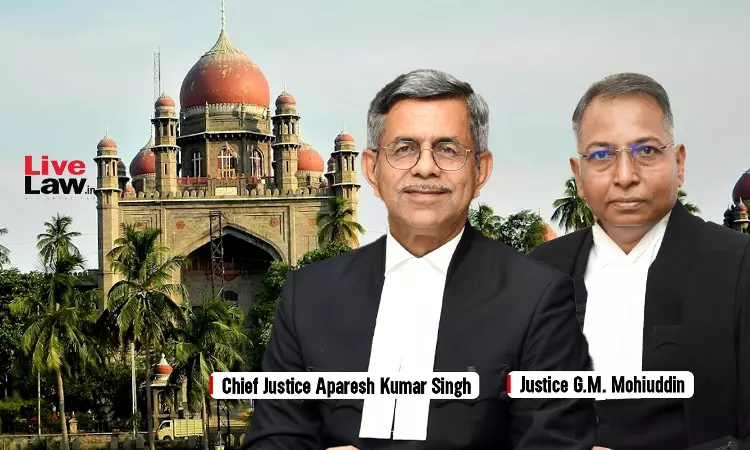
A division bench of of Chief Justice Aparesh Kumar Singh and Justice G.M. Mohiuddin held that the integrity certificate is a separate requirement and that its withholding affects only the nature of inclusion in the Select List, not the grading itself. The Court observed that “the absence" of the certificate does not preclude the Committee from assessing the officer.
"Further, the contention that the absence of the integrity certificate must have influenced the assessment of the Selection Committee is misconceived as unsupported by any cogent material. The Selection Committee comprised senior officers from different authorities, and there is nothing on record to demonstrate that the assessment was influenced by the withholding of the certificate, which, in terms of the 1955 Regulations has no bearing on the grading of service records. In these circumstances, although the withholding of the integrity certificate may constitute a procedural lapse, it cannot be said that such lapse, by itself, vitiated the assessment made by the Selection Committee. The grading assigned to the petitioner was the outcome of the Committee's evaluation of his service records and not a consequence of the non-issuance of the integrity certificate".
It noted that the grading assigned by the Selection Committee is essentially a reflection of the officer's performance as borne out from the entries in the service records, and not of the opinion of the State Government with regard to his integrity. It noted that the Committee had the petitioner's ACRs for the relevant period before it and, upon due consideration, assessed him as “Good”.
Such assessment was arrived at in the course of a comparative evaluation of all eligible officers falling within the zone of consideration, the court said.
The petitioner, L.S. Chowhan, was appointed as a Deputy Superintendent of Police in the erstwhile State of Andhra Pradesh in 1998 through direct recruitment. He was later promoted as Additional Superintendent of Police in 2005 and Superintendent of Police in 2008. Having completed the required eight years of service as DSP, he became eligible for consideration for promotion to the IPS for the panel years 2009-A and 2010 under the 1955 Regulations.
When the Selection Committee met on 27.10.2011, however, the State Government and the Director General of Police withheld the petitioner's integrity certificate on the basis of certain allegations that had earlier culminated in a warning memorandum dated 22.08.2011. The petitioner challenged that withholding before the Central Administrative Tribunal, and on 18.11.2011 the Tribunal directed the authorities to issue the integrity certificate if he fell within the parameters of the relevant DoPT circular. By then, however, the Selection Committee had already concluded the process for 2009-A and 2010.
The petitioner's case was nevertheless considered by the Selection Committee. The minutes of the meeting showed that for both 2009-A and 2010, he was assessed as “Good” on an overall evaluation of his service record. Since a number of other officers were assessed as “Very Good” and the size of the Select List was statutorily limited, the petitioner was not included in the lists, which were later notified by the Government of India on 19.12.2011.
Before the High Court, the petitioner argued that he was later promoted to the IPS against the select list of 2012 and that for the same assessment years his record could not logically have justified a “Good” grading earlier but a “Very Good” grading later. He contended that the only distinguishing factor in 2011 was the withholding of the integrity certificate, and therefore the earlier selection process stood vitiated. He also alleged bias on the ground that the then DGP, who had recommended withholding of the integrity certificate, was also a member of the Selection Committee.
Rejecting those submissions, the High Court closely examined Regulation 5 of the 1955 Regulations and held that the scheme makes a clear distinction between assessment and inclusion. The Selection Committee is required to classify officers as “Outstanding”, “Very Good”, “Good” or “Unfit” on an overall relative assessment of service records. The withholding of an integrity certificate, the Court said, does not prevent the Committee from making that assessment; it only affects whether inclusion in the Select List, if otherwise made, is unconditional or merely provisional.
The Bench further held that there was nothing on record to show that the Selection Committee's grading had been influenced by the withholding of the integrity certificate. The Committee comprised several senior officers from different authorities, including nominees of the Government of India and UPSC, and its function was confined to assessing the ACRs of all eligible officers in the zone of consideration. In those circumstances, the Court held that the petitioner's “Good” grading was the result of the Committee's comparative evaluation of his service record and not a consequence of the non-issuance of the integrity certificate.
On the plea of bias, the Court held that no real likelihood of bias had been established. It observed that the DGP's act of recommending withholding of the integrity certificate was an administrative function, and his later participation in the multi-member Selection Committee did not amount to a direct personal interest in the outcome. The Court noted that the doctrine of bias applies only where there is a real likelihood of prejudice, not on the basis of vague apprehension.
The Bench also rejected the petitioner's reliance on his later inclusion in the 2012 Select List, holding that each Selection Committee functions independently for a different panel year, with different vacancies and different comparative merit positions. A later assessment as “Very Good”, it said, does not retrospectively invalidate an earlier independent assessment as “Good.”
Holding that the Tribunal had committed no jurisdictional error, the High Court dismissed the writ petition.
Case Title: L.S. Chowhan v. Union of India & 9 others
Case No.: W.P. No.33548 of 2016
Appearance: Sri T. Koteswara Rao for petitioner; Sri B. Narasimha Sharma, Additional Solicitor General of India, representing Sri N. Bhujanga Rao, Deputy Solicitor General of India, for respondent No.1; Sri Ajay Kumar Kulkarni for respondent No.2-UPSC; Sri A. Raghuram Mahadev, representing Sri B. Rajeshwar Rao, Government Pleader for the State of Andhra Pradesh, for respondent Nos.3 and 4; Sri B. Krishna, Government Pleader for Services (Home), for respondent Nos.12 and 13.
Tags