- Home
- /
- High Courts
- /
- Telangana High Court
- /
- Public Purpose Cannot Justify...
Public Purpose Cannot Justify Taking Private Land Without Lawful Acquisition Or Compensation: Telangana High Court
Ananya Tangri
19 Aug 2026 10:30 AM IST
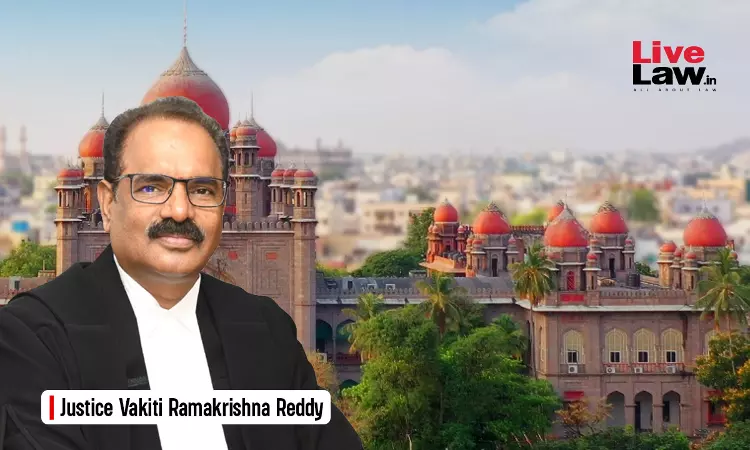
The Telangana High Court has held that a public authority cannot indefinitely retain private property without sanction of law merely because the land has already been utilised for a public purpose. [2026 LiveLaw (Tel) 131]The Court directed the State to acquire a private land it had used for constructing the Area Hospital at Bhongir and pay compensation to the landowners, after finding that...
This is a premium content
Available exclusively to
Our subscribers
Subscribe Premium 
INR 1099+GST
Your support helps us to bring you more content at
an affordable subscription scheme !!!
All payment options available
The Telangana High Court has held that a public authority cannot indefinitely retain private property without sanction of law merely because the land has already been utilised for a public purpose. [2026 LiveLaw (Tel) 131]
The Court directed the State to acquire a private land it had used for constructing the Area Hospital at Bhongir and pay compensation to the landowners, after finding that the land had been taken without acquisition proceedings or compensation.
Justice Vakiti Ramakrishna Reddy held that the public purpose underlying the use of private land cannot dispense with the State's constitutional obligation under Article 300-A to acquire it in accordance with law or compensate its owner.
The Court observed:
“The principles emerging from the aforesaid decisions apply squarely to the facts of the present case. The respondents have utilised the petitioners' land for establishing an Area Hospital, which undoubtedly serves an important public purpose. However, the public purpose underlying the utilisation of the land cannot dispense with the constitutional obligation to acquire the land in accordance with law or to compensate the owner. The constitutional guarantee under Article 300-A operates irrespective of the nature of the public purpose.
It is also pertinent to note that the respondents have not disputed the existence of the hospital over the subject land. Having permanently utilised the land for a public institution, restoration of possession is neither practicable nor sought by the petitioners. The relief claimed is confined to payment of lawful compensation, which is the only appropriate constitutional remedy in the facts and circumstances of the case.
The admitted failure of the respondents to initiate acquisition proceedings cannot be permitted to defeat the petitioners' constitutional entitlement. A public authority cannot retain private property indefinitely without the sanction of law merely because the property has already been utilised for a public purpose. Such a course would be plainly inconsistent with Article 300-A and the rule of law.”
The petitioners claimed rights over land in question; the first petitioner had purchased the property through an unregistered sale deed dated March 16, 1978.
Since the transaction was through an unregistered document, the first petitioner sought its validation under Section 5-A of the Andhra Pradesh Rights in Land and Pattadar Pass Books Act, 1971. The Revenue Divisional Officer, Bhongir, validated the transaction through proceedings dated March 19, 1982 and determined the deficit stamp duty. After the amount was paid, mutation was effected and the petitioners' names continued in the revenue records.
The petitioners alleged that in 1995, the authorities took possession of the land and constructed the Area Hospital, Bhongir, without acquiring it or paying compensation. They subsequently made representations seeking compensation and issued a legal notice in August 2009.
The authorities admitted before the High Court that the land was covered by the Area Hospital. They also admitted that no requisition proposals had been received from the requisitioning department and consequently no acquisition proceedings had been initiated.
The writ petition had initially been allowed in 2014. However, the State sought review on the ground that no Form 13-B had (certificate issued by the Tahsildar to regularize unregistered or informal land sales) been issued in respect of the land and, therefore, the petitioners had not established their entitlement to the property. The earlier order was recalled in 2017 and the petition restored for fresh consideration.
In the restored proceedings, the State principally argued that the absence of a Form 13-B certificate meant that the petitioners could not claim a legally enforceable right over the property. It did not, however, dispute the 1982 validation proceedings, payment of deficit stamp duty or occupation of the land by the Area Hospital.
Rejecting this defence, the High Court held that Form 13-B was merely “evidentiary and consequential in nature”. The source of the petitioners' rights was the statutory proceeding validating the transaction and not the subsequent issuance of Form 13-B.
It observed:
“Once the competent authority has exercised the power conferred by Section 5-A and the consequential statutory requirements have been complied with, non-issuance of a consequential form cannot render the substantive proceedings ineffective.”
The Court added that accepting the State's argument would allow it to defeat rights already recognised by a valid statutory order merely because its own authorities failed to issue the consequential certificate. This would enable the State to “take advantage of its own omission”, which could not be countenanced in law.
The Court further noted that the State had not alleged that the land was government land, assigned land or poramboke, nor had the 1982 validation proceedings ever been cancelled, modified or set aside. No third party had asserted a rival title either.
Turning to the taking of the land, the Court said Article 300-A requires “authority of law” before a person can be deprived of property. Executive action unsupported by law could not satisfy this requirement. While the right to property is no longer a fundamental right, it continues to enjoy constitutional protection as a constitutional and human right.
Relying on the Supreme Court's decisions in Vidya Devi v. State of Himachal Pradesh, Hari Krishna Mandir Trust v. State of Maharashtra and Dharnidhar Mishra v. State of Bihar, the Court reiterated that the State cannot appropriate private property without following the procedure established by law and paying compensation.
Accordingly, the Court held that taking possession of and using the petitioners' land for the Area Hospital without acquisition proceedings or compensation violated Article 300-A.
It directed the authorities to initiate and complete appropriate acquisition proceedings under the Right to Fair Compensation and Transparency in Land Acquisition, Rehabilitation and Resettlement Act, 2013, if not already initiated. The petitioners were directed to be given all applicable statutory benefits, including solatium, interest and other consequential benefits. The entire exercise must be completed within six months.
Case Title: Vangeti Satyanarayana Reddy & Ors. v. State of Telangana & Ors.
Case No.: W.P. No. 26649 of 2009
Citation: 2026 LiveLaw (Tel) 131
Appearance: K. Buchi Babu for the petitioners; Katta Radha Reddy, Assistant Government Pleader for Land Acquisition, for the respondents.
Tags