



- Home
- /
- High Courts
- /
- Tripura High Court
- /
- Tripura High Court Upholds Life...
Tripura High Court Upholds Life Imprisonment Of Woman For Burning Pregnant Daughter-In-Law
LIVELAW NEWS NETWORK
30 Sept 2026 11:15 AM IST
The Tripura High Court has upheld the conviction and life imprisonment of a woman for the murder of her pregnant daughter-in-law, holding that the oral and written dying declarations of the deceased were reliable and sufficient to sustain the conviction. The Court observed that a conviction can be based on an uncorroborated dying declaration where the Court finds it reliable. A Division Bench...
This is a premium content
Available exclusively to
Our subscribers
Subscribe Premium 
INR 1099+GST
Your support helps us to bring you more content at
an affordable subscription scheme !!!
All payment options available
The Tripura High Court has upheld the conviction and life imprisonment of a woman for the murder of her pregnant daughter-in-law, holding that the oral and written dying declarations of the deceased were reliable and sufficient to sustain the conviction.
The Court observed that a conviction can be based on an uncorroborated dying declaration where the Court finds it reliable.
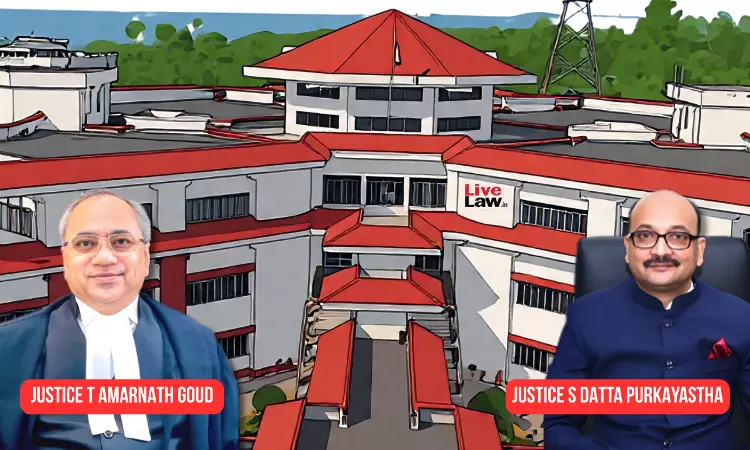
A Division Bench of Justice T. Amarnath Goud and Justice S. Datta Purkayastha remarked that: “there is no hesitation in the mind of this Court in relying upon the oral as well as written dying declaration made by the victim and to warrant conviction against the accused of this case on the basis of the said evidence….that on the uncorroborated dying declaration also conviction can be warranted against the accused, if it is found reliable.”
Background:
The deceased, Iti Saha, was married to Dhananjoy Barman in 2011. The prosecution alleged that after her marriage, she was subjected to harassment and monetary demands by her matrimonial family. On May 21, 2015, while she was about nine months pregnant, Iti suffered extensive burn injuries at her matrimonial home. She subsequently died from the injuries.
The prosecution alleged that her mother-in-law, Parul Barman, tied her mouth with a cloth, poured kerosene over her and set her on fire. Following investigation, Parul Barman was charged under Sections 498-A and 302 IPC and was ultimately convicted under Section 302 IPC by the Sessions Court, which sentenced her to life imprisonment and a fine of ₹50,000.
The High Court found the written and oral dying declarations consistent and reliable, noting that the deceased was certified to be in a fit state of mind when her statement was recorded. It held that the oral declarations corroborated the written dying declaration.
The Court further held that the testimony of relatives could not be discarded merely because they were related to the deceased, particularly in a matrimonial offence occurring within the matrimonial home.
Relying on these circumstances, the Court held that the conviction could be sustained on the reliable dying declarations and found the prosecution case proved “beyond shadow of doubt.” It accordingly dismissed the appeal.
Date of Decision: 16.09.2026
Tags


