




Uttarakhand High Court

Tinder Relationship Turning Sour Doesn't By Itself Amount To Rape On False Promise Of Marriage: Uttarakhand High Court
The Uttarakhand High Court has held that where two adults enter into a consensual relationship after meeting through a dating application like Tinder, the relationship cannot subsequently be termed as one based on a false pretext of marriage merely because it later turns sour and does not culminate in marriage. The Court observed that the allegations disclosed a consensual relationship and not...
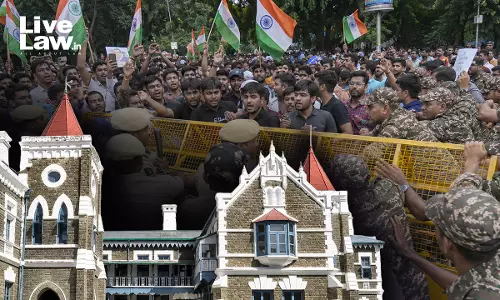
'This Is Gunda Gardi, What Authority Did You Have?': Uttarakhand High Court Slams Police For Detaining Politician En Route CJP Sansad March
The Uttarakhand High Court on Tuesday (July 21) orally questioned the State Police as to under what authority it had detained Uttarakhand Parivartan Party (UPP) president Prabhat Dhyani en route to the Cockroach Janta Party's march towards Parliament in Delhi on Monday. At the outset the counsel for the State submitted before a division bench of Justice Ravindra Maithani and Justice...
Uttarakhand High Court Transfers Corruption Trials Against Former Jim Corbett Director & Senior Forest Officials To Special CBI Court
The Uttarakhand High Court has directed the transfer of two vigilance cases against a former Director of the Corbett Tiger Reserve and other senior forest officials to the Special Judge, Anti-Corruption, CBI, Dehradun, holding that the designated CBI Court alone has jurisdiction to try cases investigated by the Central Bureau of Investigation. The Court observed that once the CBI had...

Uttarakhand High Court Quashes Maggi Noodles Misbranding Case Against Nestlé, Says Food Analyst's Report Was Legally Unsustainable
The Uttarakhand High Court has quashed criminal proceedings against Nestlé India Limited and other applicants arising out of a Food Analysis Report alleging that “MAGGI 2-Minute Noodles” were “misbranded” and “unsafe” and in contravention of various sections of the Food Safety and Standards Act, 2006. Observing that the prosecution was founded on a Food Analyst's report issued by...
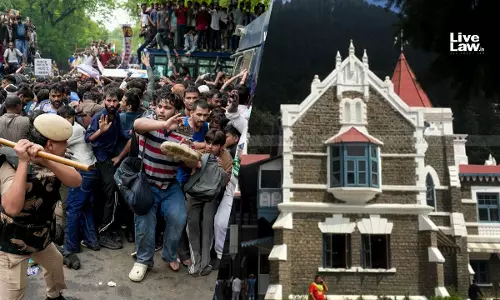
Uttarakhand High Court Questions Police Over Detention Of Politician En Route To CJP's Parliament March
The Uttarakhand High Court on Monday (July 20) questioned the police over the circumstances in which Uttarakhand Parivartan Party (UPP) president Prabhat Dhyani was detained after he announced on social media that he would participate in Cockroach Janta Party's march towards Parliament, in support of students protesting the alleged NEET paper leak.The Court also sought an explanation from...
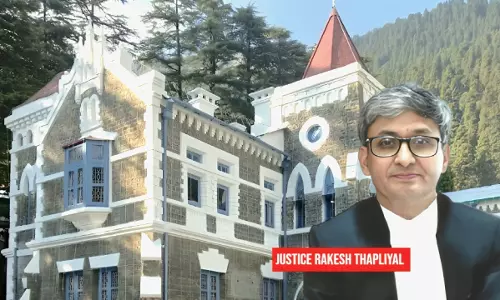
Subsequent Developments Can't Be Used To Bypass Writ Court Orders In Contempt Proceedings: Uttarakhand High Court
Holding that subsquent developments cannot be used to bypass orders of the writ court in contempt proceedings, the Uttarakhand High Court held the officials of State authority in contempt of an earlier order directing inclusion of a party in the tender process for a road contract. The court noted that the respondents by pleading new developments attempted to frustrate the order of writ court...
Mere Refusal To Marry Is Not Abetment Of Suicide, Police 'Casually' Invoking S.306 IPC: Uttarakhand High Court
The Uttarakhand High Court has observed that Section 306 of the Indian Penal Code (Abetment of Suicide) appears to be “casually and too readily resorted to by the police” and that trial courts should exercise great caution and circumspection and should not adopt a “play it safe” syndrome by mechanically framing charges under it. The Court further observed that to attract the...

Uttarakhand High Court Quashes DM's Order Directing Issuance Of Fire NOC Despite Being Alive To Deficiencies In Construction
Magistrate neither visited the site, nor called report from Fire Safety Department, Court noted.
Mere Smell Of Alcohol Without Blood Test Or Breathalyser Cannot Establish Drunken Driving: Uttarakhand High Court
The Uttarakhand High Court has held that the smell of alcohol on the breath of an accused, without a blood test or breathalyser establishing that the alcohol concentration exceeded the statutory limit under the Motor Vehicles Act, 1988, cannot establish drunken driving or justify framing a charge of culpable homicide not amounting to murder under Section 105 of the Bharatiya Nyaya...
Master's Degree In Allied Subject Valid For Assistant Professor Appointment Under UGC Regulations: Uttarakhand High Court
The Uttarakhand High Court has held that under the UGC Regulations governing appointment to the post of Assistant Professor, a candidate possessing a Master's Degree in the concerned, relevant or allied subject from an Indian University with 55% marks is eligible for appointment.The Court observed that the UGC Regulations treat degrees in “concerned”, “relevant” and “allied”...

Pay Protection Based On Previous Service Does Not Grant Vested Right To Count Such Service For Career Progression Benefits: Uttarakhand High Court
The Uttarakhand High Court has held that the grant of pay protection on the basis of previous service does not confer a vested right to have such service counted for the purpose of Assured Career Progression (ACP) benefits. The Court observed that pay protection and financial upgradation under the ACP Scheme operate in distinct fields and are governed by different executive...

Acid Attack Leading To Death By Septicemia Months Later Constitutes Murder: Uttarakhand High Court Upholds Conviction
The Uttarakhand High Court has upheld the conviction of an accused under Sections 302, 326A and 504 of the Indian Penal Code, holding that the death of an acid attack victim due to septicemic shock more than two months after the incident did not break the chain of causation. The Court observed that where the medical evidence establishes that septicemia resulted from infected ante-mortem acid...