




High Court
National Commission For Scheduled Castes Cannot Declare FIR False, Lacks Judicial Powers: AP High Court
The Andhra Pradesh High Court has held that the National Commission for Scheduled Castes (NCSC) cannot adjudicate upon the veracity of an FIR or declare it false, given its limited advisory and recommendatory role under Article 338 of the Constitution.Article 338 of the Constitution provides for the National Commission for Scheduled Castes and empowers it to investigate and inquire into...

S.69 Indian Succession Act | Kerala High Court Upholds Law On Automatic Revocation Of Christian Wills Upon Marriage
Marriage confers new duties on a person's life, priorities change and it is presumed he would not adhere to any Will he previously executed, Court explained.
Filing 'Bald Chargesheet' Without Any Evidence Affects Accused's Right To Life Under Article 21: Karnataka High Court
The Karnataka High Court has held that filing a chargesheet based on omnibus allegations by complainant without any evidence affects the right to life guaranteed under Article 21 of the Constitution of India.“Filing of charge sheet thus affects the individual right of a citizen of the country as is enshrined under Article 21 of the Constitution of India, especially when the charge sheet is...

'Make Data Protection Board Functional In 8 Weeks': Kerala High Court In PIL Raising Privacy Concerns In 'Digi Yatra'
We find that the privacy of citizens is being compromised, Court said.

Same-Sex Couples' Exclusion From 'Spouse' Benefits Under Income Tax Act Violates Article 15: Karnataka High Court Told
The Karnataka High Court was told on Friday (October 9) that excluding same-sex couples from the 'spouse' benefit under the Income Tax Act, 1961, amounts to discrimination on the ground of sex and violates Article 15 of the Constitution.Appearing for the petitioners, Dr. Dhruv Janssen-Sanghavi argued before Justice B M Shyam Prasad that the case is fundamentally about equality under Article...
State Can't Permit Unilateral Cancellation Of Registered Gift Deed By Donor Contrary To Transfer Of Property Act: AP High Court
The Andhra Pradesh High Court has held that that a donor cannot cancel a registered gift/settlement deed at will once the property has been transferred to the donee. Such unilateral cancellation cannot be registered without the bilateral consent of the parties or a decree from a competent Civil Court. Rejecting the registering authority's defence that Rule 26(i)(k)(i) of the A.P....
Allahabad High Court Dismisses PIL Against UP MLC Election Rolls, Says Article 329 Bars Challenge To Poll Notification
The Allahabad High Court on Wednesday dismissed a Public Interest Litigation (PIL) challenging the electoral rolls for elections to 5 Graduates' Constituencies and 6 Teachers' Constituencies of the Uttar Pradesh Legislative Council.The bench said that the exercise of amending the electoral rolls could not be faulted and that Article 329 of the Constitution of India bars a challenge to...

Uttarakhand High Court Upholds Reservation For Women In Student Union Polls, Dismisses Pleas Challenging 50% Quota
The Uttarakhand High Court has dismissed petitions challenging the reservation of student union posts for women in colleges affiliated with Kumaun University, observing that the State Government could issue directions under Article 15(3) of the Constitution to provide better representation to girl students. The Court further clarified that the University's decision to reserve the posts...
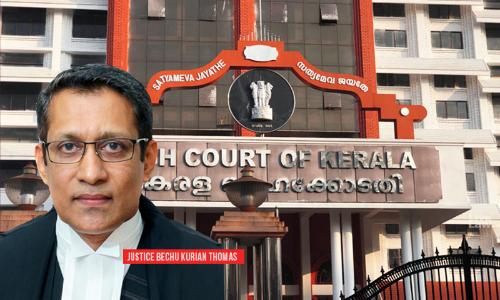
'Courts Must Appoint Guardians For Dementia/Alzheimer's Patients If Circumstances Warrant': Kerala High Court
The Kerala High Court, in a recent decision, appointed a guardian for a 93-year-old woman with dementia and Alzheimer's disease while considering her sister's plea under Article 226 of the Constitution of India. [2026 LiveLaw (Ker) 565]Justice Bechu Kurian Thomas remarked that courts must appoint guardians for persons with dementia or Alzheimer's disease if the conditions get worse and...

Goshree Islands Development Authority Entitled To Set Up Commercial Kiosks At Kochi's Queen's Walkway: Kerala High Court
The Kerala High Court on Wednesday (October 7) held that the Goshree Islands Development Authority (GIDA) is entitled to set up commercial kiosks at the Queen's Walkway in Kochi. [2026 LiveLaw (Ker) 561].The Division Bench of Dr. Justice A.K. Jayasankaran Nambiar and Justice Preeta A.K. set aside an order of the Single Bench, which barred construction of the kiosks citing that the same...

'Template Arrest Memo Saying Officer Explained Grounds Of Arrest Is Not Compliance With Article 22': Patna High Court
The Patna HC has held that merely recording in a proforma arrest memo that the arresting officer explained the grounds of arrest to the accused does not satisfy the constitutional mandate under Article 22 of the Constitution, where the grounds of arrest have not been furnished to the arrested person in writing.A Division Bench of Justice Rajeev Ranjan Prasad and Justice Sunil Dutta Mishra...

'We Are Living In Era Of Article 21': Jharkhand High Court Questions Detention Of Woman After Acquittal
The Jharkhand HC has held that the liberty of a person cannot be taken away without authority of law and questioned the continued custody of a woman despite her acquittal in a criminal case.A Division Bench of Justice Sujit Narayan Prasad and Justice Akhil Kumar was hearing a writ petition under Article 226 of the Constitution seeking production of Rina Devi before the Court for judicial...