


IBC News
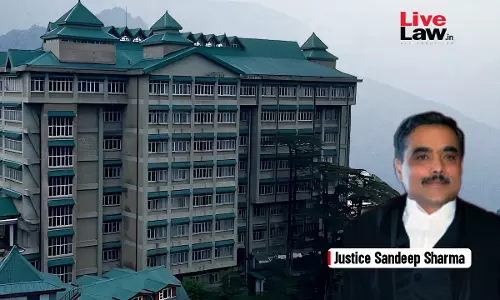
Negotiable Instruments Proceeding Under Section 138 Does Not Abate On Initiation Of Insolvency Proceeding: Himachal Pradesh High Court
In a significant judgement delivered by the Himachal Pradesh High Court, the personal liability of the accused under the Negotiable Instruments Act was upheld in spite of the insolvency proceedings initiated under the Insolvency and Bankruptcy Code (IBC). Brief Facts Tushar Sharma (accused) and his wife Smt. Shaveta Sharma applied for a house loan to the tune of Rs. 2 crores which...
NCLAT: Resolution Professional Can Only Entertain Claims Due As Of CIRP Commencement Date
The National Company Law Appellate Tribunal (NCLAT), Principal Bench, New Delhi, comprising Mr. Justice Rakesh Kumar Jain (Judicial Member), Mr. Naresh Salecha (Technical Member) and Mr. Indevar Pandey (Technical Member) has held that any claims arising after the commencement of the Corporate Insolvency Resolution Process (CIRP) cannot be entertained by the...
NCLAT Dismisses Samrat Restaurant's CIRP Plea: Section 10A Bars Insolvency For COVID-19 Era Defaults
The National Company Law Appellate Tribunal (NCLAT), New Delhi dismissed the insolvency application filed under section 9 of the Insolvency and Bankruptcy Code (IBC) by Samrat Restaurant (Operational Creditor) against Brewcrafts Microbrewing Pvt. Ltd. (Corporate Debtor). The application was dismissed on the ground that a substantial portion of the debt arose during the period of section...
Free Copy Of NCLT Order & Copy Of Order Obtained On Paying Cost Are 'Certified Copies' For Filing NCLAT Appeal : Supreme Court
The Supreme Court today (September 27) set aside an order of the National Company Law Appellate Tribunal (NCLAT) which refused to condone delay in filling an appeal because of the filling of a 'free copy' of the impugned order.The bench of CJI DY Chandrachud and Justice Manoj Misra held that there was no difference between a free certified copy of the order and a certified copy which is...
NCLAT: Delay In Filing Appeal Cannot Be Condoned If Certified Copy Is Not Applied Within The Limitation Period
The National Company Law Appellate Tribunal (NCLAT), New Delhi bench, comprising Justice Yogesh Khanna (Judicial Member) and Mr. Ajai Das Mehrotra (Technical Member) has reiterated that failure to apply for a certified copy of the impugned order within the prescribed limitation period renders the appeal time-barred.Background Facts:The appellant filed an appeal challenging the impugned...
NCLAT: Continuation Of Electricity Supply Subject To No Default On Current Dues Under Section 14(1) Of IBC
The National Company Law Appellate Tribunal (NCLAT), Delhi bench comprising Justice Ashok Bhushan, Chairperson, Barun Mitra (Technical Member) and Arun Baroka, Technical Member has directed the Resolution Professional to pay outstanding electricity dues incurred by the Corporate Debtor during the moratorium period. The Tribunal observed that the protection under Section 14(1) of the...

Deadlocks In Equal Shareholding Should Be Resolved By Buyout Of Shares: NCLT Mumbai
The National Company Law Appellate Tribunal (NCLT), Mumbai bench, comprising Mr. Kishore Vemulapalli Hon'ble Member (Judicial Member) and Ms. Anu Jagmohan Singh (Technical Member) has held that in cases of equal shareholding and director representation among shareholders, where a deadlock arises in the day-to-day management of the company, the deadlock should be resolved by one group...
NCLAT: Operational Creditor Can't Claim Priority Over Unsecured Financial Creditor In Liquidation
The National Company Law Appellate Tribunal bench, comprising Justice Ashok Bhushan (Chairperson) and Arun Baroka (Technical Member) held that under Section 53(1) of the Insolvency and Bankruptcy Code (IBC), unsecured financial creditors have priority in the waterfall mechanism over operational creditors in the distribution of a corporate debtor's liquidation estate. The tribunal reiterated...
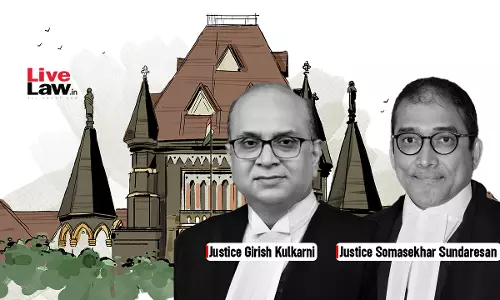
Initiating Tax Proceedings After CIRP Approval Violates Section 31 IBC: Bombay High Court
Recently, the Bombay High Court dealt with a writ petition filed by Uttam Value Steels Ltd. and Mr. Subodh Karmarkar, challenging several notices issued by the Income Tax Department under various provisions of the Income Tax Act, 1961. The dispute revolved around tax claims and proceedings initiated by the Income Tax authorities against Uttam Value Steels Ltd., despite the company...
NCLAT Affirms 'Nil' Payment To Operational Creditors In Resolution Plan
The National Company Law Appellate Tribunal, New Delhi bench, presided by Justice Ashok Bhushan, upheld the Resolution plan, which proposed NIL payment to the operational creditors in the event of Liquidation, reiterating its decision in Rajat Metaal Polychem Pvt. Ltd. vs. Mr. Neeraj Bhatia and Anr., which held that no exception can be taken to such Plans, which provide payment to...
NCLAT Rules Pre-CIRP Dues Must Be Paid As Per Resolution Plan; Voluntary Payments Post-CIRP To Be Appropriated Towards CIRP Dues
The National Company Law Appellate Tribunal (NCLAT) bench comprising Justice Ashok Bhushan (Chairperson) and Barun Mitra, Member (Technical) has held that pre-CIRP dues of the Corporate Debtor must be settled in accordance with the approved resolution plan, and any voluntary payments made by the Corporate Debtor after the commencement of CIRP must be appropriated towards CIRP dues. The...
NCLAT Upholds Liquidator's Discretion To Reject Claims Based On Post-Liquidation Arbitral Awards
The National Company Law Appellate Tribunal (NCLAT) bench, comprising Justice Ashok Bhushan (Chairperson) and Arun Baroka (Technical Member), has held that a Liquidator has the authority under Section 33(5) of the Insolvency and Bankruptcy Code, to decide to reject a claim that is made after the Liquidation Commencement Date. The Tribunal noted that the scheme of Regulations 12 and 16 ...