


IBC News

NCLAT Has No Jurisdiction To Condone Delay Exceeding 15 Days From Period Of 30 Days, Contemplated U/s 61(2) IBC: Supreme Court
The Supreme Court observed that the National Company Law Appellate Tribunal (NCLAT) has no jurisdiction to condone the delay exceeding 15 days from the period of 30 days, as contemplated under Section 61(2) of the Insolvency and Bankruptcy Code.In this case, referring to sub-section (2) of Section 61 of the IBC which provides for powers to the Appellate Tribunal to condone the delay of only...

NCLT/NCLAT Should Strictly Adhere To IBC Timelines; Delays Cause Commercial Uncertainty : Supreme Court
The Supreme Court has urged NCLT/NCLAT, the adjudicating and appellate authorities under Insolvency and Bankruptcy Code, to strictly adhere to the timelines stipulated under the IBC and clear pending resolution plans forthwithThe court said that inordinate delays cause commercial uncertainty, degradation in the value of the Corporate Debtor and makes the insolvency process inefficient...

NCLT Cannot Permit Modification Or Withdrawal Of Submitted Resolution Plan At The Behest Of Successful Resolution Applicant : Supreme Court
The Supreme Court held that adjudicating authority cannot permit modifications or withdrawals of CoC-approved Resolution Plans, at the behest of the successful Resolution Applicant, once the plan has been submitted to it.The bench of Justices DY Chandrachud and MR Shah observed that Resolution Plans cannot be considered as cannot be considered as a simple contractual negotiation between...
Personal Property of Guarantors Cannot Be Transferred During CIRP of Corporate Debtor: NCLAT
The National Company Law Appellate Tribunal has held that the personal property of the Guarantors could not be transferred in the Corporate Insolvency Resolution Process of the Corporate Debtor, even though, their properties were mortgaged with the Financial Creditors.Officiating Chairperson AIS Cheema and Technical Member Alok Srivastava held under Section 61(3) of IBC that the Resolution...

Centre Clears Appointments To National Company Law Tribunal (NCLT) & Income Tax Appellate Tribunal (ITAT)
Days after the Supreme Court pulled up the Central Government over posts lying vacant in the tribunals, the Central government today cleared the appointment of judicial and technical members to the National Company Law Tribunal (NCLT) and the Income Tax Appellate Tribunal (ITAT) Issuing a notification, the Centre has approved the proposal for the appointment of a total of 18 members to the...
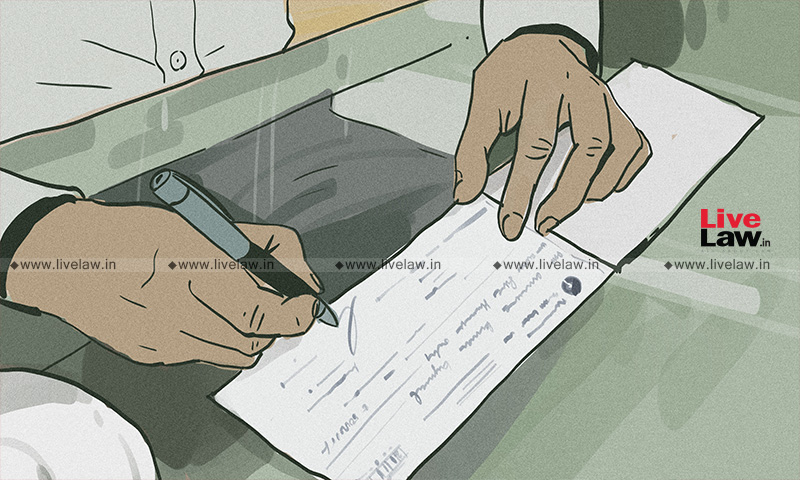
IBC Moratorium Vs Cheque Dishonour Proceedings
The Hon'ble Supreme Court of India has, in the matter of P. Mohanraj & Ors. Vs M/s. Shah Brothers Ispat Pvt. Ltd. has clarified the difference between section 14 of the IBC Code, 2016 and section 138/141 of the Negotiable Instrument Act. Besides determining the difference between the two, Hon'ble Court has also emphasised whether Moratorium under Section 14 of IBC Covers Section 138 of NI Act Proceedings against Corporate Debtor for Cheque Dishonour. First, Hon'ble Court has made...
IBC - The Journey So Far – Part III
EMERGING LEGAL ISSUES CLOGGING RESOLUTION: There are few major emerging issues which could impact resolutions under IBC (especially in large cases), one of which is shrinking market for resolution. A Corporate Debtor attracts proposals if it has inherent value and technology used by it is not changed (which is very unlikely) and it is viable in its market space. Since, there are few takers, the value offered hovers around liquidation value and in many cases substantially below...

Process Analysis Of Pre-Packs : The Next Step In The Evolution Of Insolvency Regime In India
The enactment of the Insolvency and Bankruptcy Code, 2016 ('the Code') provided a new insolvency regime to the country in order to resolve the corporates and individuals, undergoing financial distress, in a time bound manner. Given the fact that the market for the new professions created by the Code have sufficiently matured and the processes introduced by it have adequately evolved, the Government found it feasible to explore new initiatives in order to further improve the effectiveness of the...
IBC - The Journey So Far – Part II
JOURNEY ON THE LEGAL FRONT The factors which could be said to be key for rapid and successful stabilization of the legal positions, have been timely initiatives by the Government by introducing timely amendment in the Code wherever needed and some landmark judgments by the Supreme Court which helped in accelerating the process and cutting short the time. In a short span of four years there were as many as four major amendments in the Code. The first major amendment was introduced...

Application For Initiating CIRP Has To Be Rejected If A Dispute Truly Exists In Fact And Is Not Spurious, Hypothetical Or Illusory: Supreme Court
The Supreme Court observed that adjudicating authority has to reject an application seeking initiation of Corporate Insolvency Resolution Process under Section 9 of Insolvency and Bankruptcy Code, if a dispute truly exists in fact and is not spurious, hypothetical or illusory.The bench of Justices RF Nariman and BR Gavai observed that, at this stage, the authority is not required to be...
NCLT/NCLAT Has No Residual Equity Jurisdiction While Dealing With Resolution Plan Approved By CoC: Supreme Court
The Supreme Court observed that there is no residual equity based jurisdiction in the Adjudicating Authority or the Appellate Authority while dealing with the resolution plan approved by the Committee of Creditors.The bench of Justices DY Chandrachud and MR Shah reiterated that these authorities can not enter into the commercial wisdom underlying the approval granted by the CoC to the...