


IBC News

NCLAT Directs Partial Temporary Relaxation On Physical Filing, Modifies SOP For Allowing E Filing In View Of Covid
Taking note of the recent surge in Covid 19 situation, the National Company Law Appellate Tribunal has directed partial temporary relaxation in physical filing as per its earlier Standard Operating Procedure dated January 3, 2021 by allowing e filing of appeals, replies, IAs, rejoinders etc.The notice issued by the Registrar on Monday in this regard reads thus:"It is directed by the...
IBC - Approval Of Resolution Plan Does Not By Itself Discharge Liabilities Of Personal Guarantor Of Corporate Debtor: Supreme Court
The Supreme Court has held that the approval of a resolution plan does not ipso facto discharge a personal guarantor of a corporate debtor.The release or discharge of a principal borrower from the debt owed by it to its creditor, by an involuntary process, i.e. by operation of law, or due to liquidation or insolvency proceeding, does not absolve the surety/guarantor of his or her liability,...

Supreme Court Upholds IBC Provisions Applicable To Personal Guarantors Of Corporate Debtors-Read Judgment
The Supreme Court today upheld the provisions of Insolvency and Bankruptcy Code, 2016 which applies to personal guarantors of corporate debtors.The bench comprising Justices L. Nageswara Rao and S. Ravindra Bhat approval of a resolution plan relating to a corporate debtor does not operate so as to discharge the liabilities of personal guarantors (to corporate debtors). The bench dismissed...

Delhi High Court Issues Notice In Plea Seeking Modification Of NCLAT's SOP By Allowing Only E-Filing In View Of Second Covid Wave
The Delhi High Court on Thursday issued notice in a plea seeking directions on the National Company Law Appellate Tribunal (NCLAT Principal Bench at Delhi) to modify its SOP dated January 3, 2021 by allowing only electronic filing in view of the prevalent situation amid second Covid wave.A single judge bench comprising of Justice Rekha Palli issued notice in the plea filed by Advocate...
A Critical Analysis Of RPFC Telangana Vs. Vandana Garg And Ors. Of NCLAT, Chennai Bench
A recent order dated 12th May 2021 by the NCLAT Chennai Bench in Regional Provident Fund Commissioner Vs. Vandana Garg and Ors. [CA (AT) (Ins.) No.50 of 2021] prompted me to have this write-up about the order. At the outset, I am of the humble view that this order requires reconsideration. The RPF Commissioner, Telangana filed the appeal before NCLAT Chennai Bench under the Insolvency and Bankruptcy Code, 2016 to obtain an order for inclusion of total claim of Provident fund dues from...

Takeaways For The Indian Cross-Border Insolvency Regime In Light Of COVID-19
The COVID-19 pandemic is a crisis unlike any other. It has wreaked havoc on the economies of many countries around the world. As COVID-19 spreads, several companies have been negatively affected, and others have come to a halt. The vast number of major corporate downturns in the last two years have involved multiple jurisdictions, rendering foreign insolvencies common, rather than something rare. Cross-border insolvency refers to a scenario in which an insolvent debtor has assets in...
Residuary Jurisdiction Of The National Company Law Tribunal Under Section 60(5) Of The Insolvency And Bankruptcy Code, 2016: A Brief Analysis
Pursuant to Section 60(5) of the Insolvency and Bankruptcy Code, 2016 ("Code") the National Company Law Tribunal ("NCLT") is bestowed with the jurisdiction to decide: (i) 'any' application or proceeding against a corporate debtor; (ii) 'any' claim made by or against a corporate debtor including claims by or against its subsidiaries; and (iii) 'any' questions of priority or 'any' question of law or facts, arising out of or in relation to insolvency resolution or liquidation proceedings of...
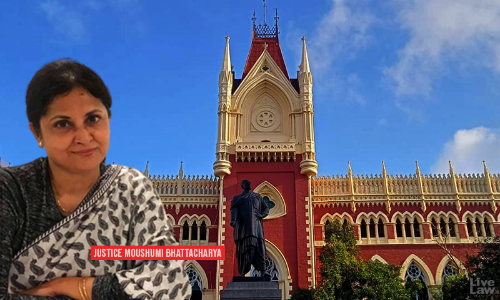
Will Arbitral Award-Holder's Claim Be Extinguished On Approval Of Award-Debtor's Resolution Plan Under IBC? Yes, Rules Calcutta High Court
On Friday, the Calcutta High Court settled an important question of arbitration law, viz., whether an arbitral award-holder's claim would stand extinguished upon the approval of a Resolution Plan for the award-debtor's revival, when it was not pressed during the Corporate Insolvency Resolution Process (CIRP). Relying on Supreme Court rulings from 2020, Justice Moushumi Bhattacharya...
NCLT Kochi Allows Promoter Of Corporate Debtor MSME To File Resolution Plan In Individual Capacity
The National Company Law Tribunal at Kochi has held that the promoter of an MSME can submit a Resolution Plan Application in his individual capacity, and that the Plan would be eligible to be considered along with those of other prospective Resolution applicants. Judicial Member Ashok Kumar Borah of the NCLT Bench at Kochi recently made this pronouncement on an application made by...
Insolvency Law In Review – March 2021
The enactment of the Insolvency and Bankruptcy Code 2016 (Code) has had significant ramifications on the corporate insolvency landscape. Over time, the Code has witnessed a manifold increase in litigation, and consequently in the number of decisions. This has made it difficult for insolvency practitioners to stay updated with developments in the field. The purpose of this column is to fill this gap by providing brief summaries of latest decisions, from the various fora dealing with...
Whether It Is Mandatory To File A Formal Application For Condonation Of Delay? An Examination Of SC Judgement In Sesh Nath Sing's Case
In Sesh Nath Singh and another v. Baidyabati Sheoraphuli Co-operative Bank Ltd. and another[1] (hereinafter referred to as "Sesh Nath"), the Supreme Court, while recently hearing an appeal under Section 62 of the Insolvency and Bankruptcy Code (hereinafter referred to as "IBC") had the opportunity to deal with an issue of particular significance for litigating lawyers. One of the issues before the Court was whether a delay in filing an application by a financial creditor under Section...

Insolvency Of Personal Guarantors To Companies: An Atmosphere Of Uncertainty
Corporate Insolvency Resolution Process can now be triggered against the personal guarantors of a corporate debtor including the promoters of a corporate person by its creditors through rules notified on 15.11.2019 by the Ministry of Corporate Affairs. The entire set of rules have flooded the gates of Courts all over against the constitutionality of the new provisions with the notification being challenged by almost 100 promoters including the billionaire Industrialists like Arvind Dham,...