



Don't Blame The Judges
Pranjal Sinha
26 Jun 2026 11:00 AM IST
Recently, the debate around judicial vacations resurfaced again. To my ignorance, I didn't know it was such a recurring debate!
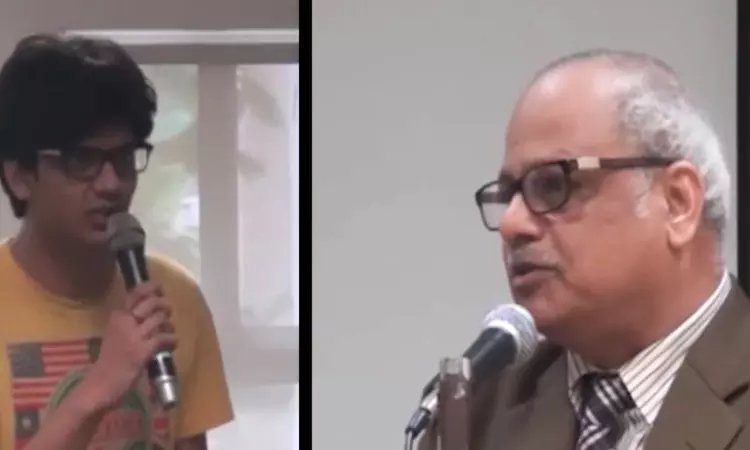
It took me 10 years back to 2015, when I was in the second year of my law school, National University of Juridical Sciences (NUJS). We used to have these weekend lecture series, where eminent guests from the legal fraternity used to come.
Former Supreme Court Judge & First Lokpal of India, Justice Pinaki Chandra Ghose, had come to give a lecture on social justice.
Six months before that lecture, former CJI R.M. Lodha had proposed that courts function all 365 days, with judges working in shifts like any other organised workforce. I thought it was the most obvious idea in the world. Within a month, the Bar Association had rejected it, calling it impractical.
WHAT? You have summer vacations, winter vacations, festival breaks- sitting on top of a backlog this size, and the solution is impractical?


Judges needed to be blamed. I took that responsibility upon myself. This whole interaction is on video.
(Video available here-NUJS WLS Lecture IV - Justice Pinaki Chandra Ghose )
After his speech was done, I stood up and asked (blamed) him-
If we have such a huge backlog of cases, why do judges in India have summer vacations? Why do they have a Durga Pooja break (Bengal), winter vacations, etc.?
I thought it was a relevant question to ask. I felt courageous too, for asking a tough question to a Supreme Court Judge in front of my batch mates.
But he looked at me and smiled. He smiled at my ignorance of not understanding the complete picture.
He told me about the life of a judge in India. They don't have a life.
They are tremendously understaffed. The judge-to-population ratio is 17 judges for every million people, against the Law Commission's recommendation (1987) of 50 judges per million. He mentioned the amount of work they have beyond court hours. Weekends go in reading, researching and writing judgements. Then there are vacation benches, administrative duties, etc. The number of cases a judge in India handles in a day is astonishing; it is way more than that of their counterparts anywhere in the world. He went on to say that we need systemic changes, early encouragement of settlement processes, etc.
I was honestly a little embarrassed, and taken aback, after getting his answer. But in some way, it validated the need to come up with a new approach for solving the pain point of resolving disputes — and it helped us kickstart our own journey of Online Dispute Resolution (ODR) at Sama.
A year later, I realised it wasn't just me who needed to hear this. In 2016, the entire country did.
The Former Chief Justice of India, Justice T.S. Thakur, teared up in front of Prime Minister Modi in Vigyan Bhavan, Delhi. He said -
"In the name of development and progress, I beseech you," he looked at Prime Minister Narendra Modi, "to rise to the occasion and realise that it's not enough to c-r-i-t-i-c-i-s-e."
(Former CJI tearing up in 2016 over the issue of judicial burden)
At the heart of the CJI's address were four arguments - that judges are overwhelmed by the load of litigation; judicial vacancies are not being filled up; the appointments procedure is getting stuck at the level of the government; and that ultimately, the common man will suffer the most.
Ten years have passed, and the same message still has to be repeated. Solicitor General Tushar Mehta recently highlighted the immense workload on judges: "I am bold enough to say this… We must send a message to everyone who is criticising that Supreme Court is taking vacations. We are not having 10-5 jobs. The Hon'ble judges read 60 files… our office starts after 5 pm. Why can't we accept that fact? And really have the vacation," he said.
Unfortunately, the stats around this debate have not changed much either:
● The backlog? The 3.2 crore backlog (from 2015) has become 5.58 crore in 2026.
● The judge-to-population ratio? It has limped from 17 to somewhere around 20 per million in working terms. Against a target of 50. Set in 1987.
How can we expect judges to work in shifts as a part of a 365-work-day policy when we do not have enough judges in the first place?
The data around vacations taken by courts around the world should be noted too. The American Supreme Court works approximately 80 days per year, the Australian High Court works fewer than 100 days per year, Singapore works 145 days per year, and the UK is similar to India. The Supreme Court of India sits for about 200 days every year.
Even during court vacations, the vacation bench is always present to hear matters. There is never a full closure of courts anywhere in the country. Also, there is a functional system of night courts for hearing matters which are taken up after the evening hours. We have 24-hour availability of Metropolitan Magistrates to hear emergency cases if the matter is brought to their house on a holiday or during vacations.
And here is the number that surprised me- India has some of the fastest judges in the world. According to the statistics revealed by the National Judicial Data Grid (NJDG), from a Munsif to a Supreme Court judge, the average disposal in India is 2,600 cases per annum, as compared to 81 cases per annum in the US. 2,600 cases as compared to 81? That is 32 times the performance of US courts!
And we still blame the judges? Maybe it is the easier option.
Justice Katju had the perfect response to the situation. Sharing his experience on the issue of pendency of cases plaguing the judiciary, he said, "This shows the plight of the judiciary. After all we are not supermen. If a man can carry a maximum load of, say, 100 pounds, and if an elephant is placed on his head, what will happen? He will collapse."
I am not denying that there will be some lapses on the part of judges as well, but that is not enough to draw a hasty generalisation for the whole scenario. Judges in India are working really hard, and they are under immense pressure.
Recently, a senior advocate with over two decades of experience put it simply — "The focus should be on increasing the number of judges everywhere... The moment that gets sorted... pendency [will] go away... and vacations, too, won't matter."
We need to understand the plight of our judiciary. We need to look beyond and see the other perspective. We need to appoint more judges. We need to further adopt Alternative Dispute Resolution (ADR) mechanisms. We need the government to encourage the adoption of ADR/ODR institutions. We need to leverage technology to deal with the accessibility aspect of our justice system. We need more startups to tackle this pain point of dispute resolution. We need lawyers to encourage their clients to settle their cases. We need outside domain experts — engineers, financial experts, psychologists etc— to look at this pain point of dispute resolution. We need more innovative solutions.
We definitely need to stop blaming the judges.
I did it once. And I still regret it.
The author is the Co-founder of Sama. Views are personal .


