




Law Firm Articles

Exploring The Dynamics Of Technology: Sexual Harassment In Metaverse
The changing dynamics of sexual harassment ft. Metaverse Entering the world surrounded by human like creatures in a parallel universe, unknown and undiscovered, performing actions resonating with magic. That creates a picture of a beautiful world in three-dimension that previously were part of your imagination .The effect of majestic visuals further magnifies when the sense of touch in the virtual world can also be felt in the physical world. This is the story of Metaverse! Now what...
The Future Of Indian Patent Filings
In this era of innovation and entrepreneurship, India has not only realised its potential in recent years. As there has been a significant upsurge in the start-up culture and thus filing, registering and protecting IP is becoming a pressing concern. This is the time for India to monumentally transform the innovation and IPR landscape. The knowledge system and IP should work in synergy to ensure that knowledge works towards the welfare of society and must foster the ideas that may economically...
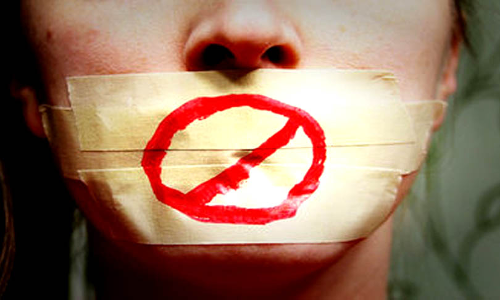
Criminal Defamation – A Potential Trial Against The Complainant?
One of Indian democracy’s treasured possessions is the freedom of speech, and it is considered to be an absolute sacrosanct. This is the reason why the constitutionality of laws in relation to criminal defamation have been questioned several times at the touchstone of freedom of speech. However, like other rights, even this right is not absolute and is subject to certain reasonable restrictions as enumerated under Article 19(6) of the Constitution. This right can’t be put on a pedestal...

Demystifying Rights Of AI Generated Inventions
The development of technology as well as permanently changing economic and social conditions pose various challenges for international, Indian and various national legislations. One such issue raised by the extremely rapid and unpredictable development is due to the swift development in technology related to artificial intelligence (AI). Technologies related to AI have implications on all areas of law. Hence, in order to ensure the changes brought about by these developments and prevent...

Liability Of Online Aggregators Under POSH Act 2013- India
With the rise of the gig economy and the increasing popularity of aggregator platforms whether it be food delivery services, online marketplaces or any other similar e-commerce service platforms, it is crucial to understand whether these newly emerging e-commerce platforms are covered under the regime of the legislation called “Prevention of Sexual Harassment of Women at Workplace Act 2013”, also referred as POSH Act. The POSH Act is a comprehensive law aiming to prevent sexual ...

Changes To The Merger Control Regime In India – Competition Law Update
Recently the Indian Parliament approved the Competition (Amendment) Bill, 2022 (“Bill”) which introduces significant changes to the Competition Act, 2002 (“Act”). The Bill, inter alia, introduces changes to the merger control regime, seeks to broaden the scope of anti-competitive agreements and introduces a settlement and commitment framework to reduce litigation.The key changes in the merger control regime and their impact are as follows:Approval of the Competition Commission of India (CCI)...
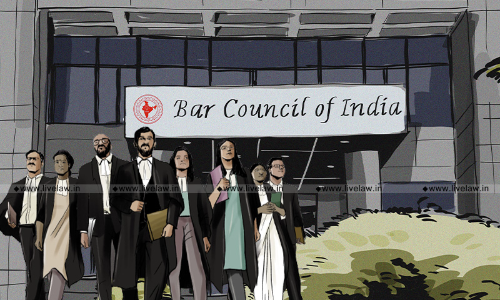
Foreign Legal Firms In India? New Frontiers Or A Floodgate?
The BCI’s (Bar Council of India) latest announcement in the first week of March this year, has proverbially left the cat loose among the pigeons. While the learned have appreciated the announcement over its finer nuances, the discourse in the general press continues to baffle the average lawyer and commoner alike. It would be equally baffling to note that the law commission’s set of amendments in 2017 with a provision to allow entry of foreign law firms had ended in a strong nationwide...

No Escaping From Penal Liability By Citing Company’s Dissolution
On March 15, 2023, a three judge bench of the Supreme Court in the case of Ajay Kumar Radheyshyam Goenka vs Tourism Finance Corporation of India Limited[1] and other connected matters held that personal liability of a signatory/director of a company in a cheque dishonour case filed under the Negotiable Instruments Act, 1881 (“NI Act”) cannot be absolved pending corporate insolvency resolution proceedings (“CIRP”) against the company under the provisions of the Insolvency and Bankruptcy...
Conflict Of Laws : PMLA v. SARFAESI Act
Conflict of laws is as old as the legal system itself. One such conflict that litigators tend to face frequently is the conflict between Prevention of Money Laundering Act, 2002 (‘PMLA’) and Securitization and Reconstruction of Financial Assets and Enforcement of Security Interest Act, 2002 (‘SARFAESI Act’.) To understand the objective behind enactment of the PMLA, first it is essential understand what “Money Laundering” means in general parlance. Money laundering is the process of...
Promotions Under The Garb Of Surrogacy Or Genuine Brand Extension? - Explained
In India, advertisements are regulated by a dual regulatory regime. One is a self-regulatory mechanism established by the Advertising Standards Council of India (“ASCI”), an independent body regulating advertisement, and the second is a statutory framework. Under the statutory framework, in addition to regulations which generally apply to advertisements like the Cable Television Network Rules, 1994 (“Rules”), a new consumer protection law was introduced through the Consumer Protection ...

Funding Matters: Inside The State Versus Union Conundrum
Any woman is equipped well to explain the perils of spending more than one’s earnings. We all have had our elders somehow explaining to us the importance of saving, but when the case involves a government and states the choices there are not too many choices. In a Country the Central Government may have the choice of handling excessive spending tackled by either printing more money, raising from markets, or rationalising the expenditure a gap. However, to a state there is the onus of...

Foreign Campuses For Higher Education In India – A Half-Baked Regulation?
In pursuance of the National Education Policy 2020 (“NEP”), on 5 January 2023, the University Grants Commission (“UGC”) unveiled the draft of ‘University Grants Commission (Setting up and Operation of Campuses of Foreign Higher Educational Institutions in India) Regulations, 2023’ (“Draft Regulation”), for the purposes of inviting public comments, with an aim to provide an international dimension to higher education, enabling Indian students to obtain foreign qualifications at affordable cost,...