



Algorithmic Deactivation, Article 14 And Karnataka Gig Worker Litigation
Sanaya Parikh
23 July 2026 8:00 PM IST
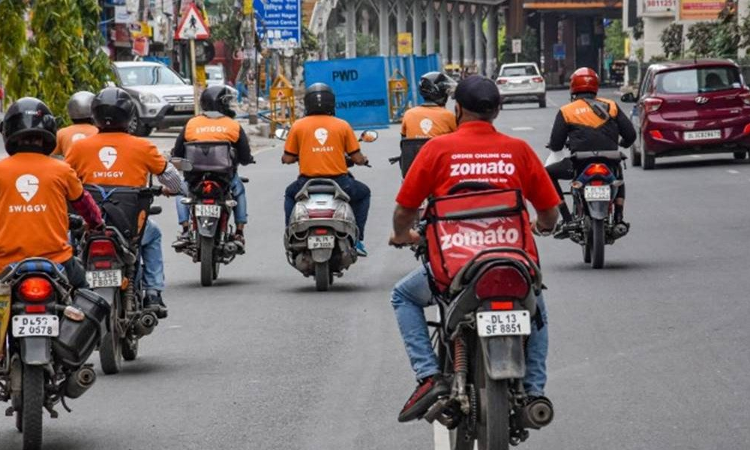
Representational Image (Courtesy : PTI)
The Issue
On 29th June 2026, IAMAI and several major platform companies, including Swiggy, Zepto, Eternal Ltd. (which operates Zomato and Blinkit) and Urban Company, filed a writ petition before the Karnataka High Court. The petition seeks to declare the Karnataka Platform-Based Gig Workers (Social Security and Welfare) Act, its Rules, related notifications and enforcement notices unconstitutional and liable to be quashed[1].
Among the notices the petition asks the Court to quash is one dated 21st May 2026, directing platforms to constitute Internal Dispute Resolution Committees (IDRCs), the mechanism through which the Act requires platforms to give workers reasons before deactivating them. Whether or not the Court frames the case this way, the underlying question is whether a gig worker is entitled to know why she stands to lose her livelihood, and to be heard before she does.


Examples
Consider a beautician who has worked on a platform like this for years. Her income depends entirely on an algorithm she cannot query. When a client is dissatisfied, she must redo the service at her own cost, no right to contest the complaint, no access to the client's identity, no hearing. When the app glitches and registers a cancellation she never initiated, there is no mechanism to correct the record; if such errors cross a threshold, her account is blocked. Whether or not the platform is formally recognised as her employer, it performs all three functions that matter most to her: it structures her work, evaluates her performance, and terminates her access to work. There is no separation between those roles, and no appeal from any of them.
This is not a hypothetical, it is the ordinary operating condition of India's home-service gig economy, and it repeats across the transport and delivery sectors that IFAT's (Indian Federation of App-based Transport Workers) members work in[2].
Legal Developments
IFAT, along with two individual gig workers, filed a writ petition before the Supreme Court in September 2021 (WP(C) No. 1068/2021) naming the Union of India and four major aggregators as respondents. It asked the Court to declare that excluding gig workers from social security violates Articles 14, 21 and 23, and to direct that they be recognised as “unorganised workers” under the Unorganised Workers' Social Security Act, 2008. That prayer has since narrowed, now that the Code on Social Security, 2020 is in force, the petition mainly asks the Union to notify the rules under Chapter IX of that Code, the chapter meant to give gig workers social security in the first place. At the last hearing, on 18th February 2025, the Union told the Court those rules were still under consideration. Nearly five years later, the petition has produced procedural orders, not a ruling on the constitutional questions it raised.
Into that vacuum, states began to legislate, as Rajasthan's Platform-Based Gig Workers (Registration and Welfare) Act, 2023 was the first. Karnataka's 2025 Act went further: it created a Welfare Board, capped the welfare fee platforms must pay, and required platforms to constitute IDRCs and give reasons before deactivating a worker. That last requirement is precisely the provision now before the Karnataka High Court.
The IAMAI-led petition seeks a declaration that the Karnataka Act, the Rules framed under it, the notification constituting the Welfare Board, and a government order dated 12th February 2026 fixing the welfare fee are unconstitutional, principally on the ground of repugnancy under Article 254: the petitioners argue that Parliament has already occupied the field through the Code on Social Security, 2020, and that a state cannot layer a parallel, and more onerous, compliance regime on top of it. Alongside the Act itself, the petition seeks quashing of the notice of 21st May 2026 requiring IDRCs, show-cause notices dated 16th June 2026 alleging non-compliance, and welfare fee notices dated 22nd June 2026 that required payment by 5th July 2026.
The Court has already passed its first order, on 3rd July 2026, Justice M. Nagaprasanna refused to stay the Act. Instead, he told the platforms to deposit the disputed welfare fee with the Court registry rather than pay it to the state, and turned down their request to offer a bank guarantee instead. He also signalled that the Court may try to read the state and central laws together rather than treat them as conflicting, and set the matter down for a further hearing. One thing follows directly from this: the due process requirement, the IDRC and reasons before deactivation, has not been stayed. It stands, while the repugnancy question is still being argued
Analysis
Article 14 does not apply simply because a private actor is powerful. A court will first ask why this is a constitutional question rather than one of contract or labour law. Indian administrative law has long recognised that where power produces serious civil consequences, procedural fairness ordinarily follows.
A.K. Kraipak v Union of India[3] held where a decision carries serious civil consequences, procedural fairness must follow, regardless of whether the decision is labelled “administrative” or “quasi-judicial”. The unresolved question is whether that constitutional value should now reach dominant digital platforms exercising comparable control over access to work. The loss of one's sole source of income is about as civil a consequence as exists. A platform that must articulate why it deactivated a worker cannot rely on criteria it has never made explicit even to itself. Stated reasons discipline the decision-maker, convert an opaque judgment into a reviewable one, and make internal appeal and judicial review possible in the first place, both are meaningless without something to appeal against. A worker need not win every dispute for the requirement to matter; she needs only to know, in specific terms, what she is accused of.
Articles 14 and 32 bind the state and bodies performing public functions, and platforms have so far resisted being characterised as either. But consider what Indian courts have already accepted elsewhere[4]. A licensing authority that revokes a trader's licence cannot do so without notice and hearing. A university that expels a student, or a professional regulator like the Bar Council or SEBI that suspends a member's ability to practise, is bound by the same requirement, not because these bodies are literally “the state,” but because they exercise a form of gatekeeping power over a person's ability to earn a livelihood that the person cannot practically route around.
A dominant home-service platform occupies a strikingly similar position. The worker has no realistic alternative platform commanding comparable client volume; she cannot negotiate the terms on which she is evaluated; and the criteria by which she is judged are opaque even to her. Together, dominance, economic dependence and algorithmic opacity create the kind of one-sided gatekeeping power that public law has historically restrained, regardless of whether the gatekeeper wears a government seal. This burden falls most heavily on workers with the least bargaining power, particularly women from economically precarious backgrounds for whom this income is primary. That fact does not broaden the constitutional argument; it demonstrates why procedural protection is most urgent.
The better question, then, is not whether a platform is a “state” in form. It is whether a constitutional protection can turn entirely on a formal legal classification, when a private digital infrastructure exercises functionally public power over a person's access to work.
While some deactivations are urgent, a harassment report or a fraud complaint cannot wait for a full hearing, and forcing one would put customers and workers at real risk. But urgency is not an argument against reasons, it is an argument for sequencing them differently. A platform can suspend first and explain immediately after, the same way a professional body can suspend a member pending a disciplinary hearing rather than after one. Procedural fairness does not invariably require a pre-decisional hearing, it demands that they not stay silent. The problem is not speed; it is that silence has become the default even for routine cancellations, ratings, and account errors that were never urgent at all.
Due to this legislative vacuum, states have started to legislate. Rajasthan's Platform-Based Gig Workers Act, 2023 was the first. Karnataka's 2025 Act went further, mandating Internal Dispute Resolution Committees and, critically, reasons for deactivation[5]. That is precisely the provision now under constitutional challenge.
One of the central constitutional objections advanced by the platforms is repugnancy: that Parliament has already occupied this field through the Code on Social Security, and a state cannot layer its own procedural framework on top. While it is not entirely unreasonable. A company operating across twenty states cannot comply with twenty different deactivation procedures. But some compliance costs are simply the ordinary price of running a pan-India platform, no different from complying with state-specific labour and shops-and-establishments regimes today. But repugnancy under Article 254 is not triggered merely because Parliament has touched the same field; the inconsistency must be real[6]. The Code on Social Security is silent on notice or reasons before deactivation, silent, not in tension. A state law may not necessarily conflict with the central law; it does what the Code has not yet done. If the platforms succeed, the only state-level attempt in India to import natural justice into algorithmic management will fall, at the instance of the companies challenging the legislation.
India is not being asked to invent this framework from nothing. The EU's Platform Work Directive, adopted in 2024, requires platforms to disclose the parameters of automated decision-making and guarantees human review of significant decisions, including deactivation[7]. Spain's “Riders' Law”[8] and the UK Supreme Court's reasoning in Uber BV v Aslam[9], which looked past the “independent contractor” label to the platform's actual control over drivers, proceed from the same underlying principle: the degree of algorithmic control a platform exercises over a worker's livelihood should determine the degree of procedural accountability it owes in return. That principle, not any specific EU or UK rule, is what India's regulatory silence currently ignores. Although these jurisdictions differ significantly, each recognises that algorithmic management requires corresponding procedural safeguards.
The Karnataka litigation raises an important question about whether the due process provisions can be viewed independently of the broader welfare-cess framework, such that a finding on repugnancy need not necessarily determine the validity of the procedural safeguards. Equally, Parliament could resolve much of the uncertainty by incorporating minimum procedural protections, including reasons for deactivation and an internal appeal mechanism, into the Code on Social Security as a national baseline. But the reform agenda is secondary to the constitutional point.
Finally, the Karnataka challenge presents an opportunity to reconsider whether traditional principles of natural justice should respond to new forms of algorithmic control over access to work. As digital platforms increasingly determine who may continue to earn a livelihood, the constitutional question is no longer whether these decisions matter, but how the law should respond to them.
Karnataka Platform-Based Gig Workers (Social Security and Welfare) Act 2025 ↑
Indian Federation of App-Based Transport Workers v Union of India WP(C) No 1068 of 2021 (SC, pending). ↑
A.K. Kraipak v Union of India (1969) 2 SCC 262 (SC) ↑
Constitution of India 1950, arts 14 and 32. ↑
Rajasthan Platform-Based Gig Workers (Registration and Welfare) Act 2023. ↑
Constitution of India 1950, art 254. ↑
Council Directive (EU) 2024/2831 of the European Parliament and of the Council of 23 October 2024 on improving working conditions in platform work [2024] OJ L. ↑
Real Decreto-ley 9/2021, de 11 de mayo, por el que se modifica el texto refundido de la Ley del Estatuto de los Trabajadores, aprobado por el Real Decreto Legislativo 2/2015, de 23 de octubre (Spain) ('Riders' Law'). ↑
Uber BV v Aslam [2021] UKSC 5. ↑
Author is a 3rd year BBA LLB (Hons.) student at Jindal Global Law School. Views are personal.


