



Copyright V. Copyleft: Future Of Creativity, Freedom, And Ownership
Pragya Chaurasia
26 May 2026 8:00 PM IST
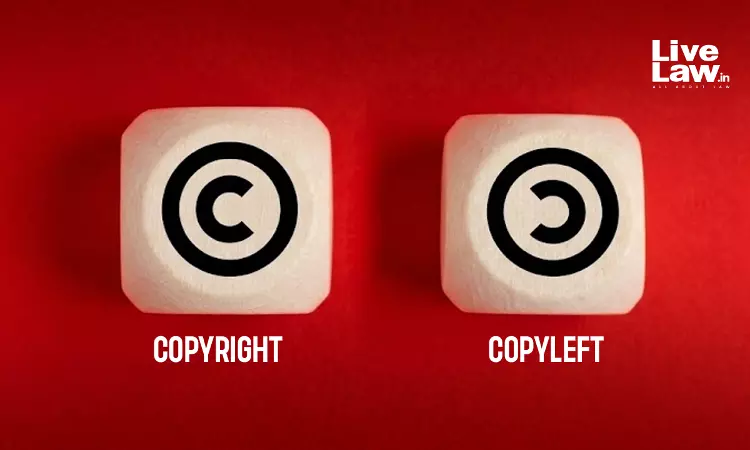
In today's digital world, creativity no longer exists in isolation. Innovation doesn't remain an individual thing anymore, it is now sharing across networks, platforms and nations. Innovation is like lightning, and collaboration is a core part of innovation. An American designer can build on the work of a Japanese coder, and a student in the other half of the world can access, interpret and edit the same idea in a matter of minutes. In this world, regulation of creativity is more complex.
This is where copyright/copyleft distinction is significant. It is no longer a legal issue, but an attitude towards creativity, rights and knowledge sharing. Copyright is premised on protection. It emphasises the value of giving authors control over their works, so that they can control access to it and how they benefit from it. So it is about exclusion and is founded on a belief that authors need security and reward to be productive.


But there is another theory: copyleft. Its emphasis is on inclusion. It is based on the idea that innovation thrives when people are able to copy, adapt and build on the work of others. Rather than knowledge being something to be protected, copyleft champions knowledge as something to be freely shared, copied and improved upon. It is an idea that fits the new age of collaboration, where creativity is often a shared endeavour.
In both cases the aim is to encourage creativity. Copyright does this by rewarding the individual, and providing incentives for innovation and creativity, while copyleft does so by rewarding collaboration and making knowledge freely available. This is significant today, as we transition into a more digital world of creation, communication and knowledge sharing. The question is to comprehend the strengths of both systems, and how they can operate in a networked, creative environment.
Understanding Copyright: Control to Protect Creativity
Copyright is a well-recognised form of intellectual property. Copyright provides authors with exclusive rights to their original works, such as the right to copy, distribute, adapt, perform and display works they create. This protection extends to a broad spectrum of works - literary works, musical works, movies, paintings, computer software and the like.
The spiritus rector of copyright is straightforward: it encourages creativity by ensuring that people's creative endeavours are protected and that their creations can be monetised. By granting authors certain rights that give them a monopoly for a limited period, copyright allows them to make a living from their work and to control its usage. A unique characteristic of copyright is that it is automatic. Once a work is fixed in a physical medium, it is protected. Although registration is not always required, it can enhance the enforceability of copyright claims.
Copyright protection also lasts a long time. It's generally valid for the author's lifetime plus decades. Such a long period is necessary to protect not just authors but also their families and estates. But this is also a source of controversy. In a fast-changing digital environment, lengthy terms of protection can hinder thoroughfare through the public domain, restricting access to knowledge and information. Additionally, rigid licensing conditions can make it difficult for students, researchers and other creatives to use and build upon existing materials.
The Rise of Copyleft: Legal Liberty
Copyleft is a solution to the problems posed by copyright, especially in software programming. Rather than abandon copyright, copyleft deftly turns it to its advantage. Copyleft permits users to freely use, modify and redistribute a work with one key requirement: that any modified work be distributed according to the same barrows. This means that the work, and any modifications to it, are free to all.
Copyleft has been popularized by the GNU project and its founder, Richard Stallman, in the form of the GNU General Public License (GPL). This license is widely used in the open-source movement, and guarantees that software remains free and cannot be transformed into proprietary software. Copyleft is an alternative philosophy to copyright. This approach treats knowledge as a public good. Rather than locking things away, it promotes inclusivity, sharing and learning. It has revolutionalised the world of technology. Open-source projects have shown that exclusivity is not always needed for innovation. Indeed, working together frequently results in quicker innovation, better product, and greater market share.
A Battle of Ideologies: "Me" vs "We"
Copyright vs. copyleft is a philosophical debate.
Copyright is based on the ethos of "all rights reserved". It is focused on the traditional rights of the individual author and places importance on control, monopoly and profit. It rests on the notion that it is needed to encourage creation. Copyleft, on the other hand, takes a world of "some rights reserved". Here, accessibility and improvement are key values and innovation is invited to build on pre-existing ideas. It takes creativity to be an open process.
This dichotomy raises the question: Is knowledge property or public good?
There is no simple answer. Each model has its merits, and solves a different stage in the creative process. Copyright rewards creativity and copyleft promotes evolution and innovation.
Advantages and Challenges of Copyright
Copyright is essential to the creative sector. It offers security to artists - knowing their work is not freely accessible. This is especially critical in creative industries such as publishing, film and music where there are considerable investments at stake. It helps preserve artistic integrity. Authors can maintain their vision and ensure their content isn't altered in ways that could misrepresent it. But copyright has drawbacks. Overly rigid enforcement can stifle innovation, particularly when it comes to building on prior works. Fees and legal barriers can stifle creativity, especially among smaller creators or startups.
Further, in the digital environment, copyright enforcement is complex. Information can be reproduced and shared across the world in a matter of seconds, making copyright protection more challenging.
Pros and Cons of Copyleft
In contrast, copyleft has transformed knowledge sharing. It eliminates access barriers and promotes collaboration and community building.
This approach has been extremely effective in computer programming, where open-source projects are at the core of today's technological society. This enables programmers to learn from others, build on existing platforms and build new things. But there are drawbacks to copyleft. This can stifle commercial interest by requiring the release of any modifications. Businesses may avoid incorporating copyleft-licensed material if it requires them to share how they've modified it. Moreover, copyleft offers less control to the author. Once released, material can be changed and distributed in ways the author of a work might not approve.
The Rise of Hybrid Models
Realising the limitations of both approaches, mixed models developed- They attempt to combine the benefits of copyright and copyleft, while minimising the costs. Creative Commons licenses are one such example. They allow creators to define how their works can be shared (modified, used in commercial applications, and/or with acknowledgement) or cannot be shared. This enables creators to mix control and sharing.
These hybrid models reflect the changing nature of the creator's universe, in which they may seek recognition and visibility. They also acknowledge different needs for some works.
Impact Across Different Sectors
Copyright and copyleft have applications in many areas. In the technology sector, copyleft has enabled open-source development, resulting in system software, websites and so on. They are collaborative and based on sharing. In academia, open-access publishing has made available research, allowing students and researchers the world over to learn from each other. In media, copyright remains the norm, to support the business model for mass production. But in digital media, other considerations are at play, where the author may sacrifice rights for reach and audience interaction. Social media has also created a blurred ownership and sharing. Data is republished, re-packaged and re-shared, making copyrighting an issue.
Finding the balance: Protection and Sharing
Copyright vs. copyleft is a balance. Too much control stifles innovation, and too much freedom stifles incentives. The law addresses this by allowing for fair use (or fair dealing), which allows some limited use of copyrighted works without permission. These are essential for education, study and criticism. But there is also a recognition of the need to reform intellectual property law to keep up with new technology. We need flexible approaches in an ever changing online world.
What's Next: The Future of Creativity
Most likely the future of creativity will be a combination of copyright and copyleft. There will be new issues and possibilities with new technology.
For example, there are issues of creativity and ownership with artificial intelligence. Who created a computer-designed product? Similarly, blockchain can manage ownership and licensing, and could change intellectual property protection. Such developments suggest that the law will need to be more flexible in the future. It's not copyright or copyleft, but reward for innovation and fairness that should be the focus.
The decision between choosing copyright and copyleft is not just legal, it also reflects our view of the world of creativity and knowledge in the 21st century. Copyright is founded on the idea of protecting. It affirms that creativity is a good thing, and should be rewarded, with fame and money. It protects the right of creators, so we have a system in which people can spend their time, money and effort to produce something new.
But copyleft is not. It is premised on sharing to increase knowledge. It's not a question of locking up information, but sharing, experimenting and creating. It conceives creativity not as an individual but interactive process, where innovation is a collective effort. So copyleft is an open, collaborative and iterative, digital phenomenon.
Neither approach is better than the other. Both have their role to play in the knowledge economy. Copyright can help to create incentives and reward creators, while copyleft can help to encourage knowledge sharing and innovation. Neither is superior to the other, but rather both are necessary for a balance. Too much control can result in less access and development and, conversely, too much freedom can result in less incentive to create.
For innovation does not occur in a vacuum. It is part of its environment - the legal and cultural environment, the technology. We impact the creation, sharing and development of knowledge. Lock or unlock - the aim is the same: to create incentives to innovate, to allow expression and to allow knowledge to develop and to be shared for the benefit of all.
Author is a Law student at Christ University. Views are personal.


