



Mandatory Listing, Missing Enforcement: Default Ladder For Upper-Layer NBFCs
Arpit Jha & Devyani Sayal
27 Oct 2026 8:00 AM IST
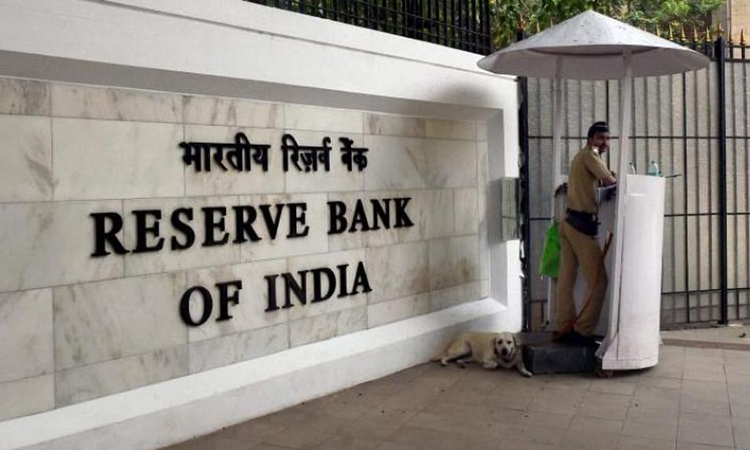
The debate over Reserve Bank of India's (RBI) rule that an Upper-Layer NBFC must list within three years has centered on whether the RBI can impose it. The more pressing question is what RBI can do when the deadline passes. The tools available to RBI fail on the factors that the fine is too small to deter, the license sanction fits the obligation poorly and neither reaches the shareholder who decides whether the company lists. However, the RBI can bridge this enforcement gap by extending its Prompt Corrective Action (PCA) Framework for NBFCs to listing defaults by deploying structured operational restrictions that directly compel shareholder compliance.
The recent Tata Sons dispute shows why. The Master Directions – Reserve Bank of India (Non-Banking Financial Companies – Governance) Directions, 2026 (Directions) requires an NBFC-UL to list within three years of identification. Tata Sons was identified in 2022 and passed the September, 2025 deadline without being listed. This shows that the regulator has fixed the obligation but not the path from breach to remedy.


The mandate itself rests on firm ground. In Peerless General Finance and Investment Co. Ltd. v. Reserve Bank of India, 1992 AIR 1033, the Supreme Court upheld RBI's power to issue binding directions to non-banking companies under sections 45J and 45K and declined to sit in judgment over economic policy. That settles the power to mandate listing, not the response to defiance.
The Clause (ii) versus (iv) Contest Matters Less Than It Seems
Section 45 – IA (6) of the RBI Act, 1934 lets RBI cancel a Certificate of Registration (CoR) if the NBFC breaches a condition of its registration (clause (ii)), fails the conditions in section 45-IA (4) (clause (iii)), or fails “to comply with any direction issued by the Bank under the provisions of this Chapter” (clause (iv)(a)). The first proviso requires RBI to offer an opportunity to comply before cancelling under clauses (ii) or (iii), “unless it is of the opinion that the delay in cancelling ... shall be prejudicial to public interest”. The second proviso requires a reasonable hearing before any cancellation. Section 45-IA (7) allows an appeal to the Central Government within thirty days.
A missed listing deadline is best placed under clause (iv)(a). The listing requirement is a generally applicable instruction to a defined class of NBFCs, not a term negotiated into an individual certificate. RBI's litigation practice points the same way. In Kandla Finance Ltd. v. Reserve Bank of India, S.C.A. No. 16918 of 2021 the Court held that the cancellation of registration because of non-compliance with the net-owned-fund mandate was under clause (iv)(a), and that the first proviso applies only to clauses (ii) and (iii). In Hindon Mercantile Bank Ltd. v. The Government of India, W.P.(C) 1804/202 the show-cause notice described the same default as a violation of directions under Chapter III-B.
The issue at hand can be narrowed down to three arguments. First, it can be argued by an NBFC-UL that its registration is dependent on the listing in the stock market and this mandates the RBI to give it a cure window before cancelling its license. Secondly, even if the court rules in favor of the NBFC-UL on the first issue the RBI can argue that the company is systematically significant enough to negatively impact “public interest” if it is allowed to bypass the cure window. Third, in practice the RBI already grants a de facto window to the companies. For example, in the Hindon case, the NBFC met the capital requirement before the cancellation order. As a consequence, the RBI's counsel accepted that remand was appropriate, and the Delhi High Court set aside the cancellation and without laying down a principle remanded it.
The listing rule also differs from the net-owned-fund rule in one important aspect. The circular quoted in the Hindon appellate order stated its own consequence: NBFCs missing the ceiling would not be eligible to hold a CoR and RBI would initiate cancellation. The listing rule does not provide for it. Therefore, it is the legislative silence and not a lack of statutory power which is the gap.
The Fines Do Not Deter and the License Action Misfires
For the NBFC the penalty imposed for non-compliance with the listing mandate is a cost of doing business. That leaves cancellation and it fits poorly. A systematically significant NBFC is kept inside the regulatory framework while exposing it to market discipline through the process of mandatory listing. But the permission to carry on regulated business is removed by the cancellation of registration. The threat may compel compliance, where the entity cannot operate without registration. But where it can discontinue or restructure the activity, or claim an unregistered category, cancellation may extinguish the status that created the duty and still cannot lead to listing. This is the cancellation paradox. The availability of harshest sanction can undermine the purpose of the specific obligation. RBI has the power to cancel the registration but it should only do it when the cancellation serves the regulatory purpose and not just because a deadline has expired.
Sanction Aimed at the Company Miss the Decision-Maker
In the recent Tata dispute, the decision to list remains with Tata Trusts and not with the regulated entity. Noel Tata has said that the Tata Trusts receive the income to fund their philanthropic activities from the dividends generated from the Tata Group companies. A reorganization proposal has also been sent to Tata Sons which according to the view of the Tata Trusts, fits within RBI's guidelines and could avoid listing. The cancellation would fall on the company, and the dividend stream that matters to the Trusts would be untouched until cancellation actually bit.
RBI regulates the NBFC, not its shareholders, so any remedy must run through the entity. It can still be built to reach the shareholder's economic interest. Section 58B (5) applies on its face to “any person” who fails to comply with a Chapter III-B direction, which raises an untested question whether those in control face personal exposure. That reading is speculative, and the safer route is a design that restricts what the entity can distribute.
Borrowing RBI's Own Ladder
The components are already supplied by the PCA Framework. It covers Middle, Upper and Top Layer NBFCs, including Core Investment Companies (CICs). Its menu includes restrictions on dividends and profit remittance, restrictions on guarantees for group companies (CICs only), governance actions such as RBI recommending that promoters or shareholders bring in new management, and, among special supervisory actions, a show-cause notice for cancellation. Exit requires four continuous quarterly statements without breach plus RBI's supervisory comfort. RBI may also publicize a placement under PCA, and the framework describes itself as a tool for effective market discipline.
PCA cannot be used as it stands. Its triggers are capital, leverage and asset quality, and it excludes government companies and NBFCs not accepting or intending to accept public funds. A listing ladder must therefore key off the listing obligation and be issued as a companion instrument. One design:
1. Trigger. Expiry of the three-year period without listing starts the ladder, with a public notice.
2. Stage one. Restriction on dividends and profit remittance, and a Board-certified statement of the controlling shareholders' position and specific obstacles.
3. Stage two. If the company does not file an offer document with SEBI within a set period actions like restrictions on group guarantees, restriction on investment in group entities and restriction on non-essential capital expenditure, with special supervisory monitoring can be taken.
4. Stage three. Board engagement and recommendations to shareholders. A show-cause notice for cancellation is reserved for willful refusal, as PCA places it last.
5. Exit. Completed listing, or relaxation of stage-two restrictions after an offer document is filed and four consecutive clean quarters follow.
The RBI can calibrate the period for each requirement. Each stage gives notice and time, which also blunts a procedural challenge on the question of clause (ii) versus (iv).
Answering the Objections
One might raise an objection that PCA addresses financial fragility while listing is structural. Though it is fundamentally true but only PCA's design carries over and not its trigger. It is an accepted position that a regulated entity's behavior can be changed by using mechanisms like graduated restrictions on distributions and group dealings. Another objection is that RBI already works informally through compliance roadmaps. It does, but an informal roadmap lacks published standards and timelines. It also lacks consequences. A fixed ladder still leaves RBI free to skip stages for evasion or pause them for genuine progress.
The listing mandate is valid but its enforcement is poorly designed. The fine does not deter and the cancellation may extinguish the status it is meant to leverage and nothing is aimed at the real decision-maker. RBI has already built a graduated ladder for capital and asset-quality breaches, and adapting it to listing defaults would close all three gaps.
Authors Arpit Jha and Devyani Sayal are fifth-year B.B.A.LL.B. (Hons.) students at Unitedworld School of Law, Karnavati University, Gandhinagar. Views are personal.


