



Trading Trees For Credits
Bandita Sarma
23 April 2026 3:00 PM IST
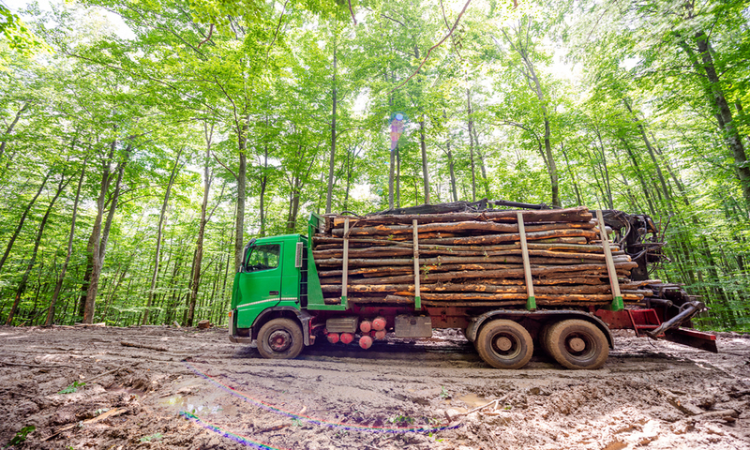
Image By: The World Wide Fund for Nature (WWF)
What Two Years of India's Green Credit Programme Revealed
What happens when a country decides that environmental obligation is best met through the market? India's Green Credit Programme (GCP), launched in October 2023, is two years into answering that question, and the answer is worth paying attention to. The Green Credit Programme was launched under India's flagship Lifestyle for Environment (LiFE) initiative with a huge promise. It was set to go beyond carbon to also reward tree plantation, water conservation, sustainable agriculture, and mangrove restoration, to name a few. With such an innovative infrastructure in place, India was moving towards pioneering the next generation of environmental and climate governance. Two years on, that promise has quietly narrowed. Only the tree plantation component has moved forward. The other initiatives, like water conservation, remain stalled with little to no progress. In sum, the GCP is, rather, more contested today than ever, and its fundamental problems are far from improved.
What is the Green Credit Programme in the first place? The GCP is a programme that aims to allow private entities to fund tree plantations on State Forest Department-marked degraded forest lands. Each tree that is planted with said funding generates a tradable Green Credit for the private entities. These credits, amongst other things, can be used to offset any compensatory afforestation obligation these private entities have under the Forest (Conservation) Act, 1980 (FCA). In fact, this interlink with the CA is often alleged to be one of the GCP's core design problems. The FCA has always required that any private entity that wishes to divert forest land for non-forestry purposes must mandatorily replenish or restore an exactly equivalent tract of forest nearby. What is interesting here is that this 'nearby' clearly implies that there is a site-specific obligation, which has been a mark of the FCA, and it's there with an aim, though a little imperfect, to support ecological balance. The GCP has completely overridden this site-specificity requirement, absolving private entities from any responsibility by permitting the usage of green credits to offset compensatory afforestation obligations. An entity could fund plantations wherever in the country, a location having nothing to do with where they have deforested. Essentially, there is no ecological balance because no replanting of lost forest is happening anywhere near deforested areas.


In 2024, the Ministry of Environment became prey to numerous petitions and open letters challenging exactly this very issue. Soon after, via a notification on 1st September 2025, the Ministry shared a revised methodology which reformulated how Green Credits are to be calculated and based it on the canopy density of the trees planted. It now requires trees to survive for a minimum of five years to qualify for green credits, and said green credits can only be used once, extinguishing thereafter. e
"A thing is right when it tends to preserve the integrity, stability, and beauty of the biotic community." - Aldo Leopold, A Sand County Almanac (1949)
Since the revised methodology, a new problem has emerged at the intersection of the GCP and India's Carbon Credit Trading Scheme (CCTS), which became active in 2025. Rule 14(5)(i) of the Van (Sanrakshan Evam Samvardhan) Rules, 2023, requires all entities registered for compensatory afforestation to simultaneously register with the Green Credit Registry, making the same afforestation activity eligible for both the Green Credits and the Carbon Credit Certificates. The result is that the same tree can now generate a Green Credit for the act of planting and a Carbon Credit Certificate for the carbon it sequesters. The same afforestation activity, once funded through green credits, also becomes eligible for carbon. This essentially means the environmental benefit of a single tree is effectively monetised twice.
But the story gets better. The Indian government, shortly after, took the GCP to the global stage. At COP28 in Dubai, the Prime Minister launched a Global Green Credit Initiative, explicitly inviting other nations to join a framework modelled on the GCP, to create a market beyond carbon credits. The political pitch was directed squarely at developing countries facing the same twin imperatives of conservation and development. Without doubt, the GCP is an attractive template for developing countries as it offers regulatory certainty, budgetary predictability, and a compliance framework that does not operate at the cost of development. Yet two years in, the GCP is a narrower and more troubled programme than at its inception in 2023 and seems to have unfortunately collapsed into a single activity that is tree plantations (mostly, monocultures at that). It did develop a new model of environmental governance, but counting the same tree counts twice, allowing destruction in one location to be restored in another, and making compliance purchasable is not faring well. The September 2025 revision, though meant to address some of these concerns by creating a stricter accounting methodology, did nothing to actually fix the problem. The revision made the accounting more rigorous without addressing whether the accounting was the right measure in the first place, and most importantly, ecological displacement remains a major issue.
This is where two years have brought the GCP: a tree plantation scheme with double-counting problems and an unresolved ecological displacement issue at its core. India surely is committed to offering a new model to the developing nations, one that simultaneously allows both environmental compliance and economic development, but two years of evidence reveal that the GCP's most successful product is not ecological restoration. It is only the appearance of it.
Author is a Law student at O.P. Jindal Global University. Views are personal.


