



Zombie Trademarks In Metaverse
Palak Gupta
28 Jun 2026 3:00 PM IST
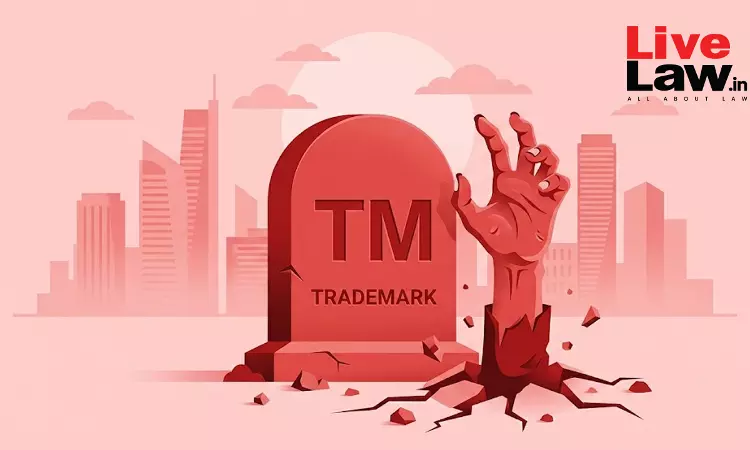
Can a dead mark be revived again? Can a trademark ever truly be considered dead? These are the foundational questions that modern intellectual property law must confront as commerce shifts toward digital frontiers. Logically, when the owner of the mark abandons it, it enters the public domain, and anyone should be allowed to use it. However, the commercial reality is far more complex.
When a mark is abandoned, it leaves behind a nostalgic consumer experience, has created its own Goodwill in the market, and, if an unrelated third party is allowed to use it, will create an unfair commercial advantage over the owner. This practice gives rise to the term “Zombie Trademark”: the act of bringing a legally dead mark back to life by an unrelated third party, provided the mark has residual goodwill, while not explicitly recognized by statute, courts have increasingly stepped in to protect the registered owner of the mark and stopped the use of the mark by third parties.
Simultaneously, the commercial landscape is being revolutionized by the Metaverse a term combining “meta” (transending) and “verse” (universe). It represents a digital environment analogous to the physical world, constructed on the backbone of extended reality (XR) technologies. Though still in its nascent developmental stages, the Metaverse is no longer confined to flat, virtual screens. Consider a practical example: a person named Paul invites his friends to his physical home. Through augmented reality (AR), virtual reality (VR), mixed reality (MR), and holographic projection, Paul's friends appear as 3D avatars directly in his physical living room. Meanwhile, those same avatars sit in a virtual meeting room within the Metaverse, interacting with Paul seamlessly across physical and digital divides.


Due to the convergence of these technologies, virtual worlds have become profitable marketplaces. Microsoft is actively planning for a world of digital avatars. Global fashion brands like Nike and Gucci create exclusive virtual apparel and accessories, and tech behemoths like Samsung and financial firms like J.P. Morgan have set up corporate stores in decentralized platforms like Decentraland.
Now, imagine a scenario where a historic trademark is legally abandoned by its original owner in the physical world, only to be resurrected by an opportunistic third party as a digital asset within the Metaverse. This blog explores the legal friction, consumer risks, and systemic advantages of deploying Zombie Trademarks within virtual economies, ultimately concluding whether this digital exhumation of dead brands should be legally permitted.
THE DEATH OF THE MARK: WHAT IS THE MEANING OF ABANDONMENT
A trademark has two lives, commercial and statutory. While the Statutory life of a mark varies with jurisdiction and depends on specific statutes, it is the commercial life of a mark that determines whether the mark is abandoned or not. The mark is alive until it is commercially exploited by the owner and becomes dead once it is legally abandoned. Although the Indian Trademark Act 1999 does not define abandonment, the guidance can be taken from the US Lanham Act, according to which abandonment refers to stopping the use of the mark without the plan to start again. The Karnataka High Court in The Official Liquidator Of V. Registrar Of Trade Marks, 2022:KHC:43730 has held that non-use alone does not amount to abandonment, but the intent not to use the mark in the future also matters. The court further held that during the liquidation, the trademark of the company remains with the official liquidator and is not open to be used by the public or any third party.
A threshold for a mark to be abandoned varies from country to country. For example, in India and UK a mark is considered abandoned when it is not in use for a period of 5 years, whereas in the USA, a mark is abandoned when it has not been in use for 3 consecutive years. This highlights the principle that even when a user has registered its mark for 10 years, it can still be abandoned and the registration can be cancelled, provided it has not been commercially exploited.
An abandonment can happen because of multiple reasons; sometimes it can happen because the mark is not commercially beneficial, the mark is not renewed, or maybe it is sold, and the new owner is not actively using the mark. Sometimes the abandonment can also happen when the company dissolves, or it is under litigation
However, abandonment does not entirely strip a mark of protection. The Delhi High Court in Boman R. Irani vs. Rahid Ahmad Mirza (2017) 239 DLT 699, a case involving the iconic motorcycle brand “YEZDI”, where the original owner (the plaintiff) had not used the trademark for decades, but sued a footwear manufacturer(defendant) who newly adopted the mark. The Delhi High Court ruled that even if the original owner abandoned the mark, it retained residual goodwill. The court provided an interim protection to the plaintiff and ordered the defendant not to show any relation of his footwear brand to the motorcycle brand of the plaintiff.
This judicial interpretation suggests that the third party in India is not altogether restricted from adopting an abandoned mark; it depends on the intent of the third party. If a third party adopts a mark with bona fide (good faith) intent in an entirely unrelated market, it may be permitted. However, if they adopt it to deliberately take advantage of the residual goodwill of the trademark, the court will intervene.
THE METAVERSE LOOPHOLE: JURISDICTIONAL AND CLASSIFICATION VACUUMS
Traditional trademark rules rely heavily on the physical world: clear geographic borders, tangible goods, and rigid government categories. The Metaverse completely tears up this rulebook, creating a regulatory grey zone that serves as an optimization engine for zombie trademark exploitation. For the third party to create a replica of the Zombie mark requires a lot of work to be done, but the metaverse provides a safe place, where the third party does not need to invest in the creation of factories or the workforce, rather just designing the products in the virtual world, similar to that of the physical world, and taking advantage of it.
Let's imagine a fictional real-world problem: X, a real owner of the mark, created a highly successful brand with recognised brand value, but was forced to shut it down because of financial hardship. Zeus, a third-party being actively present in the metaverse, opened a store in the metaverse with the same mark. Because the X is absent from the Metaverse, Zeus can freely exploit the brand's residual goodwill without anyone to stop him. Zeus's strategy relies on a massive classification loophole. Under the international Nice Classification system, trademarks are divided into distinct categories: class 25 for physical clothing, class 9 for software, and for non-fungible tokens. Zeus can register his trademark in an entirely different class from the already existing trademark. This will give Zeus an unfair advantage and will give a chance of exploiting the already existing mark.
When a consumer buys the products, he does not see whether the mark belongs to class 9 or 25, but it is bought based on the mark. If this trend is allowed to continue, it will cause deception to the consumers, who will buy the good on the pretext of its goodwill.
Under existing statutory frameworks, Zeus would likely succeed. His Class 9 registration is technically distinct, X has no Metaverse presence, and abandonment timelines have been met. This outcome, though legally defensible, completely defeats the consumer protection purpose of the trademark Act.
Because major active brands like Nike, Gucci, and Adidas routinely launch virtual clothing, digital spaces, and avatar skins, consumers now naturally expect that a luxury or heritage brand existing in the physical world has an official, authorized presence in the virtual world. Consequently, when a consumer encounters a virtual sneaker or digital luxury watch bearing a famous zombie trademark in the Metaverse, they do not assume it is an unrelated, newly registered Class 9 digital asset. They assume it is an official digital extension or a nostalgic revival backed by the original heritage brand. The low structural friction of the Metaverse, where an asset can be coded and sold globally in minutes, amplifies this deception at a scale impossible in physical markets.
SHOULD THIS PRACTICE BE ALLOWED?
The intersection of Zombie Trademarks and the Metaverse marks a critical turning point for intellectual property jurisprudence. Allowing third parties to freely unearth and monetize abandoned trademarks in virtual spaces under the guise of “new digital classifications” creates a dangerous precedent. It honors the absolute letter of statutory abandonment timelines while completely violating the underlying purpose of trademark law: to protect consumers from source confusion and to preserve fair market competition.
The practice of exploiting zombie marks in virtual worlds should not be permitted when it explicitly relies on consumer deception. While statutory law must allow abandoned words to return to the public domain to prevent digital hoarding, a clear line must be drawn when a third party adopts a defunct mark specifically because its historical residual goodwill remains potent enough to mislead the public.
Author is a third-year B.Sc. L.L.B student at National Law Institute University. Views are personal.


