From Brain Death to Bureaucratic Delay: A Critical Appraisal of India's Organ Transplant Regime
Priyanshu Kumar
27 Jan 2026 10:10 AM IST
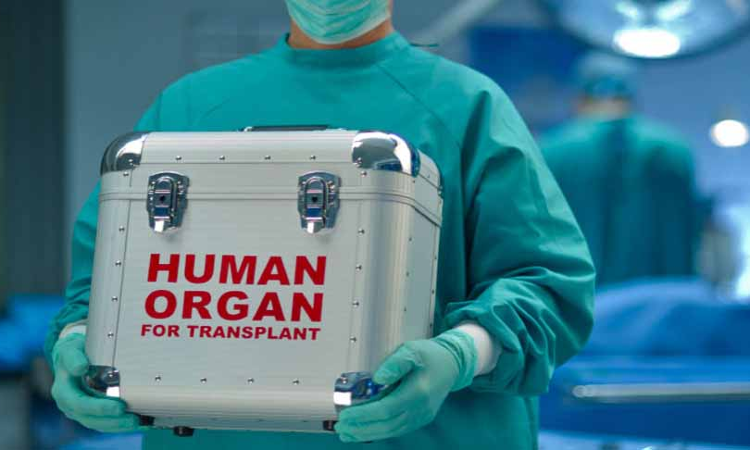
The global organ donation shortage faced by people suffering from final-stage organ disease and the need for an organ transplant has led to a surge in organ trade in India, where impoverished people sell their organs. To combat organ trafficking and ensure fair distribution of cadaver donor organs, many countries have enacted legislation to control organ transplants.
In India, the legislation "The Transplantation of Human Organs Act, 1994[1]" was enacted in 1994 and guidelines were established in 1995. The key aspect of the Act was the ratification of brain death as a means to place consent on the recovery of organs from brain dead individuals.
Key aspects of the Act include: (1) regulation of removal of cadaver donor organs for transplant purposes; (2) regulation of removal of living donor organs; (3) regulation of hospitals; (4) regulation of doctors; and (5) punishment of individuals who violate the Act. The Transplantation of Human Organs Act, 1994 adequately regulates both living donor and cadaver donor transplants, however, the process for obtaining approval for a living donor transplant has become extremely complicated and difficult to complete even in true-related cases. Additionally, swap transplants or paired donation of organs between related individuals is treated as unrelated donor transplants and the time for securing approval for these transplants is prolonged.


David Hume and Joseph Kelly, both doctors at Peter Brigham Hospital (Boston, Massachusetts), performed the very first successful organ transplant in modern history - a kidney transplant - in 1954. The very first kidney transplant in India took place on December 1, 1971 at Christian Medical College, Vellore (Tamil Nadu). And for some decades, organ transplantation in India has evolved through various phases. At the very initial stage, the focus was on mastering surgical techniques and immunosuppression protocols. And the success in kidney transplants led to a surge in unrelated donors motivated by financial benefits, facilitated by middlemen, creating a burgeoning “organ trade market.” This exploitative practice drew significant criticism, prompting legislative action. “The Transplantation of Human Organs Act (THOA), 1994”, was a watershed moment, criminalizing commercial transplants while legalizing cadaver donations under stringent guidelines. Framed in 1995 and amended in subsequent years, this Act aimed to curb unethical practices while promoting cadaver organ transplants. However, challenges like organ shortages, persistent illegal trade, and limited uptake of cadaver donations persist.
Transplantation of Human Organs Act, 1994
Organ transplantation in India is governed by a robust legal framework aimed at balancing medical needs with ethical considerations. This particular article examines the legal and the ethical aspects of the organ transplantation, focusing particularly on the role of screening committees, the evaluation process for near relatives, and the authorisation of non-near relatives or foreign donors. Drawing on the “Transplantation of Human Organs and Tissues Act (THOTA), 1994”, and its amendments, this analysis highlights procedural safeguards and ethical concerns in the screening and authorisation processes. The THOA, enacted in 1994 and amended in 2011 and 2014, sought to curb organ trade and promote cadaver donations. 4 Key provisions include:
• Regulation of hospitals and tissue banks: Hospitals performing transplants must be registered with appropriate authorities, which evaluate infrastructure, personnel qualifications, and compliance with prescribed standards (“THOA, 1994”, “Sections 13–15”). Separate guidelines govern tissue and cornea banks.
• Authorisation committees: The Act mandates the formation of authorisation committees (ACs) at the state and district levels to scrutinise applications for organ transplants involving unrelated donors. These committees aim to prevent undue pressure or financial inducement while verifying the claimed relationship between donors and recipients (“Transplantation of Human Organs and Tissues Rules, 2014, Rule 7[2]”).
• Brain death and cadaver transplants: The Act legitimised brain death and introduced protocols for its determination by a board of medical experts. This milestone facilitated cadaver donations while protecting donor rights [THOA, 1994, Section 3(6)]
Regulation of Cadaver Donation in India
The Act governs the donation of human cadavers, and Sections 3 - 8 are the relevant provisions. Section 3 states that anyone can give prior written permission for the extraction of organs from their corpse before they die, as long as it is done in front of two or more witnesses. Form 7 of the “Transplantation of Human Organs and Tissue Rules of 2014” specifies how to write this form of consent. It is now possible to write a consent for organ donation directly on a driver's licence also. If there is no written consent prior to their death, then particularly the person having the legal possession/Authority of the deceased's body may grant permission to have any organ removed from the deceased's body, provided they do not know of, or have reasonable cause to be believing that any close relative of the deceased objects to this. This law does not permit the assumption that consent was given by the deceased for organ donation, as is done in several other countries, such as Spain, but requires that the donor or the person having lawful possession/Authority of the deceased's remains give express informed consent for organ donation.
Regulation of Living Donation
Living Donation is addressed through "Section 9". The law has specific procedures for living donation from either a family member or from someone not related to the donor. "Section 2(i)" states that a person can be considered a family member by virtue of being married, being a son/daughter of someone else and so on. A person who is a family member should apply with either Form1, if the donor is married to him/her, or Form2 if the donor is related but not married to him/her, and file it with Form 11, from the "Rules for the Transplantation of Human Organs and Tissues 2014", to the appropriate authority, generally the hospital administration where the transplant will occur or its Hospital Authorization Committee. The committee will interview both the donor and the recipient along with their families, and if they are satisfied, grant approval for the transplant to occur. All interviews are tape recorded.
Although the role of the Authorisation Committee is to evaluate the relationship between the recipient and the donor, rather than the medical aspects of transplantation, there are times when the committee does become involved in medical considerations.
Situation of Shortage of Organs in India
In India, there exists a significant discrepancy between organ donation and organ requirement. Every year, approximately 180 million people in India experience end-stage kidney disease, yet there are only approximately 12,000 to 13,000 kidney transplants performed annually. The number of individuals dying from end-stage liver disease/death from liver cancer is estimated to be approximately 200,000 people, with only about 15 to 20 percent of individuals being eligible for a transplant. Thus, India will usually perform 25,000–30,000 liver transplants over the course of a year, including both live donor and deceased donor programs, but only about 1500 will actually take place. Approximately 50,000 people will experience the end-stage of heart disease annually, yet only about 10–15 heart transplants each year are reported. For cornea transplants, the need is estimated at 100,000 with only approximately 25000 transplants currently taking place each year[3].
Our national organ donation rate stands at 0.65 to 0.86 doners per million population. Although the Government of India passed the “THOA in 1994”, this paradigm shift toward cadaveric organs started from 2011 onwards only. Still, organ donation by a living donor is the mainstay of our human organs and tissue transplantation program.
The World Health Organisation has an unequivocal stance against the selling of organs[4]. Its statement regarding the sale of organs is explicit, stating very clearly that the sale of organs violates "the Universal Declaration of Human Rights" and violations of the World Health Organisation's official Constitution. As per the World Health Organisation, payments for organs, as well as the exchange of organs for payment, should be banned. The World Health Organisation also advises all physicians that if they have any reason to believe that an organ being transplanted was produced by a commercial transaction, they should not perform a transplant with that organ.
The representatives of the global transplant community recently had a meeting in Istanbul to address the surging global commerce in transplant donated organs, including the practice of "transplant tourism[5]", which the global transplant community defined as "transplant commercialism" (policy or practice in which an organ is treated as a commodity or good and either purchased, sold, or otherwise acquired for monetary gain). A recent Lancet editorial on this topic stated, "The success of transplantation as a life-saving treatment does not depend on and cannot be used to justify the exploitation of the world's poor people to obtain organs for the benefit of the wealthy." In India, with its very low deceased organ donation rate, there is a need to develop this option and appears to be the pathway to a viable solution for India's organ shortage problem.
Regulations of “Hospitals” and “Human Organ Retrieval Centres”
None of the hospital or Human Organ Retrieval Centre may start any procedures for the extraction, storage or transplantation of human organs or tissue until that hospital has been approved/registered under the provisions of the Human Organ Transplantation Act ("Section 13 and 14"). As a requirement to approve a hospital as a Human Organ Transplantation Centre under the Act, the facility must have the specialised environment, staff, and equipment to allow the hospital to complete the human organ transplantation process based on established standards and guidelines. The hospital must be capable of fulfilling the criteria set forth in the Act for registration as a Human Organ Retrieval Centre. This requires the hospital to operate its own ICU, including the necessary staff, equipment, and facilities in order to locate and maintain a brain stem deceased person. In addition, based upon Section 13 of the Act, an appropriate authority has been established to carry out the functions of providing the certificate of registration to a hospital under the provisions of the Act, and to have the authority to suspend or cancel the hospital's registration if it is found to be in breach of the provisions of the Act.
Regulation of Medical Practitioner
Section 3(4) of these Laws permits the extraction of organs from the human body to be done by a registered medical practitioner, and permits transplants only to be performed at hospitals licensed in accordance with these Laws. In accordance with section 2(n) of these Laws, registered medical practitioners do not require separate licensing under these Laws.
Furthermore, section 2(h) of the Indian Medical Council Act, 1956, provides definitions of 'registered medical practitioner' based on qualification and may list the state Medical Register as defined in section 2(k).
Section 3 of these Laws states that registrants must perform certain acts as outlined in this Law. Therefore, if registrants do not previously complete their assigned duties, they will be subject to consequences.
If the case is that a registered medical practitioner is considering a cadaver donor, the practising medical practitioner must ensure that the cadaver has been certified brain dead, as indicated above.
Once a potential cadaver donor has been determined to be over 18 years of age, a parent or similar legal guardian can grant permission for the donor to permit the removal of any portion of his/her body.
In the case of a living donor, the practising medical practitioner must provide the donor with a full explanation of the benefits, risks, and complications associated with the removal and implantation of that organ.
Punishment under the Act
In accordance with “Section 18” of the statute, if a person removes a human Organ without permission, they may be sentenced to up to 10 years imprisonment and could face a maximum penalty of Rs. 20 Lakh/. Also, if they are a medical professional registered with a State Medical Council, the Appropriate Authority must notify that Council so that they may take appropriate action, including the removal of their name from the Council's Register for a period not to exceed three years (for first offenders) or permanently ( for subsequent offenders ).
Under “Section 19” of the statute, commercial dealings involving Human Organs incur a minimum penalty of five (5) years and a maximum penalty of ten (10) years of imprisonment plus a minimum fine of Rs. 20 Lakhs and a maximum fine of Rs. 1 Crore. Under “Section 20” any criminal offence committed that violates any other Section of the Act will incur a maximum penalty of five (5) years of imprisonment and/or a maximum fine of Rs. 20 Lakhs.
Despite being enacted 31 years ago, the THO statute has failed to reduce illegal trade in human organs and to promote the Dead Donor Programme to increase the shortage of available organs. The global disparity between the supply of kidney transplants and the increasing demand for kidney transplants continues to widen. Increased global demand for human organs has fostered an environment conducive to the commercialization of these organs, especially in countries where a large percentage of population lives under abject poverty and there exists poor government regulatory systems. The resulting increase in transplant tourism has led to criticism and condemnation by many international organizations. India has an immense potential for increasing its rate of deceased organ donation as a consequence of having one of the highest rates of fatal motor vehicle accidents; however, this potential currently remains untapped. A limited number of hospitals and dedicated non-governmental organizations in India have demonstrated the feasibility of deceased donation. The ethical principles surrounding kidney transplantation will serve the society as a foundation upon which many disputes regarding future regenerative medicine will be settled.
The Transplantation of Human Organs Act, No. 42 of 1994, India.
https://legislative.gov.in/sites/default/files/A1994-42.pdf ↑
Transplantation of Human Organs and Tissues Rules, 2014, G.S.R. 571(E).
https://www.notto.gov.in/WriteReadData/Portal/Images/Rules-2014.pdf ↑
National Organ and Tissue Transplant Organisation (NOTTO), Organ Donation Statistics – India.
World Health Organization, Guiding Principles on Human Cell, Tissue and Organ Transplantation (2010).
https://www.who.int/publications/i/item/WHO-HTP-EHT-CPR-2010.01 ↑
Declaration of Istanbul on Organ Trafficking and Transplant Tourism (2008).
The Author Is A Law Student
Views Are Personal