



- Home
- /
- News Updates
- /
- 'Facing Severe Pressure, Must Be...
'Facing Severe Pressure, Must Be Examined At Earliest': Approver Pradosh Tells Court In Renukaswamy Murder Case
Sebin James
28 Aug 2026 3:45 PM IST
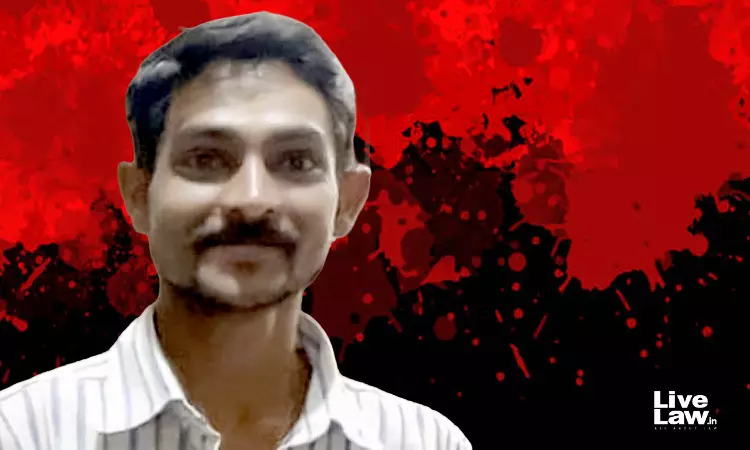
In a significant development in the high-profile Renukaswamy murder case, Pradosh Rao-accused turned approver in the trial- urged the court on August 27 [Thursday] to record his statement immediately, saying that the co-accused have no right to postpone examination of approver any further.Pradosh Rao was granted pardon and made an approver on August 25, 2026 previously by the...
This is a premium content
Available exclusively to
Our subscribers
Subscribe Premium 
INR 1099+GST
Your support helps us to bring you more content at
an affordable subscription scheme !!!
All payment options available
In a significant development in the high-profile Renukaswamy murder case, Pradosh Rao-accused turned approver in the trial- urged the court on August 27 [Thursday] to record his statement immediately, saying that the co-accused have no right to postpone examination of approver any further.
Pradosh Rao was granted pardon and made an approver on August 25, 2026 previously by the court.
Appearing before the LVIII Additional City Civil and Sessions Court Judge S.M Sambrani, Pradosh submitted that he was being subjected to severe pressure.
The submission was made by Pradosh after Darshan sought further time to examine the approver as a witness since the Actor wanted to prefer an appeal after receiving the order copy [of conditional pardon].
“… Ld. SPP submits that after the examination of PW19, they want to examine Accused No.14 as witness. Ld. Sr. Counsel for A2 prays time to examine Accused No.14 as witness, as they have not yet received the copies and they want to prefer appeal and after that, Accused No.14 may be examined. …Ld. Sr Counsel for A14 submits that the statement of Accused No.14 may be recorded at the earliest possible time as the Accused No.14 is facing severe pressure and the right of the accused persons to cross-examine the witness is available to them and other accused have no right to postpone the examination of Accused No.14 for any reasons….”, the court observed in the order.
Previously, Pradosh was directed to read the pardon order and state his acceptance. Upon enquiry by the court yesterday, he submitted that he had gone through the order and accepted the conditional pardon.
The court had granted pardon to the accused based on three conditions:
(i) Accused No.14 shall disclose full and true disclosure of the whole of the circumstances within his knowledge relating to the offences and to every other person at the time of his examination as a witness.
(ii) Accused No.14 shall be retained in the custody until the conclusion of the trial.
(iii) If accused No.14 willfully conceals anything essential or gives any false evidence or fails to comply with the conditions imposed herein, his status shall be changed back to that of an accused and he shall be liable to be tried for the offences alleged against him by the prosecution, as well as for giving false evidence.
Context
The development comes in the backdrop of the Karnataka High Court's judgment dated August 13, 2026, where Justice M. Nagaprasanna dismissed the petition filed by Kannada actor Darshan (accused No. 2) challenging the trial court's refusal to allow him to file objections to Pradosh Rao's application to turn approver.
The court had then held that a co-accused has no right of audience at the stage when a court is considering an application by another accused seeking pardon and permission to turn approver under Section 307 CrPC.
“….You are nobody. An accused is a nobody to say another co-accused turning an approver and his application for the same should seek the other accused's approval, or else, the application is not maintainable," the court orally observed.
Darshan had approached the High Court against an order of the trial court rejecting his request to file objections to the application filed by Pradosh Rao, Accused No. 14, seeking permission to turn approver in the high-profile murder case.
The trial court had held that, at the stage of considering an approver application, the persons concerned are the accused seeking pardon, the prosecution and the court, and that the other co-accused have no right to participate.
Darshan had then contended that principles of natural justice entitled a co-accused to be heard while an application under Section 307 CrPC was being considered. It was argued that since a co-accused could challenge an order granting pardon in revision, they should also have a right of audience at the stage when the application for pardon was considered.
The Court, however, rejected the contention, noting that the issue was already covered by its earlier decision in Vinay Kulkarni, authored by Justice Nagaprasanna himself, against which the Supreme Court had declined to interfere.
The Court further said that Darshan could raise his objections at the appropriate stage after an order on the pardon application was passed.
Case Title: Kamakshipalaya P.S V. Pavithra Gowda & Ors
Case No: SC 1319/2024
Sebin James
Sebin James is a Correspondent with LiveLaw, covering the Karnataka High Court

