



- Home
- /
- News Updates
- /
- Provisionally Enrolled Advocates...
Provisionally Enrolled Advocates Can Practice Freely For 2 Years Pending AIBE, But Can't Vote In Bar Elections: BCI
Sebin James
3 Aug 2026 9:24 PM IST
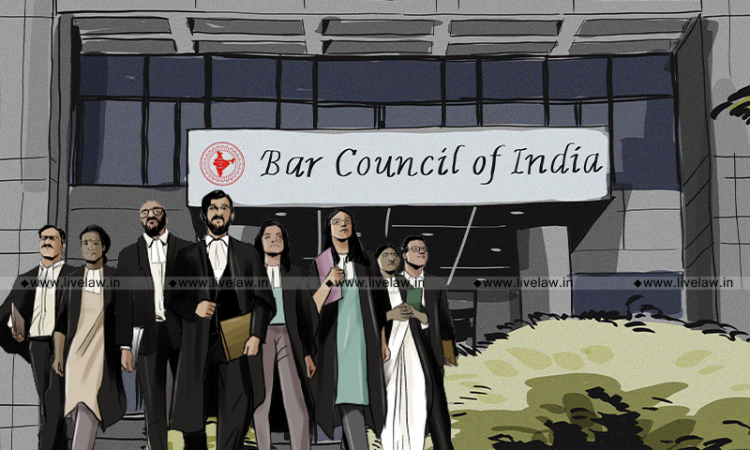
The Bar Council of India (BCI) has issued a detailed clarification confirming that provisionally enrolled advocates are fully entitled to practice law immediately upon enrolment, without having cleared the All-India Bar Examination (AIBE), during the prescribed two-year period.The BCI clarified that advocates enrolled by State Bar Councils are entitled to practice law in its entirety during...
This is a premium content
Available exclusively to
Our subscribers
Subscribe Premium 
INR 1099+GST
Your support helps us to bring you more content at
an affordable subscription scheme !!!
All payment options available
The Bar Council of India (BCI) has issued a detailed clarification confirming that provisionally enrolled advocates are fully entitled to practice law immediately upon enrolment, without having cleared the All-India Bar Examination (AIBE), during the prescribed two-year period.
The BCI clarified that advocates enrolled by State Bar Councils are entitled to practice law in its entirety during the prescribed two-year period, which includes signing Vakalat Namas and appearing before courts, without having cleared the AIBE.
"An advocate is fully entitled to practise the profession of law immediately upon enrolment and for the prescribed period of two years pending AIBE. The right includes all litigious and non-litigious legal practice. The expression "provisional" does not curtail the scope of practice during those two years. It only makes the continuation of the right to practise beyond two years dependent upon passing AIBE...Separate from the right to practise, the advocate shall not possess voting rights, the right to contest Bar Association elections or entitlement to welfare benefits until AIBЕ is passed".
The BCI stated that the description of the enrolment or certificate as 'provisional' does not restrict the nature or extent of the professional work which may be undertaken during the prescribed two-year period.
“…The provisional character relates only to the continuance of the right to practise beyond that period. It does not mean that the advocate possesses only a partial or restricted right to practise during the valid period of enrolment," the clarification stated.
While advocates have full practice rights during the two-year period, the BCI clarified that they cannot vote in Bar Association elections or receive welfare benefits until they pass AIBE.
The BCI noted that its Circular No.4/2013 dated April 12, 2013 expressly provides: "Those candidates should not get the right of voting and if any Association decides to admit them as its member, their membership should be totally provisional with no voting-right."
The BCI further clarified that advocates who have not passed AIBE are not entitled to contest elections to any office or committee of a Bar Association.
“…A person who is not entitled to vote cannot claim the higher electoral right to contest an election or hold an elected office”, the BCI said further.
The clarification comes in response to a writ petition filed before the Karnataka High Court by seven provisionally enrolled advocates from the Karnataka State Bar Council, who sought a direction in the nature of mandamus permitting them to sign Vakalatnamas and appear before courts despite not having cleared AIBE.
The single judge bench of Justice S.R. Krishna Kumar had earlier disposed of the writ petition on July 2, 2026, directing the Karnataka State Bar Council and the Bar Council of India to consider the petitioners' representations within one month.
Accordingly, now the BCI issued an authoritative clarification on the legal position governing provisionally enrolled advocates.
At the outset the BCI clarified that while the high court order does not decide the substantive legal issue against the advocates concerned or against the framework prescribed by the Bar Council of India. It states that the high court did not hold that an advocate enrolled before passing AIBE is prohibited from practising or filing a vakalatnama; but merely directed the respondents therein to consider the representations and pass an appropriate orders in a month.
The BCI, through its Principal Secretary Srimantho Sen, issued a comprehensive letter answering ten specific queries regarding the rights and restrictions applicable to advocates who have not yet cleared AIBE.
The BCI has now also directed the Karnataka State Bar Council to decide the representations strictly in accordance with the aforesaid clarification. It shall also communicate the correct legal position to all recognised Bar Associations and other concerned authorities within its jurisdiction so that no enrolled advocates are unlawfully prevented from practising during the valid two-year period.
“...No Bar Association or other authority shall impose any condition inconsistent with the uniform AIBE framework prescribed by the Bar Council of India and affirmed by the Constitution Bench of the Hon'ble Supreme Court”, the BCI stated.
The Karnataka State Bar Council has also been directed to submit an action-taken report to the Bar Council of India within seven days from receipt of the communication.
In the communication, the BCI unequivocally clarified that once a person possessing the prescribed qualifications is enrolled as an advocate by a State Bar Council, that person is entitled from the date of enrolment to practice the profession of law during the prescribed period of two years available for passing AIBE.
“…The advocate is entitled during this period to undertake the full range of professional activities permissible to an advocate, including litigious as well as non-litigious legal practice," the BCI stated.
Such an advocate may sign and file vakalatnamas, act and plead before courts, tribunals and other legally competent forums, advise and represent clients etc. The said advocates could also draft pleadings, petitions, notices, agreements and legal opinions, undertake conveyancing, arbitration, mediation, negotiation and consultation, and perform every other professional function lawfully undertaken by an advocate.
The BCI clarified that the prohibition against practice arises only if the advocate fails to pass AIBE within the prescribed period. If an advocate fails to pass AIBE within two years from the date of enrolment, the advocate's licence and right to practice shall stand suspended until AIBE is passed.
During the period of suspension, the advocate cannot sign or file a vakalatnama and act or plead before any court, tribunal or authority;
The BCI clarified that suspension does not amount to cancellation of enrolment or removal of the advocate's name from the State roll.
“…The original enrolment continues to subsist, but the licence and right to practise remain inoperative and under suspension during the period of failure to qualify AIBE. Upon subsequently passing AIBE and completing the prescribed formalities, the suspension of the right to practise shall cease and the advocate shall be entitled to resume practice”, the BCI stated.

Sebin James
Sebin James is a Correspondent with LiveLaw, covering the Karnataka High Court

