



- Home
- /
- News Updates
- /
- Madhya Pradesh SLSA Launches...
Madhya Pradesh SLSA Launches India's First 40-Hour Mediation Training Programme For Hearing-Impaired Professionals
LIVELAW NEWS NETWORK
16 March 2026 12:16 PM IST
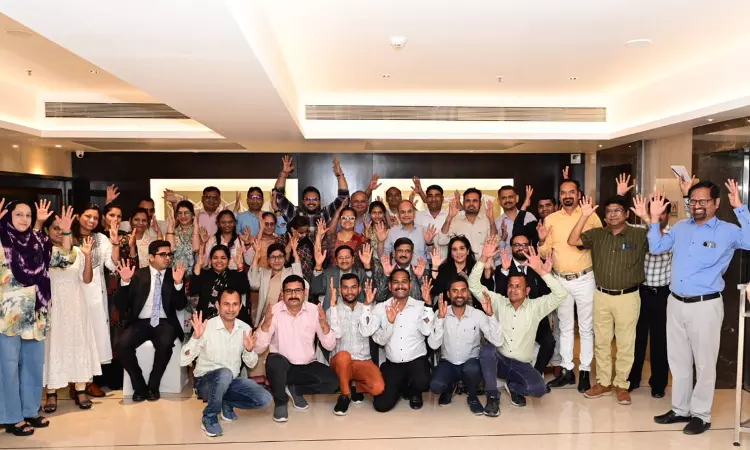
In a significant step towards promoting inclusive access to justice, the Madhya Pradesh State Legal Services Authority (MPSLSA) has commenced India's first physical 40-hour Mediation Training Programme for hearing-impaired professionals and sign language interpreters. The five-day intensive training programme is being conducted in Indore in collaboration with the District Legal...
This is a premium content
Available exclusively to
Our subscribers
Subscribe Premium 
INR 1099+GST
Your support helps us to bring you more content at
an affordable subscription scheme !!!
All payment options available
In a significant step towards promoting inclusive access to justice, the Madhya Pradesh State Legal Services Authority (MPSLSA) has commenced India's first physical 40-hour Mediation Training Programme for hearing-impaired professionals and sign language interpreters. The five-day intensive training programme is being conducted in Indore in collaboration with the District Legal Services Authority, Indore, under the aegis of the Mediation and Conciliation Project Committee (MCPC), Supreme Court of India, New Delhi.
The initiative has been undertaken under the leadership of Justice Sanjeev Sachdeva, Chief Justice of the High Court of Madhya Pradesh and Patron-in-Chief, MPSLSA, and under the guidance of Justice Vivek Rusia, Administrative Judge of the High Court of Madhya Pradesh and Executive Chairman, MPSLSA.
The programme was inaugurated by Justice Vijay Kumar Shukla, Judge, High Court of Madhya Pradesh and Chairman, High Court Legal Services Committee, Indore.
Addressing the participants, Justice Shukla emphasised that mediation represents one of the most humane and participatory forms of justice, where dialogue replaces confrontation and mutual understanding leads to sustainable solutions. His Lordship observed that the justice delivery system must constantly evolve to ensure that the benefits of dispute resolution mechanisms reach every section of society. Training hearing-impaired professionals and sign language interpreters in mediation, he noted, is a meaningful step toward making alternative dispute resolution mechanisms more inclusive and accessible.
Suman Shrivastava, Member Secretary, MPSLSA, highlighted that mediation is fundamentally rooted in understanding, empathy and communication. Emphasising the significance of the initiative, she observed that words are not always necessary for mediation, as genuine dialogue often emerges through patience, trust and sensitivity to the concerns of others. She noted that the training programme seeks to empower hearing-impaired participants with the knowledge and practical skills required to facilitate dialogue and assist in the amicable resolution of disputes.
The training programme is being conducted by experienced trainers Anuja Saxena and Reema Bhandari, nominated through the MCPC, Supreme Court of India. Over the course of forty hours, participants will receive structured training covering the philosophy of mediation, communication techniques, negotiation strategies, conflict analysis, mediator ethics and practical mediation exercises.
The programme also focuses on developing skills essential for effective mediation such as active listening, non-verbal communication, structured dialogue, caucus techniques and methods of facilitating consensual settlements. Participants are also being introduced to the legal framework governing mediation in India, including the principles underlying Section 89 of the Code of Civil Procedure and the professional standards expected of mediators.
The initiative has received support from Anand Service Society, and Gyanendra Purohit played an important role in facilitating coordination with the hearing-impaired community and enabling the participation of trainees in the programme.
Among those present on the occasion were Anoop Kumar Tripathi, Principal Registrar, High Court of Madhya Pradesh, Bench at Indore; Shivraj Singh Gawli, Secretary, District Legal Services Authority, Indore; Aniruddha Jain, Deputy Secretary, MPSLSA; and Deepak Sharma, District Legal Aid Officer.
The programme was conducted by Aniruddha Jain, Deputy Secretary, MPSLSA, while the vote of thanks was delivered by Shivraj Singh Gawli, Secretary, District Legal Services Authority, Indore.
The programme has witnessed enthusiastic participation from hearing-impaired professionals and sign language interpreters undergoing formal training to develop skills necessary for facilitating dialogue and resolving disputes amicably within their communities.
Participants undergoing training have been selected from various districts across the State of Madhya Pradesh. Upon successful completion of the programme, they will be empanelled with the District Legal Services Authorities of their respective districts and will be engaged in mediation and dispute resolution processes involving persons with hearing impairment, thereby strengthening inclusive access to justice at the grassroots level.
This initiative of the Madhya Pradesh State Legal Services Authority reflects continuing efforts to make dispute resolution mechanisms more inclusive and accessible, reaffirming that meaningful dialogue is not limited to spoken words but can also emerge through empathy, understanding and alternative forms of communication.
Tags


