



- Home
- /
- News Updates
- /
- NCERT Textbook Chapter Seemed To Be...
NCERT Textbook Chapter Seemed To Be Agenda To Threaten Judiciary : Sr Adv AM Singhvi
Upasana Sajeev
28 Feb 2026 4:47 PM IST
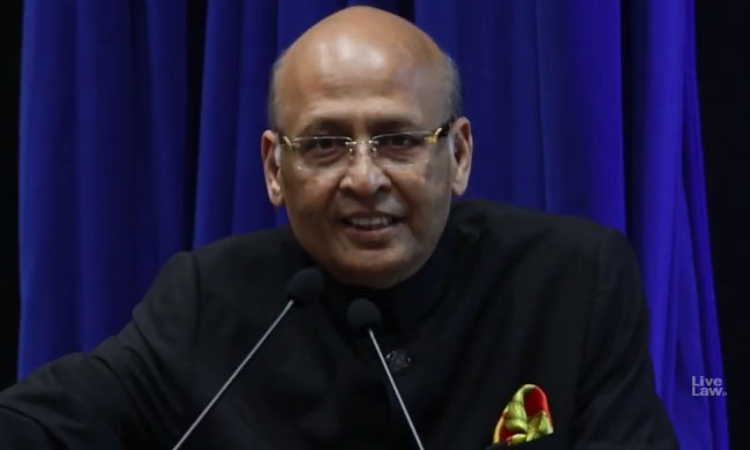
The corruption issue was selectively portrayed as if to target the judiciary, he said.
While speaking at an event in Delhi on Saturday (February 28th), Senior Advocate and Rajya Sabha MP Abhishek Manu Singhvi, remarked that the judiciary's anger and reaction regarding the NCERT textbook issue was being misunderstood. Singhvi pointed out that the anger was only towards the selective highlighting of corruption in the judiciary when it was rampant in many sectors of...
This is a premium content
Available exclusively to
Our subscribers
Subscribe Premium 
INR 1099+GST
Your support helps us to bring you more content at
an affordable subscription scheme !!!
All payment options available
While speaking at an event in Delhi on Saturday (February 28th), Senior Advocate and Rajya Sabha MP Abhishek Manu Singhvi, remarked that the judiciary's anger and reaction regarding the NCERT textbook issue was being misunderstood.
Singhvi pointed out that the anger was only towards the selective highlighting of corruption in the judiciary when it was rampant in many sectors of society, and not speaking anything about dealing with it institutionally.
“I think the reaction or anger is being misunderstood. There can be no two views about the fact that there are black sheep in the judiciary as in every other sector and that the C-word is a major issue right after arrears. But that was not the issue at all. The problem is the selectivity of the two page chapter. It suddenly, out of the blue, plucks out for the first time 2 pages on judiciary, doesn't seek to deal institutionally with corruption which is rampant in bureaucracy, political class, in politicians and so many sectors of our system. It is plucked out and placed out of context as if it is targeting one. That is a matter of concern,” Singhvi said.
Another reason for the issue, Singhvi said, might be that the chapters were introduced in the minutes of the meeting out of the blue, without careful scrutiny. Singhvi added that if such was the case, it was possible that the chapters were included as part of an agenda to intimidate and threaten the judiciary. However, Singhvi refrained from speaking much on the issue as the matter was under judicial scrutiny.
“Secondly, this was possibly introduced in the minutes of meeting out of the blue without careful scrutiny from the top. In which case, it is possibly out of agenda of some people to weaken, threaten, intimidate, control the judiciary. It is for the judges to decide,” he said.
Singhvi was speaking at the second edition of “Justice Unplugged: Shaping the Future of Law” hosted by The Hindu in partnership with the VIT School of Law at Delhi.
Speaking on “Law, Leadership and Nation Building”, Singhvi encouraged young lawyers to take the responsibility of working for liberty and for strengthening the constitution. He pointed out that the success of a lawyer was not measure by the reportable judgments he/she had in their name but the way in which they had contributed to strengthening the constitution.
Singhvi also gave examples of how leaders like Mahatma Gandhi, Jawaharlal Nehru, BR Ambedkar, Sardar Vallabhai Patel, and others had taken their skills as a lawyer and used it for the betterment of the society through leadership.
Highlighting the power of constitution and the role that lawyers play in a democracy, Singhvi remarked that cases like the Kesavananda Bharathi case, Maneka Gandhi case, etc were examples of how a law is vibrant, pulsating, and non-static concept. He added that the constitution continued to grow with lawyers.
Following his inaugural address, a question & answer session was also conducted. One of the questions was how Singhvi viewed the recent NCERT issue which prompted him to make the comments above.
It may be noted that on February 24, some media reports published that the new NCERT social science textbook for Class 8 listed 'corruption in judiciary' and case backlogs as major challenges. On February 25, an oral mentioning was made by Singhvi and Senior Advocate Kapil Sibal who said that the content scandalised entire judiciary. The CJI, in response, said that he was aware of the issue and would not permit anyone to taint the integrity of the institution. The court also registered a suo motu case against the issue.
On February 26, the court banned the said NCERT textbook and issued a contempt notice to the NCERT Director and the Secretary of School Education, Ministry of Education. The court prima facie observed that the publication of the book is a serious misconduct, which can come within the purview of criminal contempt of court, if proved to be a deliberate act to scandalise the judiciary.
On the issue of backlogs in courts, Singhvi said that the main reason is the inadequate number of judges; he pointed out that India has a very low judges-to-population ration, and timely appointments are needed.
"Our country has the most progressive, greatest inventions of law. Nobody has PILs, basic structure. We are considered the investors of such doctrines. We also have the best and brightest in law, both on this side and the bench. And yet we have to hang our head in shame due to arrears which have now doubled. This is something that's terrible. All the best and brightest are nullified and there's complete denial of human rights. There's no doubt about it. What's required is to take up 5 or 10 solutions and uninterruptedly implement them for 10 years. We'll start finding results. The answer is simple. One, judges. We need more judges. We can't have hospitals with top facilities without doctors. Second, we need to start appointing people on time," he said.
Live updates can be followed here :
VIT School of Law in partnership with The Hindu is organising the second edition of "Justice Unplugged 2026: Shaping the Future of Law" today at New Delhi @the_hindu pic.twitter.com/7Wq3lBPavY
— Live Law (@LiveLawIndia) February 28, 2026
Upasana Sajeev
Upasana Sajeev is a Principal Correspondent with LiveLaw, covering Madras High Court

