



- Home
- /
- News Updates
- /
- 'Menace To Society': Odisha Court...
'Menace To Society': Odisha Court Sentences Man To Death For Rape & Murder Of 4-Yr-Old Girl
LIVELAW NEWS NETWORK
13 April 2026 10:09 AM IST
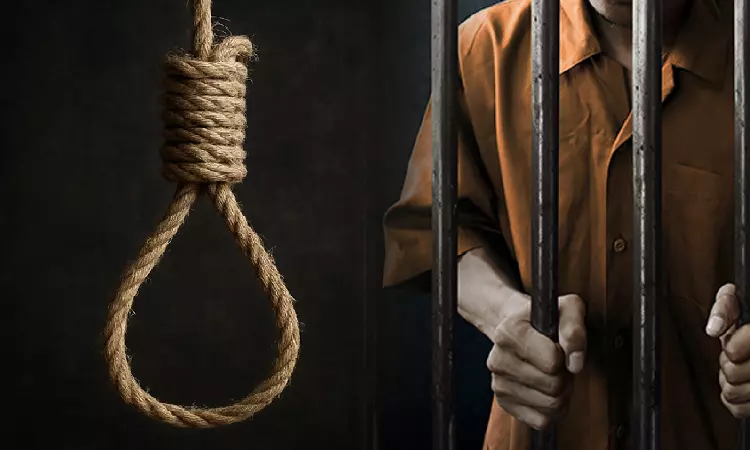
A Special Court in Odisha's Angul district imposed the extreme punishment of death on a man found guilty for commission of brutal rape and murder of a four-year-old toddler in March 2025. While pronouncing the verdict in the open Court on Friday (April 10), Ms. Soumya Subhadarshini, Additional Sessions Judge-cum-Special Court under the POCSO Act, Angul remarked–“Child rape cases are cases...
This is a premium content
Available exclusively to
Our subscribers
Subscribe Premium 
INR 1099+GST
Your support helps us to bring you more content at
an affordable subscription scheme !!!
All payment options available
A Special Court in Odisha's Angul district imposed the extreme punishment of death on a man found guilty for commission of brutal rape and murder of a four-year-old toddler in March 2025.
While pronouncing the verdict in the open Court on Friday (April 10), Ms. Soumya Subhadarshini, Additional Sessions Judge-cum-Special Court under the POCSO Act, Angul remarked–
“Child rape cases are cases of perverse lust for sex where even innocent children are not spared in pursuit of the sexual pleasure. There cannot be anything more obscene than this. It is a crime against humanity. A girl child is always in a very vulnerable position and one of the modes of her exploitation is rape besides other mode of sexual abuse...The crime was committed with extreme brutality and the collective conscience of the society was shocked. The convict is a menace to the society. The case falls under the category of “rarest of rare” case.”
The case dates back to the afternoon of March 13, 2025 when the deceased/victim, who was then aged 4 years 10 months, was playing in front her house. As per the prosecution version, the mother of the minor victim went to sleep while the child was still playing at about 1 PM. When she woke up two hours later at 3 PM, the toddler was not in the sight in front of the house nor in the vicinity.
The father of the deceased ultimately lodged the FIR upon failing to trace out her daughter. On the morning of March 15, 2025, the partially decomposed dead body of the deceased was found around 200 metres away from the house of the informant. Maggots were all over the corpse and rigor mortis had passed off. The private part of the child was visible as her under-garment was partially removed. Strikingly, a piece of soap was found to have been inserted inside the vagina of the tender-aged deceased.
When the body was sent for post-mortem, the doctor opined the cause of death as compression of neck and its complications, i.e. asphyxia. Extensive injuries were found from the private part of the victim. The said injuries were opined to be ante-mortem in nature and were caused due to “blunt penetrative force”. Significantly, four injuries were also found from the body of the accused, which were possible due to resistance given by the victim during the course of forceful penetration.
Within less than a month of investigation, the police submitted its charge-sheet on April 08, 2025 against the accused Babula Jena finding his prima facie complicity in commission of offences under Sections 137(2) [kidnapping]/103(l) [murder]/238(a) [causing disappearance of evidence]/65(2) [rape on a woman under the age of 12 years] of the Bharatiya Nyaya Sanhita, 2023 (BNS) read with Section 6 [punishment for aggravated penetrative sexual assault] of the Protection of Children From Sexual Offences Act, 2012 (POCSO Act) along with Sections 3(2)(v)/3(l)(w) of the Scheduled Caste & Scheduled Tribe (Prevention of Atrocities) Act, 1989 (SC & ST (PoA) Act).
In order to assess whether the aforesaid alleged offences were made out against the accused, the Sessions Court made an extensive examination of all the evidence brought on record. From the very outset, it was pointed out that the case is purely based upon circumstantial evidence. Particularly, three circumstances were heavily relied upon by the prosecution to bring home the charges against the accused.
The first circumstance was the 'last seen theory'. The prosecution endeavoured to prove this circumstance on the strength of the testimonies of two witnesses who had seen the accused sitting on an adjacent verandah while the minor victim was playing in front of her house. Both the witnesses incontrovertibly testified that the accused was the last person to been seen with the deceased alive.
Though thorough cross-examination was made by the defence counsel to negate such evidence, no fatal inconsistency could be brought out. Therefore, the Court was of the opinion that when the accused was last seen with the deceased and subsequently, she was found to be murdered, the statutory burden falls upon the accused to explain the circumstances under which the victim met with the death.
The second circumstance was extra-judicial confession. When search for the girl was underway, the accused allegedly questioned the need for such search which was heard by certain villagers. He purportedly stated “Jhia ta aau nahin, emane kan khojuchanti” (which means, “the girl is not alive anymore, what they are searching for?”). Therefore, the said villagers/witnesses were shocked as to how he knew about the death of the girl.
Further, he confessed his guilt before the police and stated that by alluring the child to show a movie, he took her away to his house where he committed the penetrative assault upon her and subsequently, throttled her to screen the evidence.
He even led the police team to a kadali bana (banana farm) where he had concealed a mobile phone as well as paunji (anklets) of the deceased. Upon the request of the investigating team, the SDJM, Angul conducted test identification parade of the anklet in the presence of the parents of the deceased, who correctly identified the object. Thus, the Court found the leading to discovery to be a very relevant piece of evidence in the chain of circumstances against the accused.
The third circumstance was the chemical examination report. Notably, the result of the DNA analysis and DNA profile generated from the blood stained cloth of the accused found consistent with that of the deceased. Further, no plausible explanation was forthcoming from the side of the accused to explain the match in DNA profiling.
Though the defence counsel urged to discard such chemical examination report on the ground of non-examination of the forensic scientist who prepared the said report, the Court nixed such prayer by relying upon the dictum laid down by the Orissa High Court in the case of Chandia @ Chandi Sethi & Ors. v. State of Odisha, 2025 LiveLaw (Ori) 104, which categorically held that non-examination of scientific expert not fatal to the prosecution case.
Accordingly, the Court found the accused guilty for commission of offences under Sections 137(2)/103(l)/238(a)/65(2) of the BNS read with Section 6 of the POCSO Act. However, it acquitted the him from the charge under Section 3(2)(v)/3(l)(w) of SC & ST (PoA) Act.
So far as the question of sentence was concerned, the Court took into account the reports of the Probation Officers who informed about the poor socio-economic background of the accused. The report received from the Superintendent of Jail acknowledged good behaviour shown by the accused inside the jail.
The Judge meticulously assessed the aggravating circumstances against the mitigating circumstances. She found the aggravating circumstances heavier enough to make the case a rarest of rare one. Considering the extreme brutality with which the crime was committed and finding the accused to be a “menace to the society”, the Court deemed it proper to impose the extreme sentence of death both for commission of murder as well as aggravated penetrative sexual assault.
The Court also ordered a compensation to tune of rupees ten lakh to the parents of the deceased, who lost their only child and suffered unimaginable mental agony, in addition to the fine amounts which shall be payable to them upon realization.
Case Title: State of Odisha v. Babula Jena
Case No: Special POCSO Case No. 16 of 2025
Date of Judgment & Sentence: March 31, 2026 (conviction) & April 10, 2026 (sentence)
Counsel for the State: Mr. Dillip Kumar Das, Special Public Prosecutor
Counsel for the Accused: Mr. Binayak Goduka, DCLADC
Tags


