



- Home
- /
- News Updates
- /
- Court Flags Gaps In Delhi Police...
Court Flags Gaps In Delhi Police Probe While Granting Interim Bail To Swatantra Bhardwaj, Bars Him From Discussing Case In Media
Nupur Thapliyal
15 Sept 2026 6:20 PM IST
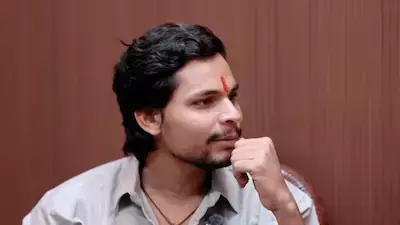
While granting three weeks' interim bail to Swatantra Bhardwaj, a Delhi Court has barred him from posting or sharing anything on the case on social media, including anything in his defence.Bhardwaj is accused in an alleged assault case relating to father of a teenage Cockroach Janta Party (CJP) activist during Jantar Mantar protest in July.While granting interim relief to Bhardwaj,...
This is a premium content
Available exclusively to
Our subscribers
Subscribe Premium 
INR 1099+GST
Your support helps us to bring you more content at
an affordable subscription scheme !!!
All payment options available
While granting three weeks' interim bail to Swatantra Bhardwaj, a Delhi Court has barred him from posting or sharing anything on the case on social media, including anything in his defence.
Bhardwaj is accused in an alleged assault case relating to father of a teenage Cockroach Janta Party (CJP) activist during Jantar Mantar protest in July.
While granting interim relief to Bhardwaj, Additional Sessions Judge Saurabh Partap Singh Laler of the Patiala House Courts flagged deficiencies and gaps in the investigation done by the Delhi Police and has asked the IO concerned to file a status report addressing the issues.
In a detailed order, the judge has observed that in the digital age, intimidation of a victim does not necessarily require physical proximity, as public statements and boasts about an alleged assault on social media can reach victims and witnesses with greater reach and permanence.
The Court directed that Bhardwaj shall not “make, publish, upload or share any statement, video, podcast, interview, reel or post concerning the case, his defence, or the complainant and his family on any public platform during the period of interim bail.”
The Court has now listed his regular bail plea on October 06 on grant or dismissal of regular bail or extension of interim bail.
The FIR was registered at Parliament Street Police Station under Sections 115(2), 126(2) and 351(3) read with Section 3(5) of the Bharatiya Nyaya Sanhita (BNS), along with provisions of the Scheduled Castes and Scheduled Tribes (Prevention of Atrocities) Act.
According to the prosecution, the complainant had gone to Jantar Mantar on June 23 with his daughter and a friend to participate in a protest. An altercation allegedly took place after a person objected to the complainant recording a video.
The prosecution alleged that Bhardwaj and his associates surrounded and assaulted the complainant with fists and a hard object resembling a kada. The complainant suffered two lacerated wounds on his head.
The FIR was initially registered for bailable offences under Sections 115(2) and 126(2) BNS. Bhardwaj was not arrested at that stage and joined the investigation pursuant to a notice under Section 35(3) of BNSS.
However, on September 04, the complainant gave a supplementary statement claiming that he belonged to a Scheduled Caste and alleging that caste-based derogatory remarks had been made against him and his minor daughter. Following this, provisions of the SC/ST Act and Section 351(3) of BNS were added. Bhardwaj was thereafter arrested and was remanded to judicial custody.
The Delhi Police relied on social media material and a podcast in which Bhardwaj allegedly spoke about the incident.
While granting him interim bail today, the Court said that what weighed more with it was the accused's alleged conduct after the incident.
The Court observed that social media has become a “new medium of intimidation” but also clarified that abusive and sexually explicit messages allegedly sent from several numbers to the complainant and his minor daughter could not, on the material before it, be traced to Bhardwaj.
The Court, however, said such messages demonstrated how public commentary surrounding a pending case could generate hostility against a victim and the victim's family.
The Court further observed that freedom of speech under Article 19(1)(a) is not absolute and remains subject to the restrictions. It said the freedom of speech does not extend to using public platforms “to overawe a victim or to try a pending case before the public.”
“A condition that restrains the applicant from commenting publicly on the subject matter of this case bears a direct connection to the protection of the victim and the integrity of the proceedings. It is proportionate to that object, and it is not a general restraint on lawful expression,” the judge said.
On the allegations under the SC/ST Act, the Court noted that the original FIR did not contain the allegation of caste-based abuse, even though the complainant subsequently attributed such remarks to the beginning of the incident.
It noted that the allegation surfaced for the first time approximately ten weeks after the incident. The Court however cautioned that a belated allegation is not necessarily false.
“A belated allegation is not, for that reason alone, false; nor can this Court decide its truth at the threshold. It is nonetheless a circumstance that bears on the weight to be given to the accusation for the limited purpose of bail,” it said.
The judge said that the only instances of non-cooperation cited were the non-disclosure of Bhardwaj's mobile phone and of his associates' particulars, and that such contacts things could adequately be addressed by a condition requiring him to join and cooperate with the investigation.
“The one apprehension that does find support in the record is the risk that the complainant and witnesses may be influenced. That risk arises not from physical approach, but from the use of public platforms. It is a real concern, but it can be addressed by stringent, narrowly tailored conditions and a period of observation. It does not call for indefinite detention of an undertrial,” the Court said.
The Court also took note of Bhardwaj's conduct on social media, while referring to a Times of India recent news report concerning an accused in a murder case allegedly celebrating after being granted bail.
It observed that public displays of this nature, whether on the street or on social media, “do not augur well for society or for law and order” and erode public confidence in the administration of justice.
“Bail is an expression of the Court's trust, and it is not a trophy to be displayed,” the Court said.
While flagged shortcomings and gaps in the investigation, the Court noted that the podcast relied upon by the Delhi Police was central to its opposition to bail, but the investigating agency had not stated whether the person managing the channel had been examined, whether the original footage had been requisitioned or whether the electronic material had been sent for forensic examination.
The Court also noted that the police's reply was silent regarding CCTV footage from the Jantar Mantar protest site, recordings made by police personnel deployed at the gathering, Bhardwaj's call-detail records and location data etc.
Describing these as “elementary steps” in an investigation of this nature, the Court directed the investigating agency to proceed with the investigation “with purpose and dispatch.”
It specifically directed the IO to collect CCTV footage, police recordings, call-detail records and tower-location data, obtain account and upload details from social media platforms, examine the podcast channel operator and send the relevant electronic material for forensic examination to determine whether it was genuine, morphed or artificially generated.
The Court noted that the offences alleged carried a maximum punishment of seven years and that custodial interrogation of Bhardwaj had already been completed.
Balancing the victim's statutory right to protection with the accused's right to personal liberty under Article 21 of Constitution of India, the Court granted Bhardwaj interim bail for three weeks.
Apart from the social-media posting restriction, Bhardwaj has also been directed not to contact the complainant, his minor daughter, family members or prosecution witnesses.
The judge has also directed him not to tamper with evidence, to join the investigation whenever required and not leave the country without prior permission.
He has further been directed to surrender on expiry of the interim bail.

Nupur Thapliyal
Nupur Thapliyal is a Principal Correspondent with LiveLaw, based in New Delhi. She reports from the Delhi High Court and trial courts in the national capital

