


Supreme court

Candidate Can't Claim Reservation If Caste Certificate Isn't Submitted In Prescribed Format : Supreme Court
The Supreme Court observed that to apply under the recruitment advertisement, the caste certificate must be submitted in the specific format prescribed therein, and a candidate cannot claim exemption from this requirement merely on the basis of belonging to that category. Holding thus, the bench comprising Justice Dipankar Datta and Justice Manmohan declined to grant relief to the candidate...

Supreme Court Daily Round-Up : May 16, 2025
Here are the links of the Supreme Court stories published today :Supreme Court Grants Interim Bail To Man Convicted For Rape On False Marriage Promise After Parties Agree To MarryCommercial Suits Filed Before 20.08.2022 Without Pre-Institution Mediation Be Kept In Abeyance To Explore Mediation : Supreme CourtNo Probation For Food Adulteration Offences Committed Between 1976 & 2006 :...

Satisfaction Recorded In Execution Petition Over Injunction Decree Doesn't Bar Subsequent EPs For Future Breaches: Supreme Court
The Supreme Court today (May 16) observed that satisfaction recorded in one Execution Petition (“EP”) for past breach of permanent injunction would not preclude the filing of a subsequent EP for fresh breaches of permanent injunction. The Court reasoned that because a permanent injunction is perpetual and enforceable against future interferences, the filing of a subsequent EP against...
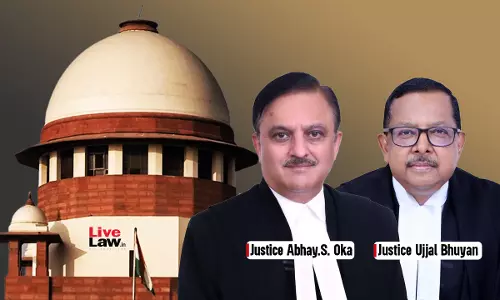
Recusal A Matter Of Judges' Discretion, Article 142 Cannot Be Used To Frame Guidelines On Judicial Recusal: Supreme Court
The Supreme Court on Friday (May 16) dismissed a writ petition seeking guidelines to govern the recusal of judges.A bench of Justice Abhay S Oka and Justice Ujjal Bhuyan held, “The recusal is a matter of discretion of the judge. Jurisdiction under Article 142 cannot be exercised for laying down guidelines for the recusal of judges. Hence the writ petition is dismissed.”. Last year, the...

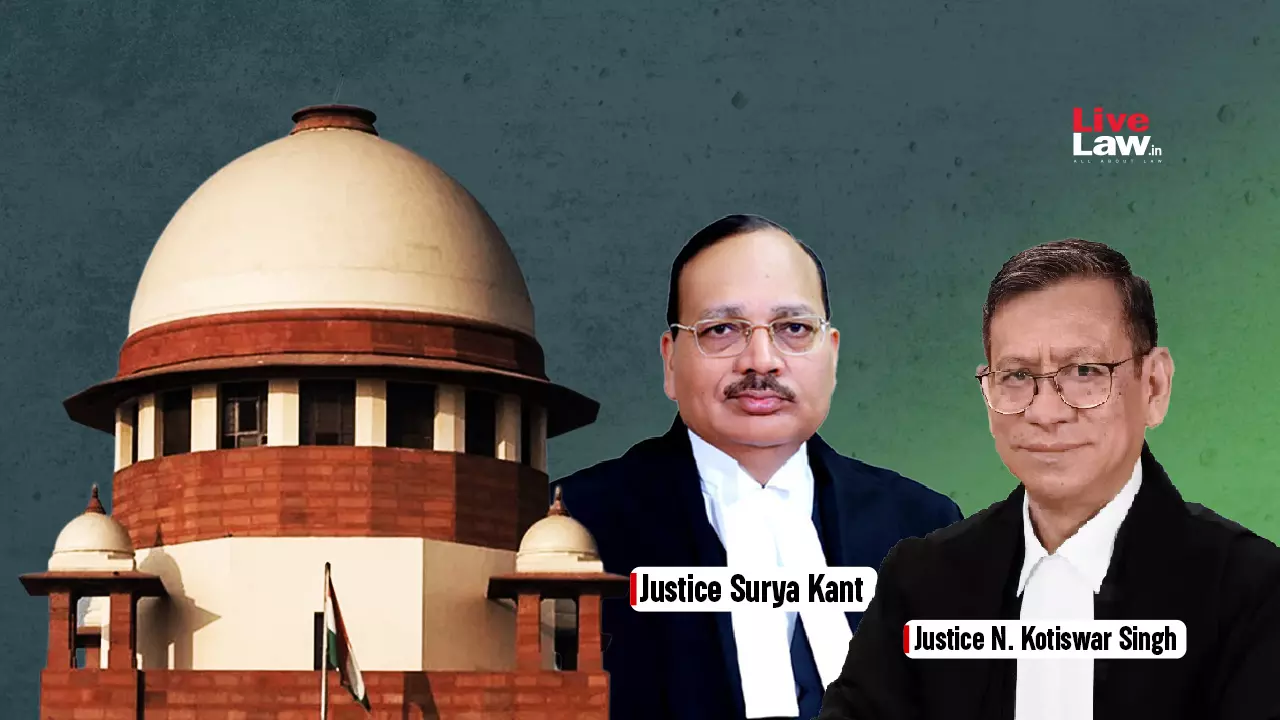
Fee Regulatory Committee Can't Transfer NRI Quota Fee To State Corpus Fund; Self-Financing Colleges Can Retain It : Supreme Court
The Supreme Court today held that an Admission and Fee Regulatory Committee in a State does not have the power to direct that the fee collected from NRI medical students be kept in a corpus fund maintained by the State to subsidise the education of Below Poverty Line students.The Court directed the State of Kerala to return the amounts collected from self-financing medical colleges for...
S. 31(7) Arbitration | Arbitral Tribunal Has Power To Award Different Rates Of Interest For Pre-Reference & Pendente Lite Period : Supreme Court
The Supreme Court held that under the Arbitration and Conciliation Act, 1996, an Arbitral Tribunal has the power to award different rates of interest for different phases.A bench comprising Justices Abhay S. Oka and Ujjal Bhuyan overturned the Delhi High Court's ruling, which had invalidated the tribunal's grant of interest on interest, deeming it impermissible under Section 31(7) of...