Supreme court
NSEL Scam | IBC Moratorium Doesn't Bar Property Attachments Under Maharashtra Protection Of Interest Of Depositors Act: Supreme Court
The Supreme Court today (May 15) ruled that the moratorium under the Insolvency & Bankruptcy Code (“IBC”) doesn't prohibit attachment of properties under the Maharashtra Protection of Interest of Depositors Act (“MPID Act”). The Court rejected the contention that the moratorium imposed under the IBC bars the attachment of properties under the MPID Act. It held that the...
BREAKING | Supreme Court Clears ₹500 Crore Shri Banke Bihari Temple Corridor Plan, Permits Land Purchase Using Temple Deposits
In a significant ruling, the Supreme Court today (May 15) permitted the Uttar Pradesh Government to use funds from the Shri Banke Bihari Temple (Vrindavan) for acquiring 5 acres of land around the temple for corridor development, on the condition that the acquired land shall be registered in the name of the deity. Modifying the order of the Allahabad High Court, which had prohibited the...
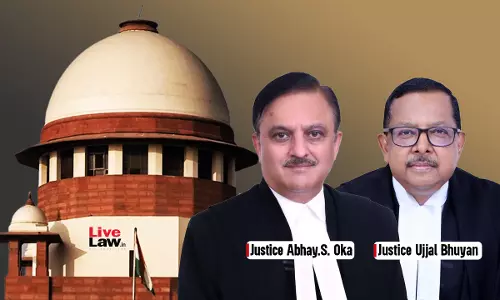
Crude Soybean Oil Is Not Agricultural Produce But Manufactured Product, Eligible For Customs Duty Exemption: Supreme Court
The Supreme Court ruled that a crude degummed soybean oil is not an agricultural product as it undergoes a manufacturing process that changes its fundamental nature, distinct from the original raw material, i.e., soybean. The bench of Justices Abhay S. Oka and Ujjal Bhuyan set aside the Gujarat High Court's ruling that crude degummed soybean oil retains its agricultural character, rejecting...
Supreme Court Directs Compilation Of States/UTs Affidavits To Enforce POSH Act; Says It Will Try To Upload Information On NALSA Website
The Supreme Court on May 14 asked the amicus Priya to file a comprehensive compilation of State and district appointment of District Officers pursuant to Court's December 3, 2024, order in which it passed comprehensive directions for effective compliance with the Sexual Harassment of Women at Workplace (Prevention, Prohibition and Redressal) Act, 2013 (POSH Act). The Court orally remarked...
Supreme Court Deprecates 'Deliberate, Ambiguous' Drafting Of Arbitration Clauses; Calls For Suo Motu Action In Malafide Cases
Delivering a significant judgment on arbitration law, the Supreme Court today deprecated the practice of arbitration clauses being deliberately phrased "ambiguously" by members of legal fraternity and urged judicial forums across the country to throw out cases involving "shoddily drafted arbitration clauses" at the threshold.The Court said that such "malafide cases" are a "criminal wastage...
Private Arbitration Clauses Cannot Override Statutory Mandates Under MSMED Act : Supreme Court
Reaffirming that the MSMED Act prevails over the Arbitration Act, as held in Gujarat State Civil Supplies v. Mahakali Foods, the Supreme Court set aside the Karnataka High Court's interference with MSMED proceedings in Delhi, despite the contract naming Bengaluru as the arbitration seat. The Court clarified that private contractual clauses cannot override the statutory mandate of the MSMED...

'Witnesses Must Identify Accused In Court When Previously Known', Supreme Court Overturns Conviction In 2001 Murder Case
The Supreme Court observed that if a witness was familiar with the accused before the commission of the crime, it becomes essential for the witness to identify the accused in court, and failure to do so would undermine the prosecution's case. Holding thus, the bench comprising Justices Abhay S. Oka, Pankaj Mithal, and Ahsanuddin Amanullah set aside the convictions of the accused, who had...
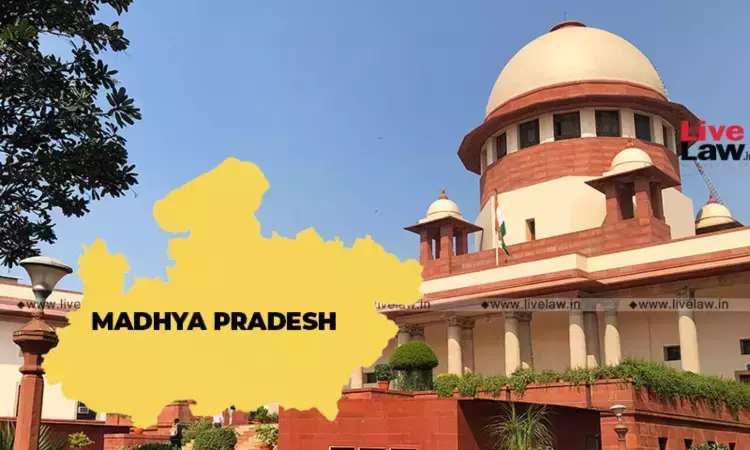
'Can There Be A Better Cover-Up': Supreme Court Pulls Up State Of MP, Orders CBI Investigation In To Alleged Custodial Death Of 25-Year-Old
The Supreme Court today (May 15) transferred the investigation into the alleged custodial torture and murder of a 25-year-old Deva Pardhi to the Central Bureau of Investigation. The Court found that the police are continuously trying to cover up and influence the investigation into the alleged custodial death. First, when the victim's family immediately lodged an FIR after the incident, the...