


Supreme court
Child's Right To Know Father Must Be Balanced With Other Person's Right To Privacy; Can't Force DNA Test On Mere Adultery Allegations : Supreme Court
The Supreme Court held that a careful balance must be struck between the child's right to know their biological parents and an individual's right to dignity and privacy. The Court emphasized that once the legitimacy of the child is established under Section 112 of the Evidence Act, it would be unjust to compel a third party to undergo a paternity (DNA) test, as it would violate the...
Family Court Cannot Entertain Paternity Claim From Extra-Marital Affair : Supreme Court
The Supreme Court observed that the Family Court lacks jurisdiction to entertain a plea for paternity claim from the extra-marital affairs. The Court observed that since the Family Court's jurisdiction is limited to adjudicating matrimonial causes. Hence, a claim to determine paternity arising out of an extra-marital relationship has to be filed before the regular Civil Court.The...
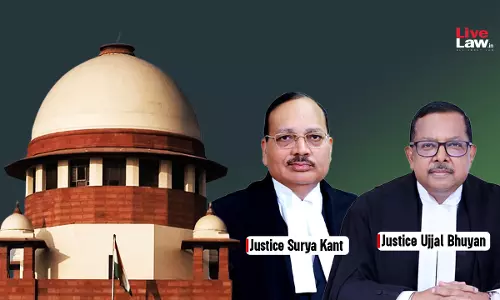
Supreme Court Asks Union To Consider Bringing Law To Protect Domestic Workers' Rights
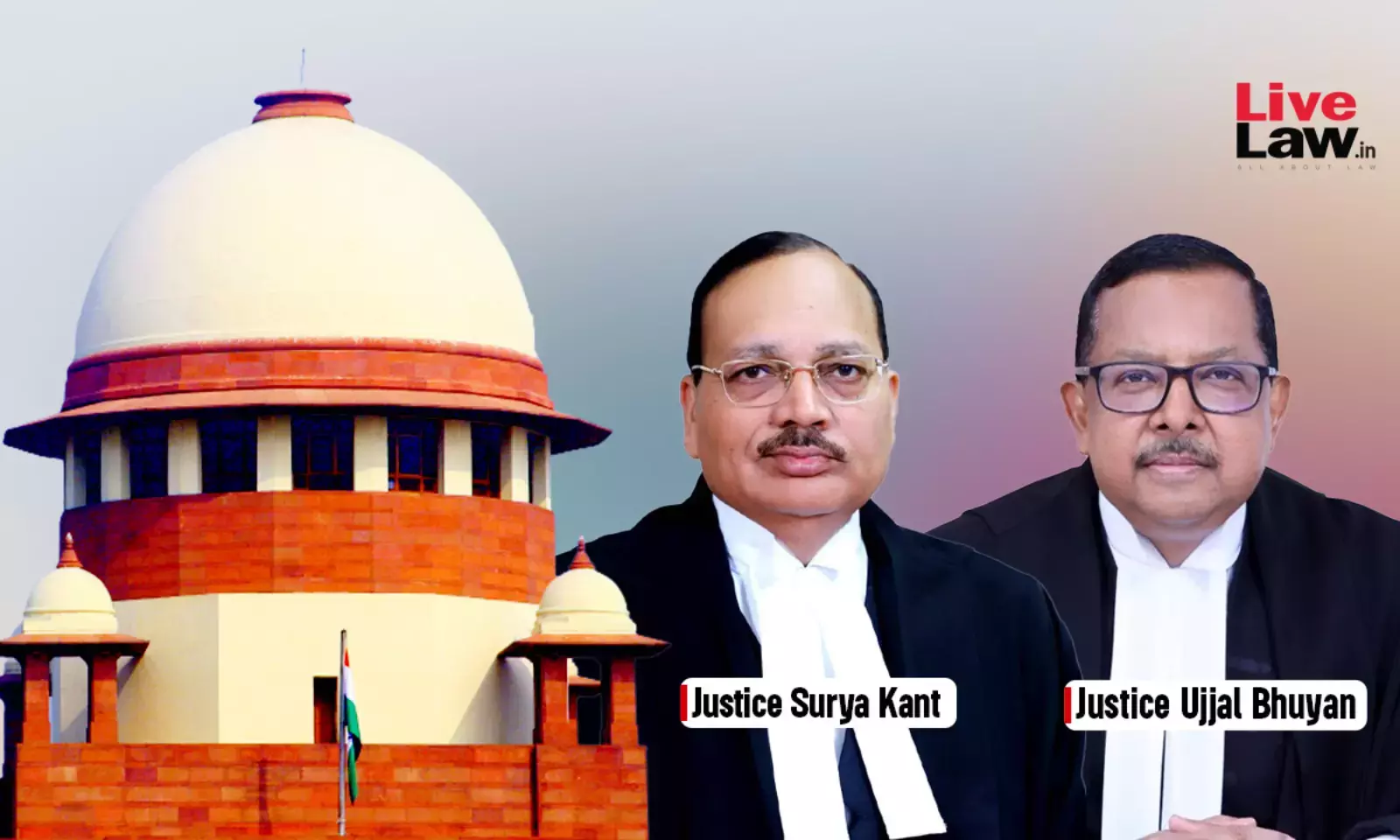
The Supreme Court on Wednesday (January 29) directed the Union Government to consider the enactment of a law to protect the rights of domestic workers.A bench comprising Justice Surya Kant and Justice Ujjal Bhuyan directed the Ministry of Labour & Employment and the related Ministries to constitute an expert committee to look into the feasibility of such a law on domestic workers and submit...


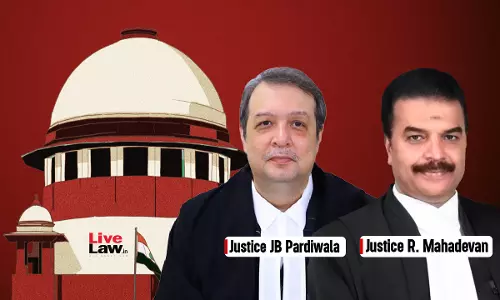
Supreme Court Reserves Judgment On PIL To Make e-KYC Process Accessible For Acid Attack Survivors & Persons With Blindness/Low Vision
The Supreme Court on Tuesday(January 28) reserved judgment on the two writ petitions seeking directions or guidelines for persons with blindness/low vision and acid attack survivors, respectively, to conduct digital Know Your Customer (KYC)/e-KYC/video KYC.A bench of Justices J.B. Pardiwala and R. Mahadevan heard the two petitions. It directed the parties to file written submissions that...
'Gaping Holes In Prosecution' : Supreme Court Acquits Man Who Was Sentenced To Death For Rape & Murder
The Supreme Court today(January 28) set aside the judgment of the Bombay High Court which upheld the conviction and the death sentence awarded to the Appellant by the Trial Court for the rape and murder of a 23 years old woman which took place in 2014. The Court acquitted the Appellant of all charges on the ground that when the prosecution is relying on circumstantial evidence to draw home...
AoR Designated As Senior Advocate Cannot Appear Without Informing Clients Of Sr Designation & Reporting Compliance To Registry: Supreme Court
The Supreme Court on Tuesday emphasized that Advocates on Record (AoRs) who are designated as Senior Advocates must inform their clients about their designation and submit a report to the Registry confirming that alternate arrangements have been made for their clients' representation.The Court stated that failure to comply with this obligation would bar such Senior Advocates from appearing...
Presumption That Husband Is Father Of Child Born During Marriage Not Displaced Even If Wife Had Relations With Another Man : Supreme Court
The Supreme Court today (January 28) reaffirmed that a child's legitimacy determines paternity, emphasizing that a child born during a valid marriage is presumed to be the legitimate offspring of parents who had access to each other at the time of conception. The Court dismissed the argument that legitimacy and paternity are distinct concepts requiring separate determination. It held...
Groom Refuses To Cooperate With Wedding Reception Over Gold Demand; Supreme Court Upholds Conviction Under S.498A & Dowry Law
The Supreme Court upheld the conviction of a man under Section 498A of the Indian Penal Code and Section 4 of the Dowry Prohibition Act who refused to cooperate with the wedding reception function since the bride's family did not accept his demand for 100 sovereigns of gold as dowry.The case arose from a marriage which lasted only for three days.After the engagement ceremony held in 2006,...
In Cases Without Test Identification, Witness Identifying Accused For First Time During Trial After Many Years Raises Doubts : Supreme Court
The Supreme Court recently acquitted an individual accused of kidnapping a girl because the prosecution failed to conduct the test identification parade (“TIP”). The bench comprising Justices BR Gavai and AG Masih was hearing the case where no TIP was conducted and the witness had identified the accused for the first time after a substantial gap of eight years. The accused was...

Arbitration Act | Appellate Courts Can't Reassess Awards, Must Limit Enquiry On Public Policy Breach : Supreme Court
The Supreme Court reaffirmed that arbitral awards should only be interfered with in cases of perversity, violation of public policy, or patent illegality. It emphasized that appellate courts cannot reassess the merits of awards and must limit their inquiry to whether the award breaches Section 34(2)(b)(ii) of the Arbitration Act i.e., if the award is against the public policy of India.The...