




Supreme court
MRTP Act | Denying Refund Of Unused Additional FSI Premium For Housing Projects Arbitrary : Supreme Court
The Supreme Court has recently held that housing project owners cannot be denied a refund of the premium paid for unutilised additional Floor Space Index (FSI) merely because there is no specific legal provision permitting such a refund. The Court said that when the benefit of refund is extended to educational institutions, medical institutions and star-category hotels, not extending the same...

Supreme Court Grants Bail To Two UAPA Accused In Jail For 12 Years, Says Slow Trial Violated Article 21
The petitioners were booked over the alleged recovery of explosives linked to Indian Mujahideen module.
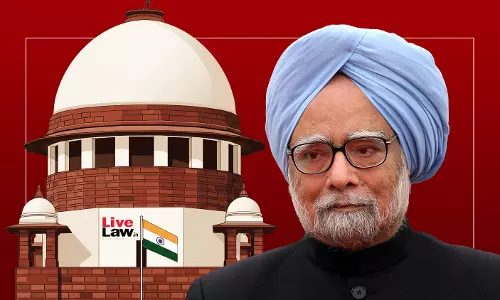
Supreme Court Accepts CBI's Clean Chit To Ex-PM Manmohan Singh In Coal Block Case, Sets Aside Summoning Order
The Court observed that there was no justification for the trial Court to take cognizance ignoring the CBI's closure report.

Centre Can Allow Post-Facto Environmental Clearance Only By Statutory Notification : Supreme Court Quashes 2021 OM Prospectively
The Court held that the 2006 notification, which made prior EC mandatory, could not have been supplanted through an administrative order.
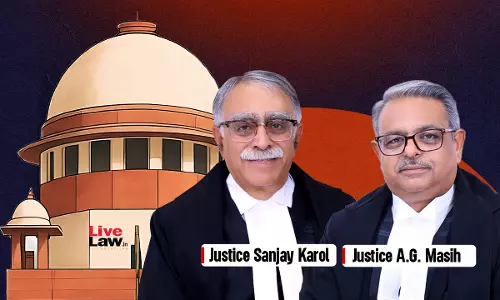
National Scheduled Castes Commission Has No Adjudicatory Role; Only Advisory : Supreme Court Quashes Order In Service Dispute
The NCSC has only been given a limited role, which is recommendatory and not adjudicatory, the Court stated.
Supreme Court Daily Round-Up : July 28, 2026
Links to the reports of July 28 :Advocate Moves Supreme Court Alleging Assault By Delhi Cops During Police Station Visit To Meet Detained Student ProtestersS.457 CrPC | Registration Certificate Alone Not Sole Factor For Interim Release Of Seized Vehicles: Supreme CourtCJP Food Volunteer Junaid Malik Moves Supreme Court Alleging Police Harassment Of FamilyGST | 'ITC Available To Buyer Only...
Supreme Court Rejects Plea Seeking Mechanism For Urgent Hearings Beyond Regular Hours, Says E-Filing Allows Anytime Access
"A litigant apprehending an imminent violation of liberty is not required to physically approach a courtroom," the Court observed.
Evidence Act | Section 27 Recoveries Alone Can't Sustain Conviction : Supreme Court Restores Acquittal In 1988 Murder Case
The Supreme Court on Tuesday (July 28) restored the acquittal of six men in a 1988 murder case, observing that recovery made under Section 27 of the Indian Evidence Act, 1872 (now Section 23 BSA) cannot, by itself, form the basis of a conviction unless the recovered material is clearly connected with the offence through independent evidence. A bench of Justice JB Pardiwala and Justice K...
Res Judicata Applies To Successive Impleadment Applications Under Different CPC Provisions: Supreme Court
The Supreme Court on Monday (July 27) held that where an application for impleadment has been rejected on merits under Order I Rule 10 of the CPC, a subsequent application seeking the same relief under Order XXII Rule 10 of the CPC would be barred by the doctrine of res judicata, provided it is based on the same cause, between the same parties litigating under the same title, and is decided by...
GST | 'ITC Available To Buyer Only If Supplier Paid Tax', Supreme Court Upholds Validity Of S. 16(2)(c) Of CGST Act
The Supreme Court has recently affirmed the Gujarat High Court's judgment, which held that the Input Tax Credit (ITC) can be availed only if the supplier has actually paid the tax to the government.A bench of Justice Sanjay Kumar and Justice Sanjeev Sachdeva dismissed a batch of petitions filed against the Gujarat High Court's judgment, which had upheld the constitutional validity of...
S.457 CrPC | Registration Certificate Alone Not Sole Factor For Interim Release Of Seized Vehicles: Supreme Court
The Supreme Court on Monday (July 27) held that registration certificate alone are not determinative of entitlement to interim custody of vehicles under Sections 451 and 457 of the CrPC.“Registration is a relevant factor, but it is evidentiary and not conclusive of entitlement to interim possession.”, observed a bench of Justice Sanjay Karol and Justice Augustine George Masih,...
Supreme Court Daily Round-Up : July 27, 2026
Links to the reports of July 27'Peaceful Protests Constitutionally Protected, Mere Agitation Can't Justify Lathi-Charge': CJI Surya Kant In Pleas Over Jantar Mantar Police ActionRajya Sabha MP Manoj Jha Moves Supreme Court Over Bihar Police Firing On NEET Protesters, Seeks FIRs Against Errant OfficersSurendra Gadling Bail Plea: Kapil Sibal Asks Supreme Court To List Matter Before Another...