


Supreme court
Supreme Court Seeks Explanation From 2 NCDRC Members For Issuing Non-Bailable Warrants Ignoring SC's Interim Protection
The Supreme Court has issued notice to two members of the National Consumer Disputes Redressal Commission (NCDRC) seeking explanation from them for issuing non-bailable warrants against the directors of a company, ignoring a previous interim order of the Supreme Court.The Court noted that on March 1, it had passed an interim order directing that no coercive steps should be taken against...
Is Sanction Needed To Order Investigation Against Public Servant Under S.156(3) CrPC? Supreme Court Seeks Early Decision In Pending Reference
A two-judge bench of the Supreme Court has called for an early adjudication of the issue whether prior sanction is mandatory for a Magistrate to forward a complaint against a public servant for investigation as per Section 156(3) CrPC. This issue was referred to a larger bench in 2018 in the case Manju Surana v. Sunil Arora. In the present matter, a bench comprising Justices CT Ravikumar...
![The Complete Supreme Court Annual Digest- 2023 [Part-VII]](https://www.livelaw.in/h-upload/2024/04/16/500x300_534157-complete-supreme-court-annual-digest-2023-part-7.webp "The Complete Supreme Court Annual Digest- 2023 [Part-VII]")
The Complete Supreme Court Annual Digest- 2023 [Part-VII]
Consumer Law A pedantic and hyper-technical approach would cause damage to the very concept of consumerism. (Para 23) Alpha G184 Owners Association v. Magnum International Trading Company Pvt. Ltd., 2023 LiveLaw (SC) 442 : AIR 2023 SC 2527 Amend Consumer Protection Rules on appointment process of commission members within 3 months : Supreme Court to Centre, States. In Re: Inaction...
West Bengal Governor Agrees Before Supreme Court To Appoint 6 University VCs Recommended By State Government
The West Bengal Governor has agreed to fill up six vacancies of Vice Chancellors by appointing candidates out of the list recommended by the West Bengal Government. Attorney General for India R Venkataramani informed the Supreme Court about the decision of the Governor (Chancellor of the Universities) on Tuesday (April 16).Taking note of the AG's statement, the bench comprising Justices...
Supreme Court Upholds Appointment Of Technical Assistants As Assistant Engineers In TN PWD
While upholding the decision of the Tamil Nadu Government to appoint Technical Assistants as Assistant Engineers in the Public Works Department, the Supreme Court on Tuesday (April 16) expressed displeasure over the attitude of the Association of Engineers in Tamil Nadu to grab all posts of Assistant Engineers in the State without leaving the posts for the candidates promoted from the...
![You Cant Insult Allopathy : Supreme Court To Baba Ramdev & Patanjali MD Acharya Balkrishna [Read Full Courtroom Exchange]](https://www.livelaw.in/h-upload/2024/04/10/500x300_533215-baba-ramdev-patanjali-sc-03.webp "You Cant Insult Allopathy : Supreme Court To Baba Ramdev & Patanjali MD Acharya Balkrishna [Read Full Courtroom Exchange]")
'You Can't Insult Allopathy' : Supreme Court To Baba Ramdev & Patanjali MD Acharya Balkrishna [Read Full Courtroom Exchange]
The Supreme Court on Tuesday (April 16) interacted with Patanjali Ayurved's Managing Director (MD) Acharya Balakrishna and its co-founder Baba Ramdev in the contempt proceedings initiated against them over the publication of misleading medical advertisements despite undertaking given to the Court in November last year. The bench of Justices Hima Kohli and Ahsanuddin Amanullah...
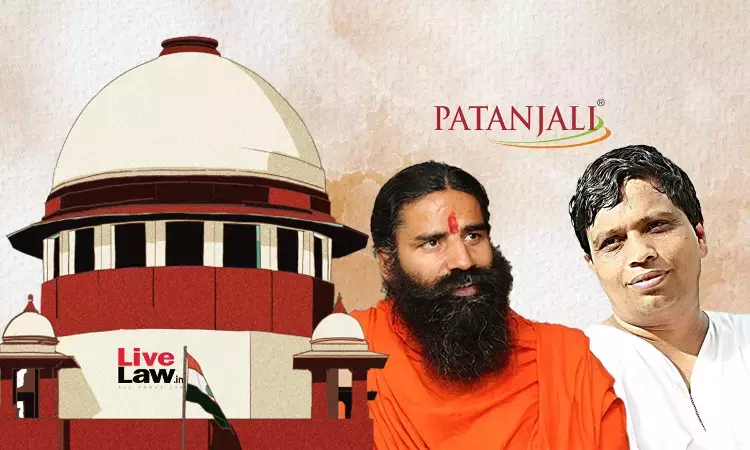
Baba Ramdev & Acharya Balkrishna Personally Apologise To Supreme Court, Patanjali Ltd Agrees To Publish Public Apology
Baba Ramdev, co-founder of Patanjali Ayurved Ltd, personally appeared before the Supreme Court on Tuesday (April 16) and expressed unconditional apology for publishing misleading advertisements and making comments against Allopathic medicines in breach of an undertaking given to the Court.Acharya Balkrishna, the Managing Director of Patanjali, also personally apologised to the Court....
'UGC Regulations Binding On Universities' : Supreme Court Directs Regularization Of Teachers At Jamia Milia Islamia
Observing that the University Grants Commission (UGC) regulations are binding on the Universities, the Supreme Court on Monday (April 15) directed the reinstatement of the teachers at Jamia Milia Islamia (“University”) on a permanent basis who were denied regularization by the University even after UGC's letter to University directing regularization of the teachers who were selected through...
Supreme Court Asks Allahabad HC To Enable E-Filing & Virtual Appearance Facilities At UP District Courts
The Supreme Court on Monday (April 15) asked the Registrar General of the Allahabad High Court to enable e-filing facility at e-Sewa Kendras of all the District Courts in the State of Uttar Pradesh. The Court also stated that a hybrid hearing before the High Court through a virtual set-up in the District Courts of Western UP may take place in compliance with the Allahabad High Court Rules...
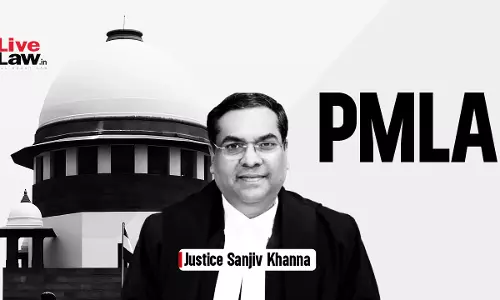
Statement Made Before Court Ultimately Matters Than Statement Under Section 50 PMLA : Justice Sanjiv Khanna
Supreme Court judge Justice Sanjiv Khanna on Monday (April 15) orally observed that there was a difference between the admissibility of a statement of an accused recorded under Section 50 of the Prevention of Money Laundering Act (PMLA) and its evidentiary value.Justice Khanna observed that the evidence before the Court is the actual statement made by the person in the Court itself and not...
Supreme Court Rejects Advocates' Challenge To Gujarat HC's Order Directing Investigation Against Them For Allegedly Forging Vakalatnama
The Supreme Court (on April 15) refused to interfere in a petition filed by two practising advocates from Gujarat challenging an inquiry ordered by the Gujarat High Court against them for alleged misconduct of forging their client's vakalatnama. The matter was considered by a bench of Justices BR Gavai and Sandeep Mehta. Senior Advocates Mukul Rohatgi and Yatin Oza appeared for...
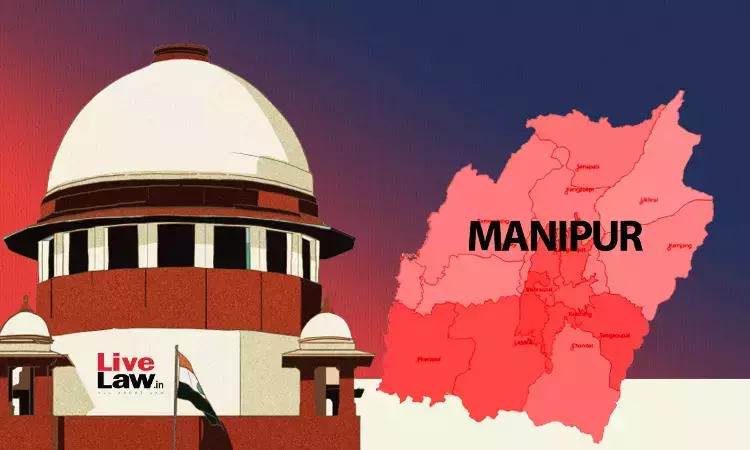
Supreme Court Rejects Plea Seeking Voting Arrangements For Displaced Manipuris, Says Too Late To Issue Directions To Election Commission
The Supreme Court on Monday (April 15) declined to entertain a petition seeking voting arrangements for approximately18,000 who got displaced from Manipur due to the ethnic clash to cast their votes in their home constituency in the Lok Sabha General Elections scheduled to take place on April 19 and 26. The bench led by CJI DY Chandrachud comprising Justices JB Pardiwala and Manoj Misra...