


Supreme court
Supreme Court Denies Specific Performance To Plaintiff Who Made False Statements, Calls Relief Discretionary & Equitable
While denying a plaintiff's plea for specific performance on account of false/incorrect statements made by him, the Supreme Court recently held that grant of a decree for specific performance under Section 20 of the Specific Relief Act, 1963 is discretionary and equitable."The exercise of discretion depends on several factors. One of the factors is the conduct of the plaintiff. The reason is...
Parliament Should Consider Amending Arbitration Act To Prescribe Limitation Period To File S.11 Application : Supreme Court
In a recent verdict, the Supreme Court delved into the crucial question of whether the Limitation Act, 1963 is applicable to applications for the appointment of arbitrators under Section 11(6) of the Arbitration and Conciliation Act, 1996. The court highlighted the absence of a statutory prescription regarding the time limit for such applications and expressed concerns about the unduly...
The Complete Supreme Court Criminal Law Digest 2023
Abkari ActAbkari Act, 1077; Section 57A- Offence under Section 57A is not limited to the holders of the license under the Act, but refers to anybody who mixes or permits to be mixed any noxious substance, likely to endanger human life with any liquor. (Para 43) Sajeev v. State of Kerala, 2023 LiveLaw (SC) 974 : 2023 INSC 998Abkari Act, 1077; Section 55 - Alcohol as mentioned in Section 55,...
Legal Representatives Not Liable To Perform Personal Contracts Of Deceased ; But Should Discharge Monetary Liabilities: Supreme Court
The Supreme Court (on March 01), while allowing an appeal arising out of consumer dispute, observed that the legal representatives are not liable to discharge the party's obligation which had to be discharged in a personal capacity."..in the case of a personal obligation imposed on a person under the contract and on the demise of such person, his estate does not become liable and...
All CISF Personnel Entitled To HRA If They Aren't Provided Accommodation : Supreme Court
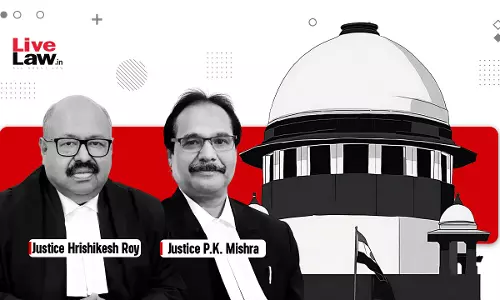
The Supreme Court has endorsed a judgment passed by the Delhi High Court which held that Central Industrial Security Force (“CISF”) personnel are entitled to receive House Rent Allowances (“HRA”) from the Union Government as provided to other paramilitary forces.A bench comprising Justices Hrishikesh Roy and Prashant Kumar Mishra dismissed the appeal filed by the Union of India...
Court May Refuse To Appoint Arbitral Tribunal If S.11(6) Petition Is Barred By Limitation Or Claim Is Ex-Facie Time Barred : Supreme Court
In a recent ruling, the Supreme Court held that the Limitation Act, 1963 is applicable to proceedings for appointment of arbitrator under Section 11(6) of the Arbitration and Conciliation Act, 1996 ("A&C Act"), and a Court may refuse to make a reference if the claims, on the date of commencement of arbitration proceedings, are ex-facie barred."...there is no doubt as to the applicability...
Money Recovery Suit Won't Be Commercial Suit Unless Disputed Property Is 'Actually Used' In Trade and Commerce: Supreme Court
The Supreme Court held that merely because the dispute is related to an immovable property wouldn't per se make it a commercial dispute under the Commercial Courts Act, 2015 unless the immovable property is 'actually used' exclusively in trade or commerce.Setting aside the High Court's decision which had considered a suit for money recovery as a commercial suit, the Bench Comprising...
Ownership Over Property Can't Be Claimed When Sale Deed Is Executed By Person Having No Title : Supreme Court
The Supreme Court held that a sale deed executed by the person (not being an owner of the property) in the plaintiff's favor wouldn't entitle the plaintiff to claim ownership/possession over such property. Reversing the findings of the High Court which held the plaintiff to be an owner of the property, the Bench Comprising Justices Sanjay Karol and Sanjay Kumar observed that the...
'Article 142 Doesn't Empower Court To Ignore Substantive Rights Of Litigants' : Supreme Court Issues Guidelines On Exercise Of Inherent Powers
While overturning the 2018 Asian Resurfacing judgment that mandated an automatic vacation of stay orders after six months, the Supreme Court issued crucial guidelines on the exercise of its powers under Article 142 of the Constitution. This latest verdict was issued yesterday by a constitution bench comprising Chief Justice DY Chandrachud and Justices Abhay S Oka, JB Pardiwala, Pankaj Mithal,...
'They Also Have Right To Privacy' : Supreme Court Dismisses Plea Seeking 24x7 Digital Monitoring Of MPs/MLAs
The Supreme Court today (March 1) dismissed a Public Interest Litigation (PIL) petition writ petition seeking to digitally monitor all the activities of MPs/MLAs to 'ensure transparency and to prevent corruption'. At the outset, CJI DY Chandrachud expressed dissatisfaction regarding the substance of the petition and reminded that a mandamus to seek continuous digital monitoring of...
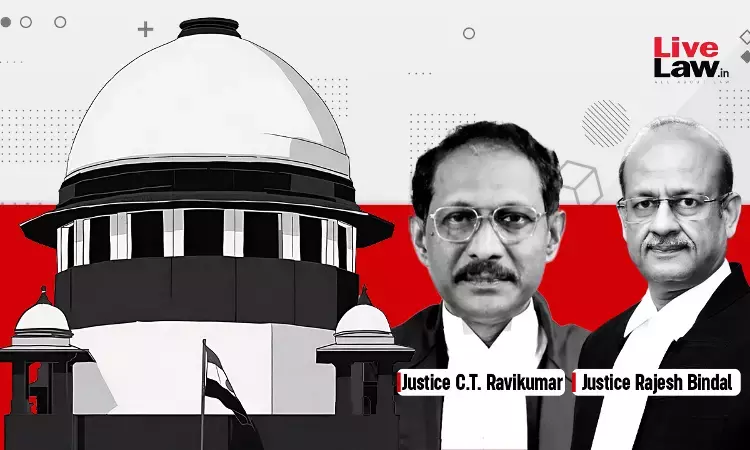
Order 6 Rule 17 CPC | Amendment Of Plaint Shouldn't Be Allowed If It Alters Nature Of Suit: Supreme Court
The Supreme Court on February 29 (Thursday) held that an application seeking amendment of plaint shouldn't be allowed under Order 6 Rule 17 of CPC if the amendment alters the nature of the suit.In the present case, an amendment of the plaint in a partition suit was sought to include a prayer to declare an earlier compromise decree as void. The Court disallowed the application stating that...
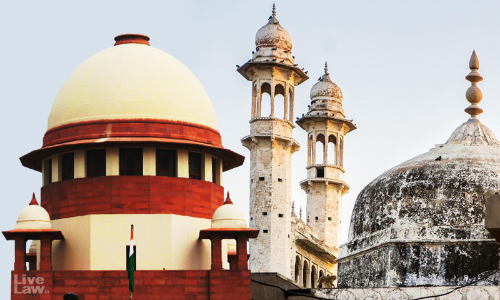
Gyanvapi Mosque Committee Moves Supreme Court Against High Court's Decision That Suits Aren't Barred By Places Of Worship Act
In the latest development in the Gyanvapi dispute, the mosque committee has moved the Supreme Court challenging an Allahabad High Court order holding that a batch of civil suits by Hindu parties pending before a Varanasi civil court are not barred by the Places of Worship Act, 1991. This suit, filed in 1991 by Hindu worshippers and on behalf of deities, seek the right to worship in the...