




Supreme court
Arbitral Tribunal Cannot Award Pre-Reference Interest If There's Contractual Bar: Supreme Court
The Supreme Court has held that when a contractual clause bars claims for interest arising from delay in making periodical or final payments, it is impermissible for an arbitral tribunal to award the same as a pre-reference interest under Section 31(7)(a) of the Arbitration and Conciliation Act, 1996. A bench of Justice Pamidighantam Sri Narasimha and Justice Alok Aradhe set aside the...
Supreme Court Commutes Death Sentence Awarded To Man Convicted For Rape- Murder Of 6-Year-Old Stepdaughter
The Supreme Court today commuted the death sentence imposed on a man convicted for raping and murdering his six-year-old step-daughter in Madhya Pradesh.A bench of Justice Vikram Nath, Justice Sandeep Mehta and Justice Vijay Bishnoi upheld his conviction but commuted the death sentence to life imprisonment.The appellant, one Waris, was convicted by the Special Court under the Protection...
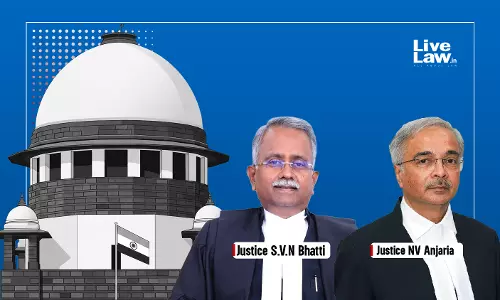
Anti-Suit Injunction Cannot Be Granted On Speculation That Foreign Court May Pass Decree Not Enforceable In India : Supreme Court
The anti-suit injunction orders are not supposed to be a routine judicial exercise, the Court stated.
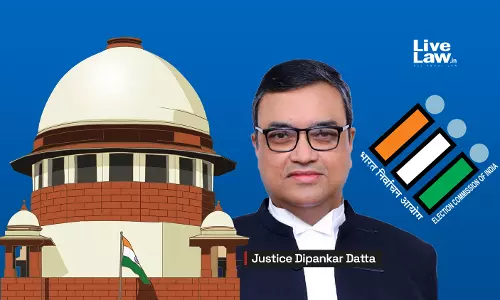
Election Commissioners' Appointment | Forced To Ask If Trust Placed In Prime Minister Has Been Betrayed In Practice : Justice Dipankar Datta
Justice Datta flagged the increasing criminalisation of politics and wondered whether the Constitutional Trust has been honoured in adequate measure.
Supreme Court Daily Round-Up : September 23, 2026
Links to the reports of SeptemberRecovery Of Tainted Money Without Proof Of Bribe Demand Insufficient To Convict Under PC Act : Supreme CourtLawyer Moves Supreme Court Against Delhi High Court Judgment Upholding GST Department's Seizure Of Office ComputersPlea Seeking FIR Against Justice Yashwant Varma Mentioned In Supreme Court'How Can BCI Regulate Law Colleges?What Do They Know About...
Arbitration | High Court's Location Doesn't Become Arbitration's Seat Just Because HC Appointed Arbitrator : Supreme Court
The Supreme Court on Wednesday (September 23) has held that mere conduct of arbitral proceedings at a particular place does not, by itself, determine the juridical “seat” of arbitration, in the absence of an express designation or agreement between the parties. A Bench of Justice Sanjay Kumar and Justice Sanjeev Sachdeva set aside the Orissa High Court's judgment, which had deemed Cuttack...
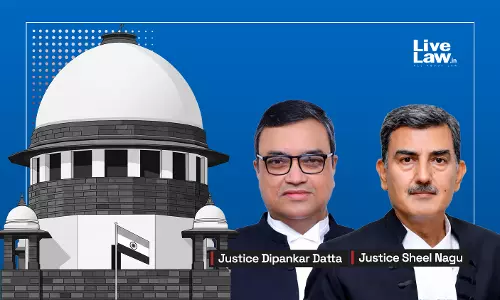
Supreme Court Frowns Upon PIL Challenging Inter-Se Assessment Of Tender Bids
The Supreme Court on Wednesday (September 23) has observed that a ₹23-crore road construction contract was not of such magnitude as to justify a Public Interest Litigation (PIL) on the ground of alleged wastage of public resources, particularly when the dispute essentially concerned the comparative eligibility of competing bidders. A Bench of Justice Dipankar Datta and Justice Sheel Nagu...
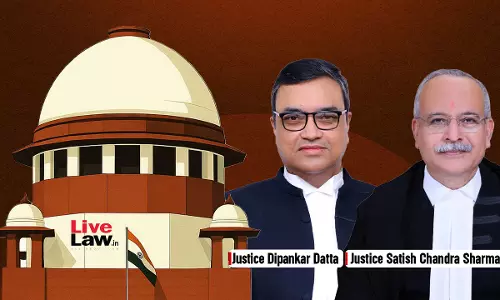
Supreme Court Judges Urge CJI To Consider Constituting Permanent Constitution Bench, Flag Years-Long Delay In References
The Supreme Court on Wednesday urged Chief Justice of India Surya Kant to consider constituting a permanent five-Judge Constitution Bench to decide pure constitutional questions, flagging the years-long delay in references to larger benches.The Court observed that the inordinate delay in resolving references was a source of institutional embarrassment which all stakeholders should strive...
'Prime Minister's Nominee Can't Be Expected To Defy Him': Justice Datta Doubts Independence Of Election Commissioners' Selection Panel
"If free and fair elections are to be ensured, it is axiomatic that the ECI must not only be an independent body but also be seen to act independently,” he observed.
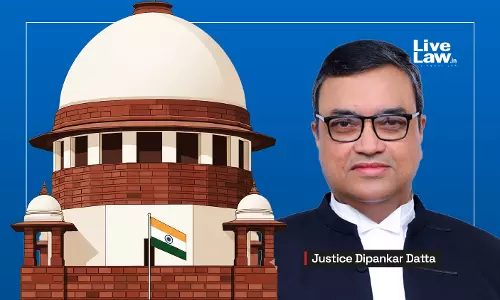
Hope Present Collegium Makes Proper Choices In Future; Judiciary Playing Second Fiddle To Executive In Judges' Appointment : Justice Dipankar Datta
The Collegium is avoiding confrontation with the Executive though selective acceptance of recommendations has become a norm, Justice Datta said.
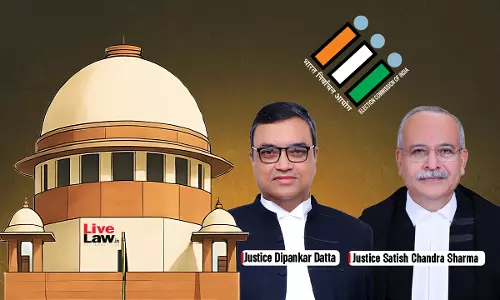
Supreme Court Refers Pleas Challenging Election Commissioners' Law To Constitution Bench; Justice Datta Questions Selection Process
Justice Datta prima facie doubted whether the present appointment process for Election Commissioners was independent.

Recovery Of Tainted Money Without Proof Of Bribe Demand Insufficient To Convict Under PC Act : Supreme Court
The Supreme Court on Tuesday (22 September) has acquitted a Patwari who passed away during the pendency of his appeal against his conviction for demanding and accepting bribe under the Prevention of Corruption Act, 1988 (PC Act). The bench acquitted him, holding that mere recovery of tainted currency notes, without proof of demand, is not sufficient to sustain a conviction under Sections 7...