


Supreme court


Supreme Court Sends Tenant To Tihar Jail For Not Vacating Premises, Imposes Rs 5 Lakh Fine On Aged Co-Tenant
The Supreme Court on Friday (September 26) held two tenants guilty of contempt for willfully disobeying its order to vacate rented premises in Saharanpur, Uttar Pradesh, and imposed civil imprisonment on one of them along with monetary penalties.A bench of Justices JK Maheshwari and Vijay Bishnoi sentenced one contemnor to three months' civil imprisonment and directed that he be taken...

Supreme Court Dismisses Telangana Govt's Plea Against Quashing Of 2015 Cash-for-Vote Scam Case Against One Accused
The Supreme Court on Friday (September 26) upheld the quashing of charges against Jerusalem Mathai, one of the accused in the 2015 Telangana cash-for-votes scam.The bench of Chief Justice of India BR Gavai and Justice K Vinod Chandran dismissed the Special Leave Petition filed by the State of Telangana in 2016 against the High Court's judgment, which quashed the case under the Prevention...
Committee Of Creditors Continues To Exist Till Resolution Plan Is Implemented Or Liquidation Order Is Passed : Supreme Court
In the JSW Steel matter, the Supreme Court held that the Committee of Creditors (CoC) under the Insolvency and Bankruptcy Code, 2016 (IBC) does not become functus officio merely upon the approval of a resolution plan by the Adjudicating Authority. The Court held that the CoC continues to have a role until the resolution plan is fully implemented or an order of liquidation is passed.A...

Supreme Court Restores CCI's 2015 Penalty Order Against Kerala Film Exhibitors Federation For Anti-Competitive Practices
The Supreme Court today(September 26) restored the September 8, 2015 order of the Competition Commission of India ("CCI"), which imposed penalties on the Kerala Film Exhibitors Federation (KFEF) and two of its office bearers (P.V. Basheer Ahmed and M.C. Bobby) for indulging in anti-competitive practices by denying the screening of Tamil and Malayalam films in the theatres of the informant...
S.138 NI Act | Accused In Cheque Dishonour Cases Entitled To Benefit Of Probation Of Offenders Act : Supreme Court
The Supreme Court on Thursday (Sep.25) held that accused persons convicted under Section 138 of the Negotiable Instruments Act, 1881 (cheque dishonour cases) are entitled to the benefit of the Probation of Offenders Act, 1958.“Consequently, this Court is of the view that not only a voluntary compromise can bring the proceedings under Section 138 NI Act to an end, but the accused under the...
Supreme Court Modifies Guidelines On Compounding Of Cheque Dishonour Cases
The Supreme Court has recently modified the guidelines on compounding dishonour of cheque Cases issued in Damodar S.Prabhu vs Sayed Babalal H.The Supreme Court bench comprising Justice Manmohan and Justice NV Anjaria in Sanjabij Tari Vs Kishore S Borkar and another 2025 LiveLaw (SC) 952, observed that since a very large number of cheque bouncing cases are still pending and interest rates...
Supreme Court Upholds JSW Steel's Resolution Plan For Bhushan Power & Steel, Says JSW Can't Be Penalised For Reviving Loss-Making Entity
The Supreme Court today upheld the resolution plan of JSW Steel Ltd for Bhushan Power and Steel Ltd (BPSL) and rejected the objections raised by the ex-promoters and certain creditors of BPSL.Allowing the appeals after JSW has revived the loss-making entity by infusing huge amounts of funds will lead to "diastrous results", the Court said.A bench comprising Chief Justice of India BR...
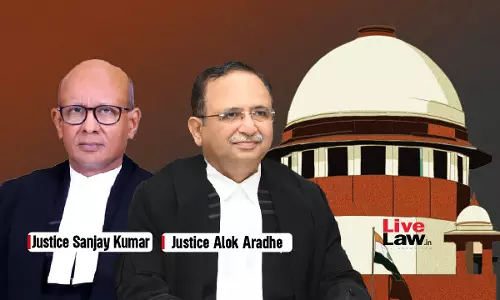
Bank's Failure To Disclose Encumbrances Of Property In Auction Notice Invalidates Sale : Supreme Court Orders Refund To Auction Purchaser
The Supreme Court on Thursday (Sep.25) quashed the auction by the Corporation Bank of a prime property located in Delhi, as the Bank failed to disclose the liability attached to the property in the e-auction. The bench of Justices Sanjay Kumar and Alok Aradhe emphasized that strict adherence to procedural safeguards is mandatory in public auctions to ensure the integrity of the debt...
Supreme Court Daily Round-Up : September 25, 2025
Links of today's reports :'Day-to-Day Trial Practice Must Be Revived In Sensitive Cases' : Supreme Court Gives Guidelines To Courts On Speedy TrialStates Cannot Use Weapon Of Taxation To Discriminate Against Goods Imported From Other States : Supreme Court'Calling Judiciary Biggest Hurdle To Viksit Bharat Is Troubling': Senior Advocate Vikas Pahwa On Sanjeev Sanyal's Remarks'Duty-Free Import...
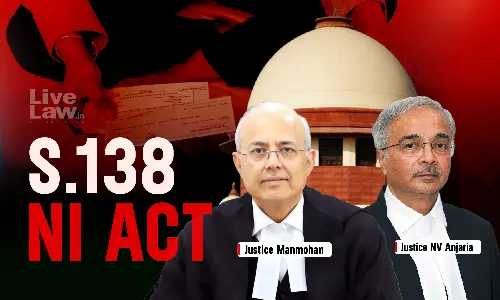
No Need For Pre-Cognizance Summons To Accused In S.138 NI Act Case : Supreme Court Issues Directions For Speedy Trial Of Cheque Bounce Cases
In a significant judgment, the Supreme Court held that an accused need not be heard at the pre-cognizance stage of complaints filed for dishonour of cheque as per Section 138 of the Negotiable Instruments Act.The Court agreed with the Karnataka High Court's judgment in Ashok Vs. Fayaz Aahmad, that there is no requirement to issue summons to the accused at the pre-cognizance stage under...