



- Home
- /
- Supreme court
- /
- Absence of Eyewitness Not Fatal If...
Absence of Eyewitness Not Fatal If Surrounding Circumstances Establish Guilt: Supreme Court Upholds Murder Conviction
Yash Mittal
12 May 2026 10:10 AM IST
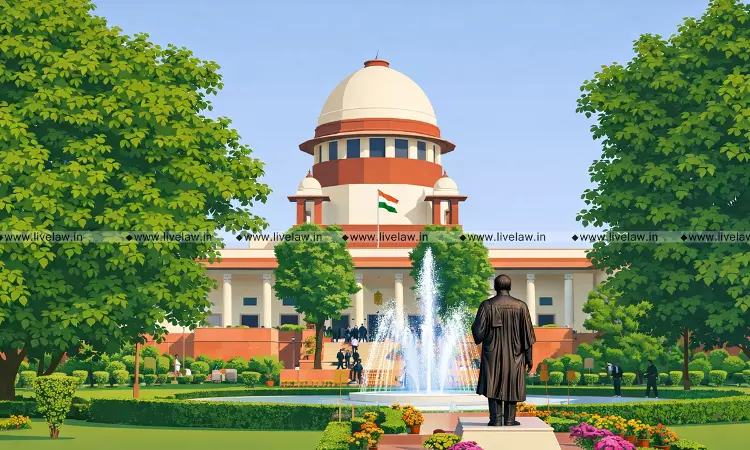
The Supreme Court on Monday (May 11) upheld the conviction of a murder accused, observing that the absence of an eyewitness is not fatal to the prosecution's case when the surrounding circumstances, read along with the deceased's dying declaration, clearly establish the guilt of the accused. A bench of Justice Aravind Kumar and Justice Prasanna B. Varale refused to interfere with the...
This is a premium content
Available exclusively to
Our subscribers
Subscribe Premium 
INR 1099+GST
Your support helps us to bring you more content at
an affordable subscription scheme !!!
All payment options available
The Supreme Court on Monday (May 11) upheld the conviction of a murder accused, observing that the absence of an eyewitness is not fatal to the prosecution's case when the surrounding circumstances, read along with the deceased's dying declaration, clearly establish the guilt of the accused.
A bench of Justice Aravind Kumar and Justice Prasanna B. Varale refused to interfere with the concurrent findings of the Trial Court and High Court, which had extensively relied on the witness testimony (PW-1), who although not an eyewitness to an incident, his testimony assumed significance because the deceased has deposed him repeatedly about the assault committed by the Appellant on him, which was later corroborated by an auto-driver passing thereby from the place of incident.
The case arose from the murder of one Somabhai Sankabhai Rabari, who ran a tea stall in Ahmedabad. According to the prosecution, on the night of December 11, 1998, a quarrel broke out between the deceased and the accused after the accused allegedly threw a half-burnt cigarette into a bucket used for washing cups and saucers at the tea stall. During the altercation, the accused allegedly threatened the deceased.
The next morning, the complainant, who was the deceased's brother, was informed that Somabhai was lying injured near the tea stall. Upon reaching the spot, the deceased allegedly informed him that the accused had stabbed him. The deceased reportedly repeated the same accusation while being taken to the hospital in an auto-rickshaw, but was declared dead upon arrival.
During the investigation, the police recovered the alleged weapon of offence, a knife, pursuant to information furnished by the accused.
Both the Trial Court and High Court convicted the Appellant for the offence of murder, prompting him to file an appeal before the Supreme Court, arguing that the sole testimony of the PW-1 couldn't form the basis of a conviction, as there was no eyewitness to the incident
Rejecting such an argument, the judgment authored by Justice Aravind Kumar said that the mere absence of an eyewitness to an incident would not be fatal to the prosecution's case, once the surrounding circumstances show the involvement of the accused in the crime.
Given that the deceased himself deposed to the PW-1 about the assault committed on him by the Appellant, which was later corroborated by PW-12, an auto-rikshaw driver, who passed by, witnessing the crime committed by the Appellant, the Court noted that such attending circumstances cannot be ignored.
“upon reaching the place of incident the deceased disclosed to him that it was the appellant who had stabbed him with a knife.”, the court noted, pointing that “though PW-1 is not an eyewitness to the actual occurrence, his evidence cannot be discarded while determining whether the offence in question was committed by the appellant, particularly in view of the surrounding circumstances deposed to by him.”
The Court further rejected an argument that a solitary testimony would not be capable of upholding the conviction. Instead, the Court said that “it is a settled principle of criminal jurisprudence that it is the quality and not the quantity of evidence which is determinative. Even the testimony of a solitary witness, if found to be wholly reliable and of sterling quality, is sufficient to base a conviction.” (See Namdeo v. State of Maharashtra, (2007) 14 SCC 150)
“From the aforesaid analysis of the evidence of PW-12, it is evident that his testimony is in complete consonance with the version of PW-1 and materially corroborates the same. The witness has given a clear, cogent and consistent account of the occurrence and has withstood the test of cross-examination without any material contradiction or infirmity being brought on record so as to discredit his presence or his version. We find his evidence to be natural and reliable, and the same conclusively establishes the overt act attributed to the appellant in the commission of the offence.”, the court observed.
In terms of the aforesaid, the appeal was dismissed, and the conviction was affirmed.
Headnote
Indian Penal Code, 1872; Section 302 - Evidence Act, 1872; Section 134 - Quality vs Quantity of Evidence - Conviction on Solitary Witness – Held - It is a settled principle of criminal jurisprudence that it is the quality and not the quantity of evidence which is determinative - The Indian legal system does not insist on a plurality of witnesses. Neither the Legislature under Section 134 of the Evidence Act, 1872, nor the judiciary mandates that there must be a particular number of witnesses to record an order of conviction against an accused - The emphasis of Courts is always on the value, weight, and quality of evidence rather than on quantity, multiplicity, or plurality of witnesses. Even the testimony of a solitary witness, if found to be wholly reliable, free from blemish or suspicion, and of a sterling quality, is sufficient to form the sole basis of a conviction without the necessity of corroboration - a court may acquit the accused in spite of the testimony of several witnesses if it is not satisfied with the quality of evidence - the mere fact that a large number of witnesses, including panch witnesses and some of the alleged eyewitnesses, have turned hostile will not entitle the accused to the benefit of doubt if the remaining material witnesses completely establish the case of the prosecution beyond reasonable doubt. [Relied on Namdeo v. State of Maharashtra, (2007) 14 SCC 150; Bhimappa Chandappa v. State of Karnataka, (2006) 11 SCC 32; Paras 8-16]
Evidence Act, 1872; Section 32(1) - Oral Dying Declaration - Reliability and Evidentiary Value – Held - The legal position with regard to dying declarations is well settled by a catena of decisions - A truthful and voluntary dying declaration, if found to be reliable, can by itself form the sole basis of conviction without the necessity of corroboration - Simply because the deceased subsequently became unconscious by the time he reached the hospital or the doctor, it cannot be presumed that he was unconscious even when the witness initially reached the spot and asked him about the incident immediately after the occurrence - the non mentioning of the name of the assailant in the medical history papers pales into insignificance, as medical history is recorded by doctors primarily to understand how the incident occurred and what type of weapon was involved, rather than investigating who caused the injury. [Relied on P.V. Radhakrishna v. State of Karnataka, (2003) 6 SCC 44; State of Uttar Pradesh v. Ram Sagar Yadav and Others, (1985) 1 SCC 552; Paras 13-15]
Cause Title: MITESH @ T.V. VAGHELA VERSUS THE STATE OF GUJARAT
Citation : 2026 LiveLaw (SC) 486
Click here to download judgment
Appearance:
For Appellant(s) : Mrs. K. Sarada Devi, AOR
For Respondent(s) :Ms. Swati Ghildiyal, AOR Mr. Rishi Yadav, Adv.

Yash Mittal
Yash Mittal is a Correspondent with LiveLaw, covering the Supreme Court of India

