



- Home
- /
- Supreme court
- /
- Accused Entitled To Seek Production...
Accused Entitled To Seek Production Of Prosecution's Unrelied Documents At Appropriate Stage In Trial : Supreme Court
Yash Mittal
29 Sept 2026 9:01 PM IST
The Supreme Court has clarified the manner in which an accused can seek access to documents seized during investigation but not relied upon by the prosecution, holding that while an accused is entitled to documents available with the prosecuting agency to shape his defence, the stage at which such documents can be sought would depend on the nature of the documents.The Court made the...
This is a premium content
Available exclusively to
Our subscribers
Subscribe Premium 
INR 1099+GST
Your support helps us to bring you more content at
an affordable subscription scheme !!!
All payment options available
The Supreme Court has clarified the manner in which an accused can seek access to documents seized during investigation but not relied upon by the prosecution, holding that while an accused is entitled to documents available with the prosecuting agency to shape his defence, the stage at which such documents can be sought would depend on the nature of the documents.
The Court made the observations while setting aside orders of the Special Court and the High Court directing the Central Bureau of Investigation (CBI) to produce certain documents sought by accused Anil Dixit under Section 91 of the Code of Criminal Procedure, 1973.
The case concerned an application filed by Dixit seeking several categories of documents, including seizure memos, CBI registers, source information reports, unrelied documents seized during investigation, minutes of Building Committee meetings, recordings and minutes of evaluation committee meetings, technical bids and appointment files of two persons who were named in the FIR but not chargesheeted.
The CBI resisted production of some of the documents, stating that certain documents were confidential, some were voluminous, while others were not available with the investigating agency.
The Supreme Court noted that the accused had, pursuant to an earlier order, clarified that he was not seeking the source of information received by the CBI or the case diaries.
The Bench considered the competing reliance placed by the parties on the Supreme Court's judgments in State of Orissa v. Debendra Nath Padhi and Sarla Gupta v. Directorate of Enforcement. While Debendra Nath Padhi had held that an accused's entitlement to seek an order under Section 91 CrPC would ordinarily arise only at the stage of defence, Sarla Gupta had clarified that the observation was made in the context of what constitutes the "record of the case" for the purpose of Section 227 CrPC.
The Court, however, said it was unnecessary to resolve the apparent tension between the two decisions for deciding the appeal.
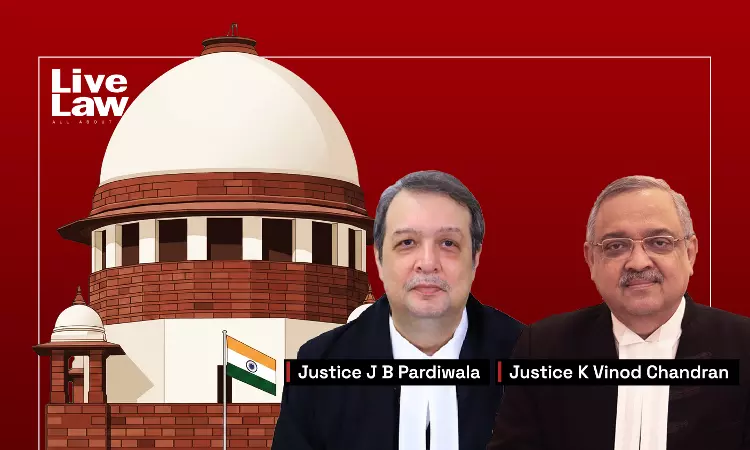
"we need not look at the aforesaid decisions but would only proceed on the premise that the accused is entitled to the documents available with the prosecuting agency to shape its defence; but at what stage could the documents be sought for, is the question arising, which has to be looked at on the specific documents sought for," observed the bench of Justice JB Pardiwala and Justice K Vinod Chandran.
The accused may examine the documents and identify the specific documents required. Such documents can then be sought for production at the appropriate stage, including when the concerned witness is being examined by the prosecution or defence, the Court said.
The Respondent-accused opposed the CBI's appeal and defended the High Court's order while placing reliance on Sarla Gupta and Anr. v. Directorate of Enforcement 2025 LiveLaw (SC) 541, wherein it was held that the accused is entitled to a list of documents, objects, exhibits, etc. that are not relied upon by the agency at the stage of framing of charge.
However, the Court noted that the law laid down in Sarla Gupta does not entitle the accused to seek copies of the said documents at the stage of framing of charges.
“…Though the accused will be entitled to a list of documents, objects, exhibits, etc. that are not relied upon by the ED at the stage of framing of charge, in ordinary course, the accused is not entitled to seek copies of the said documents at the stage of framing of charges.”, the Court said in Sarla Gupta.
With regard to the voluminous unrelied documents, the Court accepted the CBI's position that the accused could inspect them rather than requiring the entire material to be produced before the Trial Court at the stage of framing of charge.
“The accused could examine such documents and seek for production of the specific document required at the appropriate time, when the appropriate witness is being examined either by the prosecution or the defence…”,the bench stated.
The CBI was directed to keep the relevant files ready at the time of trial.
Alternatively, the agency may permit the accused or an authorised representative to identify the required documents during inspection. The specific documents identified should be recorded in writing and signed by both sides, and produced before the Trial Court without delay, the Court said.
On the minutes of various Building Committee meetings sought by the accused, the CBI had stated that only the minutes of the 11th meeting dated January 27, 2012, had been relied upon in the chargesheet.
The accused contended that the minutes of other meetings would help establish his innocence. The Supreme Court held that if those documents were available in the voluminous records open to inspection, the accused could seek their production in accordance with the procedure laid down by the Court.
If such documents were not available with the CBI, the Court said the accused could procure and prove them in his defence, including by resorting to the Right to Information Act, 2005, or by examining an appropriate witness during defence evidence. Their evidentiary value would have to be assessed by the Trial Court.
As regards other documents sought by the accused, including videography or photography of evaluation committee meetings, minutes of a January 21, 2012 meeting and the technical bid, the CBI had categorically stated that the material was not available with it. The Supreme Court held that documents not available with the CBI could not be directed to be produced by it.
The Court also noted that the CBI had already produced the seizure memos sought by the accused. The accused had not pressed his request for CBI registers and source information after clarifying that he was not seeking the source of information.
As a result, the Court directed the Trial Court to proceed in accordance with the directions issued in the judgment and set aside the impugned orders.
Cause Title: Central Bureau of Investigation Versus Anil Dixit
Citation : 2026 LiveLaw (SC) 1001
Click here to download judgment
Appearance:
Mr. S. V. Raju, Additional Solicitor General for the appellant-CBI
Mr. Arvind Kumar Gupta, Sr. Adv. for the respondent-accused
Tags

Yash Mittal
Yash Mittal is a Correspondent with LiveLaw, covering the Supreme Court of India

