



- Home
- /
- Supreme court
- /
- Administrative Orders Must Be...
Administrative Orders Must Be Justified On Reasons Stated There; Can't Add Fresh Grounds Later : Supreme Court
Yash Mittal
27 Nov 2025 2:08 PM IST
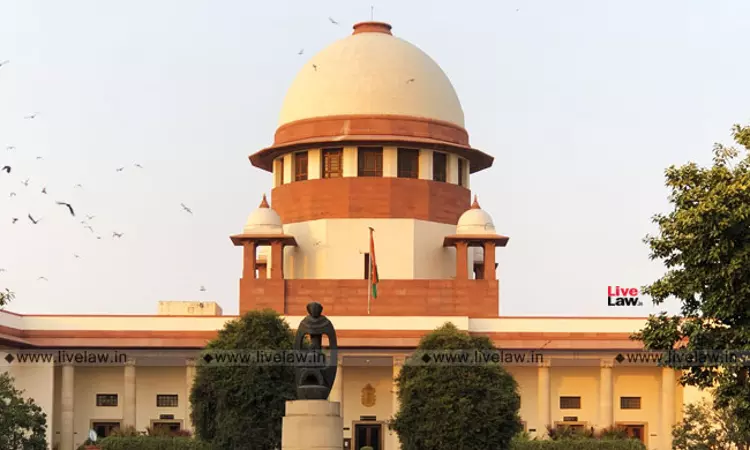
The Supreme Court reiterated that a government order can be defended only on the basis of the reasons which are stated there. The reasons in the order cannot be improved through grounds subsequently raised in the affidavits filed in Courts.“This Court has, however, cautioned against the practice of post-facto rationalisation, whereby authorities attempt to supplement or fabricate reasons...
This is a premium content
Available exclusively to
Our subscribers
Subscribe Premium 
INR 1099+GST
Your support helps us to bring you more content at
an affordable subscription scheme !!!
All payment options available
The Supreme Court reiterated that a government order can be defended only on the basis of the reasons which are stated there. The reasons in the order cannot be improved through grounds subsequently raised in the affidavits filed in Courts.
“This Court has, however, cautioned against the practice of post-facto rationalisation, whereby authorities attempt to supplement or fabricate reasons after the decision has already been taken. Such afterthoughts cannot cure an inherently arbitrary action. The legitimacy of administrative reasoning must be tested with reference to the material that existed at the time the decision was made, not by subsequent embellishment.”, observed a bench of Chief Justice Surya Kant and Justices Ujjal Bhuyan and N Kotiswar Singh, adding that “what is permissible is elucidation of contemporaneous reasoning already traceable on record; what is impermissible is the invention of fresh grounds to retrospectively justify an otherwise unreasoned order.”
The bench made this observation while considering a case in which the State of Himachal Pradesh challenged a High Court order that had quashed its decision to cancel a contract for supplying ePoS machines for the Public Distribution System. The State had issued an unreasoned cancellation order, prompting the private contractor to approach the High Court under its writ jurisdiction to challenge the termination.
Challenging the High Court's finding that its unreasoned cancellation was invalid, the State approached the Supreme Court, where it sought to justify the termination on a newly introduced ground, that the respondent company had been blacklisted on multiple occasions, which it hadn't taken while cancelling the contract, despite having knowledge of the same.
Although the judgment authored by CJI Kant justified the State's cancellation of the contract on an another ground of non-fulfilment of the conditions specified in the Letter of Intent (“LoI”) but found the State's reliance on the blacklisting ground as an afterthought i.e., the act of inventing justifications after a decision has been challenged in court to defend an otherwise arbitrary action.
Related- Reasons Not Stated In An Order Can Be Considered In Limited Circumstances: Supreme Court
Cause Title: State of Himachal Pradesh & Anr. versus M/s OASYS Cybernatics Pvt. Ltd.
Citation : 2025 LiveLaw (SC) 1142
Click here to download judgment
Also From Judgment: Letter Of Intent A 'Promise In Embryo'; Doesn't Create Vested Rights Until Preconditions Are Met : Supreme Court

Yash Mittal
Yash Mittal is a Correspondent with LiveLaw, covering the Supreme Court of India

