



- Home
- /
- Supreme court
- /
- Article 25 Doesn't Include Right To...
Article 25 Doesn't Include Right To Seek Public Holiday On Religious Occasion : Supreme Court
LIVELAW NEWS NETWORK
25 March 2026 6:44 PM IST
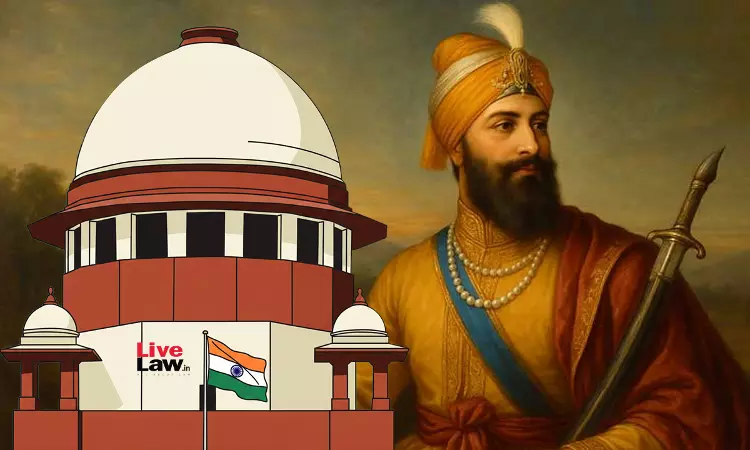
The Court, while expressing deep reverence for Guru Gobind Singh Ji, declined a plea seeking a public holiday for Guru Gobind Singh Jayanti.
The Supreme Court has held that the fundamental right to freedom of religion under Article 25 does not include a right to demand that the State declare a public holiday on a religious occasion, while emphasising that as a developing nation, India must prioritise productivity and continuity of work.A Bench of Justice Vikram Nath and Justice Sandeep Mehta dismissed a public interest...
This is a premium content
Available exclusively to
Our subscribers
Subscribe Premium 
INR 1099+GST
Your support helps us to bring you more content at
an affordable subscription scheme !!!
All payment options available
The Supreme Court has held that the fundamental right to freedom of religion under Article 25 does not include a right to demand that the State declare a public holiday on a religious occasion, while emphasising that as a developing nation, India must prioritise productivity and continuity of work.
A Bench of Justice Vikram Nath and Justice Sandeep Mehta dismissed a public interest litigation filed by the All India Shiromani Singh Sabha seeking directions to declare the birth anniversary (Prakash Parv) of Guru Gobind Singh as a nationwide gazetted holiday and to frame uniform guidelines governing the declaration of public holidays across the country.
The Court had dismissed the matter last week (March 17) and the detailed order was uploaded yesterday.
At the outset, the Court expressed deep reverence for Guru Gobind Singh, observing that his teachings emphasise honest labour and selfless service, and that his legacy is best honoured through dedicated performance of duties rather than disengagement from work.
"At the outset, it must be observed that the tenets of Sikhism place paramount emphasis on remembrance, honest labour, and selfless service. The life of Guru Gobind Singh Ji stands as a testament to courage, discipline, and unwavering commitment to duty, even in the face of the gravest adversity. His teachings, rooted in the concept of 'Kirat Karo' (earn an honest living) and 'Vand Chakko' (share what you earn), illuminate a path of active engagement with one's responsibilities rather than disengagement therefrom. This Court records its deepest reverence for the Tenth Guru, whose life was a tireless crusade for justice and the fulfillment of one's earthly duties. In this light, the celebration of his legacy is perhaps best achieved through the dedicated performance of duties toward society and the nation rather than a symbolic show of respect by demanding a holding in reverence."
Addressing the core issue, the Court underscored that the declaration of public holidays is a matter of policy determination involving administrative efficiency, economic implications and governance considerations. It noted that any indiscriminate expansion of gazetted holidays could adversely impact governance and public productivity.
Significantly, the Bench highlighted the developmental context of the country, observing that the dignity of labour and continuity of work must remain central considerations in policy decisions relating to public holidays. The Court observed that increasing non-working days through judicial mandate would involve a line-drawing exercise that is inherently policy-driven and not amenable to judicial determination.
"In this context, we must be mindful of the fact that the country's diverse diaspora already enjoys a variety of holidays based on religious beliefs. Our national and regional calendars are replete with observances reflecting our rich pluralism. The expansion of the list of gazetted holidays is a matter of administrative calibration, and any indiscriminate addition would adversely impact governance and public productivity. As a developing nation, the focus must remain on the dignity of labour and the continuity of work. Any judicial mandate to increase non-working days involves a line-drawing exercise that is inherently policy-driven and not amenable to judicial determination."
Rejecting the reliance on Article 25, the Court clarified that while the Constitution guarantees every individual the right to profess, practice and propagate religion, it does not extend to seeking State recognition of a religious occasion through the declaration of a compulsory nationwide public holiday. The invocation of Article 25 for such a claim, the Court held, was misplaced.
"Similarly, the reliance on Article 25 of the Constitution of India is totally misplaced. While the freedom of religion guarantees every individual the right to profess, practice and propagate religion, it does not extend to a right to seek State recognition of a religious occasion in the form of a compulsory nationwide public holiday."
The Court further observed that India's federal structure necessitates variation in executive decisions across States based on regional socio-cultural considerations, and that divergence in approaches to public holidays does not by itself amount to arbitrariness or discrimination under Article 14.
Cautioning against judicial overreach, the Bench warned that granting such relief could open the floodgates to similar demands from diverse groups, resulting in an impractical expansion of public holidays and adverse consequences for governance and administrative functioning.
Accordingly, holding that the relief sought did not disclose a justiciable violation of fundamental rights under Article 32, the Supreme Court dismissed the writ petition.
Headnote
Constitution of India – Article 32 and Article 14 – Declaration of Public Holidays – Judicial Review of Policy Decisions – Writ petition seeking directions to the Union and State governments to frame uniform guidelines for declaring public/gazetted holidays and to declare Guru Gobind Singh's 'Prakash Parv' as a nationwide gazetted holiday - Held: Dismissing the petition, the Court observed that the declaration of public holidays is a policy decision involving administrative efficiency, economic implications, and the balancing of diverse socio-cultural practices – Noted that i. Executive Domain: Matters of policy determination regarding governance and administrative exigencies lie within the exclusive domain of the executive. Any judicial mandate to increase non-working days involves a line-drawing exercise that is inherently policy-driven and not amenable to judicial determination; ii. Article 14 (Equality): The absence of a uniform policy does not amount to discrimination under Article 14. Absolute uniformity is not mandated where differentiation is founded on rational considerations, such as regional socio-cultural needs in a federal structure; iii. Article 25 (Religious Freedom): Freedom of religion does not extend to a right to seek State recognition of a religious occasion in the form of a compulsory nationwide public holiday; iv. Administrative Impact: Expanding the list of gazetted holidays would adversely impact governance and public productivity - In a developing nation, the focus must remain on the dignity of labor and continuity of work; v. Floodgates Argument: Granting such relief would open the floodgates to similar claims from diverse sections of society, leading to an impractical expansion of holidays; vi. Legacy of Guru Gobind Singh Ji: Supreme Court recorded deep reverence for the Tenth Guru, noting that his teachings of 'Kirat Karo' (honest living) and 'Vand Chakko' (sharing) emphasize active engagement with responsibilities - His legacy is best honored through the dedicated performance of duties rather than a symbolic show of respect by demanding a holiday. [Paras 11-18]
Case :All India Shiromani Singh Sabha v. Union of India and others | W.P.(C) No. 1474/2020
Citation : 2026 LiveLaw (SC )290


