



- Home
- /
- Supreme court
- /
- Central Govt Must Engage With...
Central Govt Must Engage With State's Views Before Rejecting All India Services Officer's VRS : Supreme Court
Yash Mittal
27 May 2026 4:44 PM IST
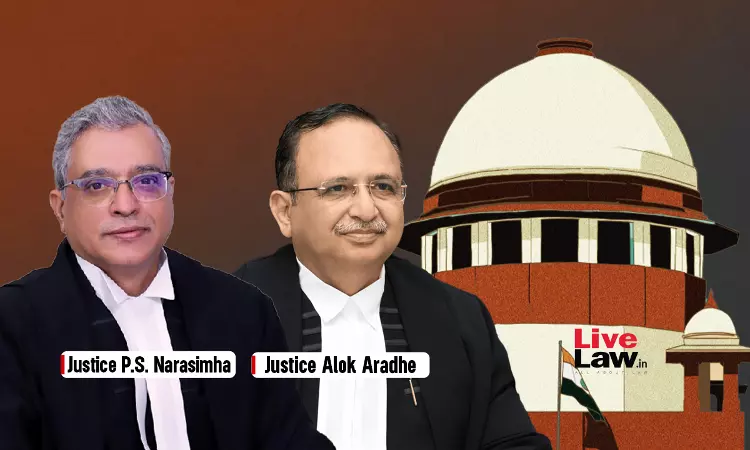
Though the Central Govt is not bound by the recommendation of the State Government, its opinion does carry weight and persuasive value, the Court held.
The Supreme Court has observed that though the Voluntary Retirement from Service from All India Services requires a mandatory approval of the Central Government, this would not by itself, empower the Central Government to reject the application for VRS without considering the recommendation of the State Government. While dealing with a VRS plea of a Maharashtra Cadre Indian Police...
This is a premium content
Available exclusively to
Our subscribers
Subscribe Premium 
INR 1099+GST
Your support helps us to bring you more content at
an affordable subscription scheme !!!
All payment options available
The Supreme Court has observed that though the Voluntary Retirement from Service from All India Services requires a mandatory approval of the Central Government, this would not by itself, empower the Central Government to reject the application for VRS without considering the recommendation of the State Government.
While dealing with a VRS plea of a Maharashtra Cadre Indian Police Service (“IPS”) Officer, a bench of Justice Pamidighantam Sri Narasimha and Justice Alok Aradhe set aside the concurrent findings of the Bombay High Court and the Central Administrative Tribunal, which had upheld the Central Government's decision to reject the Appellant's VRS plea.
The Court noted that the Central Government's decision to reject the Appellant's plea for VRS was passed without a proper application of mind and did not contain the State Government's recommendation regarding the suitability of the Appellant to apply for VRS.
“There is, therefore, no gainsaying about the position of the operation of the Rule that a request for VRS by a member of the (All India) service mandatorily requires acceptance of the Central Government…exercise of discretionary power in accepting or rejecting a request for VRS cannot be without engagement with views expressed by the State Government.”, the Court observed.
"The Central Government cannot form an opinion which is not supported by material on record. Though not bound by the recommendation of the State Government, its opinion does carry weight and persuasive value owing to the fact that it is the authority with direct supervisory knowledge of the officer serving in connection with affairs of that State and under whose authority any disciplinary proceedings are to be conducted.", the Court added.
The Case
The case arose after the appellant's third application seeking voluntary retirement, dated August 1, 2019 was rejected by the Ministry of Home Affairs on October 25, 2019 on the ground that disciplinary proceedings were “pending or being contemplated” and that the officer was therefore “not clear from vigilance angle.”
The rejection came despite the State Government recommending acceptance of the VRS application on October 16, 2019. The State Government had specifically noted that no chargesheet had been issued in any matter and that disciplinary proceedings were merely contemplated. It further opined that no major penalty was likely to be imposed on the officer.
The officer challenged the rejection before the Central Administrative Tribunal, which dismissed his plea. The High Court subsequently affirmed the CAT's decision, leading to the present appeal before the Supreme Court.
Decision
Allowing the appeal, the Supreme Court found that the Central Government's rejection order suffered from non-application of mind because it failed to distinguish between the three complaints or explain why the State Government's assessment was being disregarded.
“…the decision and order of the Central Government in rejecting the notice for voluntary retirement on the ground that the appellant…suffers from non-application of mind. Further, the Central Government did not engage with the State Government's opinion…and the material considered therein, so as to justify the departure from the recommendation to permit the appellant to voluntarily retire from service.”, the court held.
The Court noted that the rejection order merely used generic expressions such as “pending or being contemplated” without analysing whether disciplinary proceedings were actually pending in law. Further, the Court criticised the prolonged delays in disciplinary proceedings initiated against the Appellant after rejection of his VRS application, as an unexplained delay in disciplinary proceedings can itself cause prejudice to the employee. [See State of Andhra Pradesh v. N. Radhakishan, (1998) 4 SCC 154]
In terms of the aforesaid, while allowing the appeal, the Court asked the Central Government to hear the Appellant's plea for VRS afresh.
“…we are of the opinion that the Central Government has not examined the complaints in detail before taking the decision…of not accepting the notice for VRS…the Central Government must revisit its decision dated 25.10.2019 and examine the notice for voluntary retirement afresh.”, the court held.
Headnote
All India Service (Death-cum-Retirement Benefits) Rules, 1958 – Rule 16(2A) – Voluntary Retirement from Service (VRS) – Final Authority of the Central Government - The Supreme Court held that the voluntary severance of an employer employee relationship pursuant to a VRS notice by an All India Service officer mandatorily requires the acceptance of the Central Government - The Central Government is the ultimate repository of authority over career-terminating decisions for such officers and possesses the final word in deciding a request for VRS - It is not bound by the recommendation or opinion formed by the State Government - The act of "acceptance" under the first proviso to Rule 16(2A) is not a mere automatic, routine, or ministerial function; rather, it requires a genuine, independent assessment and a well-considered exercise of discretion based on the entire material available on record - while not bound by the State Government's views, the Central Government's independent decision must still actively engage with and consider the views expressed by the State Government, as it possesses direct supervisory knowledge of the officer. [Relied on Ashok Kumar Sahu v. Union of India, (2006) 6 SCC 704; Paras 10 - 22]
All India Service (Death-cum-Retirement Benefits) Rules, 1958 – Rule 16(2A) read with DoPT Guidelines dated 16.10.1980 [Guideline 3(ii)] – Service Law – Vigilance Clearance – Distinction Between "Pending" and "Contemplated" Disciplinary Proceedings - The Supreme Court clarified the conditions precedent under Guideline 3(ii) for rejecting a VRS request on vigilance grounds – i. Pending Proceedings: A disciplinary proceeding is legally considered "pending" only when a formal charge-sheet/charge-memorandum has been issued and served upon the employee - The mere existence or pendency of a preliminary investigation or complaint prior to the issuance of a charge-sheet does not amount to "pending" disciplinary proceedings; ii. Contemplated Proceedings: "Contemplation" in the context of disciplinary action connotes a deliberate, concrete intention to act on a complaint - It requires the existence of a genuine possibility or contingency that formal departmental proceedings will follow a given complaint, rather than the mere passive existence of an unexamined pending complaint. [Relied on Union of India v. K.V. Jankiraman, (1991) 4 SCC 109; State of Haryana v. Dinesh Singh, (2024) 13 SCC 357; State of U.P. v. Jai Singh Dixit, 1974 SCC OnLine All 240; Paras 23-34]
Service Law – Disciplinary Proceedings – Effect of Abnormal and Unexplained Delay - The Supreme Court reiterated that an unexplained and abnormal delay in the initiation and conclusion of disciplinary proceedings defeats justice and causes inherent prejudice to the delinquent employee - A government servant has a fundamental right to have disciplinary proceedings against them concluded expeditiously - Subjecting an employee to protracted proceedings without any fault on their part inflicts unnecessary mental agony and monetary loss - Supreme Court must balance the need for clean and honest administration against the seriousness of the disciplinary authority in pursuing the charges when determining if delayed proceedings should be terminated. [Relied on State of A.P. v. N. Radhakishan, (1998) 4 SCC 154; Para 30, 31]
Cause Title: ABDUR RAHMAN VERSUS UNION OF INDIA & ORS.
Citation : 2026 LiveLaw (SC) 550
Click here to download judgment
Appearance:
For Petitioner(s) : Mr. Huzefa Aziz Ahmadi, Sr. Adv. Mr. Rohit Kumar Singh, AOR Mr. Ashray Chopra, Adv. Mr. Rohan Sharma, Adv. Mr. Paras Sharma, Adv. Ms. Shubhanginee Singh, Adv.
For Respondent(s) : Ms. Aishwarya Bhati, A.S.G. Ms. Ruchi Kohli, Sr. Adv. Ms. Anupriya Srivastava, Adv. Ms. Shreya Jain, Adv. Mrs. Srishti Mishra, Adv. Mr. Nitin Pavuluri, Adv. Mr. Digvijay Dam, Adv. Ms. Astha Singh, Adv. Mr. Arvind Kumar Sharma, AOR Mr. Shrirang B. Varma, Adv. Mr. Siddharth Dharmadhikari, Adv. Mr. Aaditya Aniruddha Pande, AOR

Yash Mittal
Yash Mittal is a Correspondent with LiveLaw, covering the Supreme Court of India

