



- Home
- /
- Supreme court
- /
- Condonation Of Delay Can't Be...
Condonation Of Delay Can't Be Claimed As Matter Of Right; Entirely Court's Discretion : Supreme Court
Yash Mittal
16 Feb 2026 6:06 PM IST
The Supreme Court has reiterated that condonation of delay cannot be claimed as a matter of right and that it was entirely the discretion of the Court.The Court made this observation while dismissing a Special Leave Petition filed by the State of Odisha as time-barred.In the judgment, the Court pulled up the State of Odisha for its lethargic approach in filing a time-barred appeal with...
This is a premium content
Available exclusively to
Our subscribers
Subscribe Premium 
INR 1099+GST
Your support helps us to bring you more content at
an affordable subscription scheme !!!
All payment options available
The Supreme Court has reiterated that condonation of delay cannot be claimed as a matter of right and that it was entirely the discretion of the Court.
The Court made this observation while dismissing a Special Leave Petition filed by the State of Odisha as time-barred.
In the judgment, the Court pulled up the State of Odisha for its lethargic approach in filing a time-barred appeal with a substantial delay of four months, rejecting the State's plea for condonation that was founded on a weak and routine excuse of procedural delay in securing approval from higher authorities.
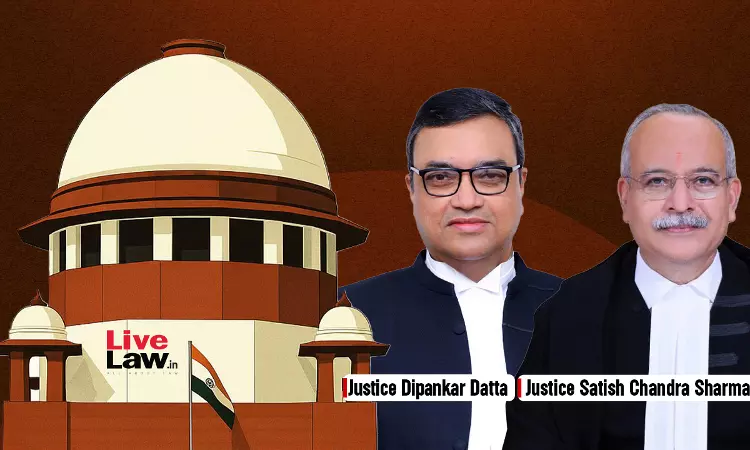
“We have found the State of Odisha to be utterly lethargic, tardy and indolent not only before the High Court but also before this Court. Notwithstanding that its appeal was dismissed as time-barred by the High Court, this Court has been approached by the State of Odisha four months after expiry of the period of limitation.”, observed a bench of Justices Dipankar Datta and Satish Chandra Sharma.
When the State tried to justify the delay for seeking a condonation, stating that the delay in filing an appeal was unintentional and not deliberate, as there was a procedural delay in obtaining approval from the higher authority, the court rejected their reasons, saying “we are of the clear opinion that the cause sought to be shown here by the State of Odisha is not an explanation but a lame excuse.”
The bench was hearing the case where the State of Odisha sought to assail the High Court's order, which had affirmed the State Education Tribunal's order directing the State to release grant-in-aid in favour of the teaching and non-teaching staff of the school in the manner as directed. The Tribunal's 2013 order was challenged with a delay of 2 years.
Against the High Court's order, the State preferred an SLP with a delay of 123 days, and a further delay of 96 days occurred in re-filing the same after curing defects.
As per the Limitation Act, an appeal against the High Court's decision generally needs to be filed within 90 days before the Supreme Court, unless the delay in filing an appeal is condoned under Section 5 of the Limitation Act, 1963.
Affirming the High Court's decision, the bench refused to condone the delay, citing the State's lethargy and its lame excuses for justifying the delay.
Referring to the precedents, the Court, while dismissing the State's appeal, said: “Condonation of delay cannot be claimed as a matter of right. It is entirely the discretion of the Court whether or not to condone delay.”
The Court also traced the evolution of judicial approach, from earlier adopting a liberal stance in condoning delays in State appeals to advance substantial justice over technicalities, to a more stringent position that insists on strict adherence to statutory limitation periods, which are frequently breached.
The bench said rulings such as Collector, Land Acquisition, Anantnag v. Mst Katiji, (1987) 2 SCC 107, and G. Ramegowda v. Land Acquisition Officer, (1988) 2 SCC 142, adopted a liberal and a justice-oriented approach upon calling to differentiate the cases for when a 'State' seeks condonation of delay as distinguished from 'a private party'.
Also, the bench then recorded a shift from a liberal approach to a seemingly different and strict approach while dealing with applications for condonation of delay during the last decade and a half became, which became discernible starting with the decision in Postmaster General v. Living Media India Limited, (2012) 3 SCC 563 where a delay of 427 days in filing the relevant special leave petition was not condoned. Further, in another case of University of Delhi v. Union of India, (2020) 13 SCC 745 (of a three-Judge Bench of this Court), the Court records that a delay of 916 days was not condoned.
Notably, the Bench referred to the decision in Commissioner of Wealth Tax, Bombay v. Amateur Riders Club, Bombay, 1994 Supp (2) SCC 603, describing it as a classic instance where the Court strongly deprecated the lack of promptitude on the part of revenue authorities in filing appeals. The order, authored by former CJI M. N. Venkatachaliah, censured the Revenue for instituting the appeal belatedly, observing that such delays ultimately undermine the department's own interests. The Court underscored that when a government litigant is itself guilty of bureaucratic apathy and indifference, courts are powerless to come to its aid.
“even the courts cannot help a litigant even if the litigant is Government which is itself under the shackles of bureaucratic indifference.”, the court observed in Amateur Riders Club (supra).
“It is absolutely clear that the law was laid down in Ramegowda (supra), following Katiji (supra), with much optimism that matters would improve. Their Lordships, however, found no visible support for such optimism and the Court's patience having been tested to the extreme limit, held that there is a point beyond which even the courts cannot help a litigant even if the litigant labouring under the shackles of bureaucratic indifference is the Government.”, the bench recorded further in this case.
Accordingly, the appeal was dismissed.
Headnote
Limitation Act, 1963; Section 5 — Condonation of Delay — State/Government Litigants — The Supreme Court dismissed a Special Leave Petition filed by the State of Odisha, refusing to condone a delay of 123 days in filing and 96 days in re-filing – Held that while a liberal approach and certain latitude ("play at the joints") are traditionally extended to the State due to procedural red tape, there is a limit to such indulgence – Noted that the State's explanation—citing "procedural delay in obtaining approval from the higher authority"—as a "lame excuse" rather than a "sufficient cause." – Noted that condonation of delay is not a matter of right but a discretionary power, and the State had shown "utter lethargy" throughout the proceedings in both the High Court and the Supreme Court.
Limitation Act, 1963; Section 5 — Sufficient Cause vs. Bureaucratic Indifference — Relying on its previous observations in Amateur Riders Club, reiterated that "there is a point beyond which even the courts cannot help a litigant even if the litigant is Government which is itself under the shackles of bureaucratic indifference." - noted that despite decades of judicial optimism that governmental promptitude would improve, there has been no conspicuous change, leading to the exhaustion of judicial patience regarding stereotyped explanations for delay. [Relied on Commissioner of Wealth Tax, Bombay v. Amateur Riders Club, Bombay, 1994 Supp (2) SCC 603; Collector, Land Acquisition, Anantnag v. Mst Katiji, (1987) 2 SCC 107; G. Ramegowda v. Land Acquisition Officer, (1988) 2 SCC 142; Postmaster General v. Living Media India Limited, (2012) 3 SCC 563; Paras 12-20]
Cause Title: STATE OF ODISHA & ORS. VERSUS MANAGING COMMITTEE OF NAMATARA GIRLS HIGH SCHOOL
Citation : 2026 LiveLaw (SC) 161
Appearance:
For Petitioner(s) :Ms. Sanjana Saddy, AOR Ms. Shailja Singh, Adv.
For Respondent(s) :Mr. Nagendra Kasana, AOR Mr. Mahendra Kumar Sahoo, Adv. Mr. A Deb Kumar, Adv. Mrs. A Deepa, Adv. Mrs. Neeta Kasana, Adv. Mrs. Anjana Kasana, Adv. Mr. Binod Ch Sabat, Adv.
Tags

Yash Mittal
Yash Mittal is a Correspondent with LiveLaw, covering the Supreme Court of India

