Constructive Res Judicata | Claim Based On Subsequent Cause Of Action Not Barred By Judgment On Prior Cause Of Action : Supreme Court
Yash Mittal
18 Nov 2026 8:02 PM IST
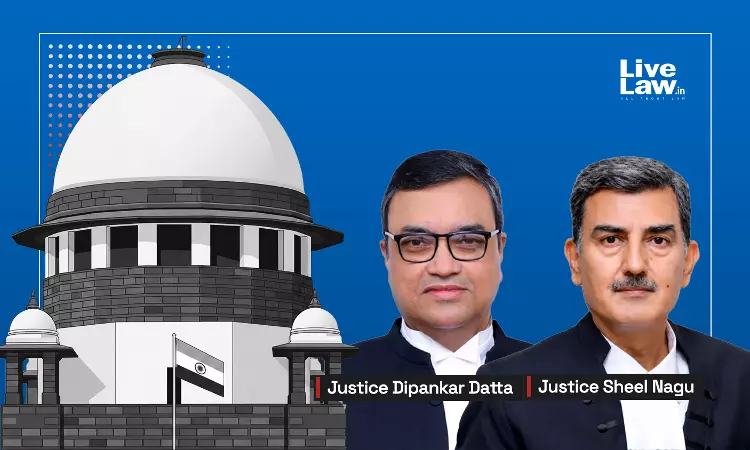
The Supreme Court on Wednesday (November 18) held that the principle of constructive res judicata cannot bar a subsequent claim merely because a relief was not sought in earlier proceedings, where the cause of action for such relief had not arisen when the original proceedings were instituted.
A bench of Justice Dipankar Datta and Justice Sheel Nagu heard the case concerning a retired Central Bank of India employee whose subsequent writ petition seeking interest on delayed payment of salary arrears was dismissed on the ground that he had not claimed such interest in his earlier writ petition challenging the disciplinary proceedings initiated against him.
According to the Appellant-bank employee, the claim for interest had not arisen when the original writ petition was filed, as he could not have foreseen the prolonged delay in the conclusion of the litigation and payment of his dues. Despite the High Court's 2007 order directing reinstatement with consequential benefits, the salary arrears were paid only in 2011.
Setting aside the Punjab and Haryana High Court's order, the judgment authored by Justice Dipankar Datta held that the principle of constructive res judicata would apply only if the cause of action for claiming interest on delayed payment of salary had existed when the initial writ petition was filed. The Court noted that the appellant's original writ petition challenged only the disciplinary proceedings, and no claim for interest had arisen at that stage. The High Court directed his reinstatement with consequential benefits only in 2007, while the salary arrears were paid in 2011. The delay in payment, therefore, gave rise to a fresh cause of action, entitling the appellant to independently seek interest on the delayed dues.


“A right to relief ordinarily relates back to the date the proceedings are instituted. The crucial date here is 11th June, 1991. Res judicata and/or principles analogous thereto and the bar of Order II Rule 2, CPC apply only to a claim that could have been raised when the earlier writ petition was instituted. On 11th June, 1991, Kumar had no claim for interest, having not foreseen that it would take years for the proceedings to conclude…A claim based on a subsequent cause of action cannot be barred by a judgment on a prior cause of action. That apart, grant of interest required adjudication of disputed facts not forming part of the original lis – such as entitlement to interest, the period of delay attributable to each party, the applicable rate, etc. The relief, in such event, being substantive and independent, the proper remedy was a fresh proceeding, which Kumar correctly instituted.”, the Court observed.
It further noted that the claim for interest required adjudication of separate factual issues, including entitlement to interest, the period of delay attributable to each party and the applicable rate.
The Court held that the claim was substantive and independent in nature and, therefore, the Appellant had correctly instituted a fresh proceeding for seeking interest.
The ruling clarifies that constructive res judicata bars subsequent litigation over claims that were available and ought to have been raised in the earlier proceedings, but does not extend to substantive claims arising from subsequent events that give rise to a distinct cause of action.
As a result, the appeal was disposed of, with a direction to pay an additional Rs. 5 Lakh compensation to the Appellant towards full and final settlement, in addition to Rs. 42 Lakh already granted to the Appellant towards salary arrears.
Appearance:
Mr. Gopal Jha, Adv./Amicus Curiae
For Petitioner(s) : Petitioner-in-person
For Respondent(s) :Mr. Basant R., Sr. Adv. Mr. Divyanshu Sahay, AOR Mr. Naman Vashishtha, Adv. Mr. Aakash Rajeev, Adv. Ms. Shradha Narayan, Adv. Mr. Akshay Sahay, Adv.