



- Home
- /
- Supreme court
- /
- Digitize Land Records Using...
Digitize Land Records Using Tamper-Proof Technology Like Blockchain : Supreme Court Suggests To Govts
Yash Mittal
22 Jan 2026 6:51 PM IST
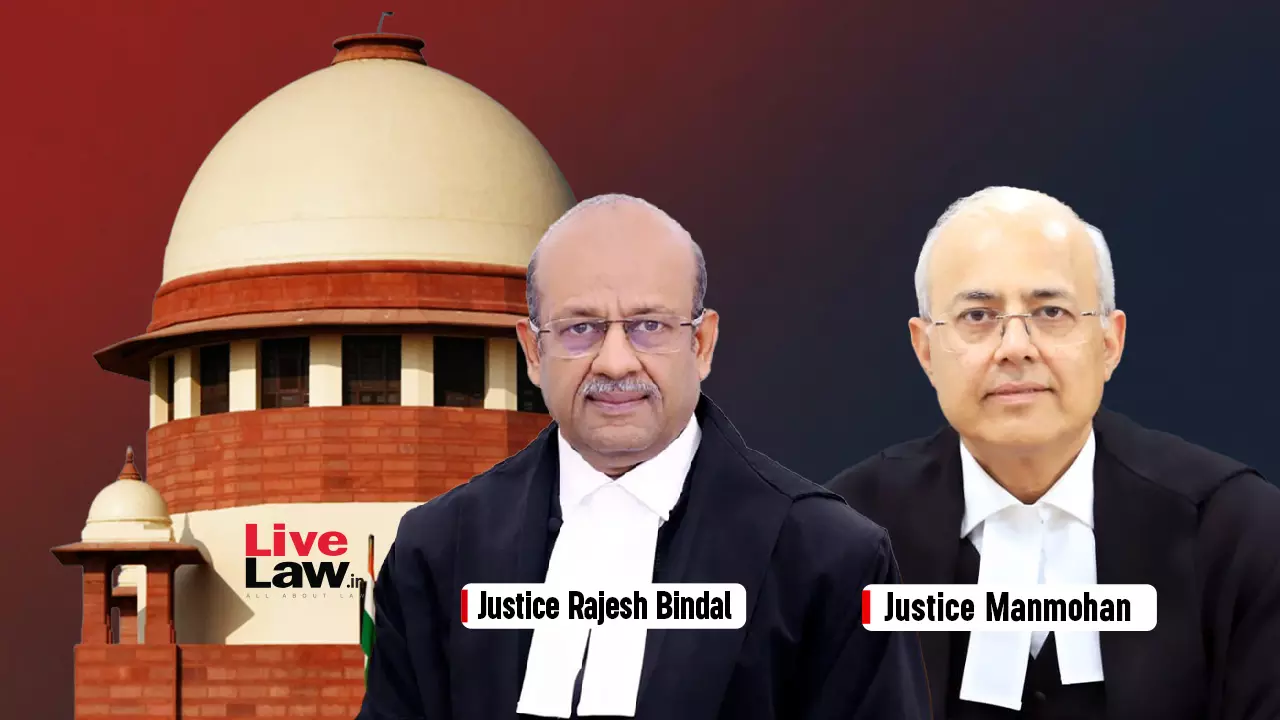
The Supreme Court on Thursday (January 22) urged the Union and State Governments to adopt secure, tamper-proof technologies such as Blockchain for digitising land records, to prevent forgery, and minimise prolonged litigation arising from disputes over the authenticity of property documents. “this Court deems it necessary to suggest to the Union and State Governments the urgent need for...
This is a premium content
Available exclusively to
Our subscribers
Subscribe Premium 
INR 1099+GST
Your support helps us to bring you more content at
an affordable subscription scheme !!!
All payment options available
The Supreme Court on Thursday (January 22) urged the Union and State Governments to adopt secure, tamper-proof technologies such as Blockchain for digitising land records, to prevent forgery, and minimise prolonged litigation arising from disputes over the authenticity of property documents.
“this Court deems it necessary to suggest to the Union and State Governments the urgent need for the digitization of registered documents and land records using secure, tamper-proof technologies such as Blockchain. Many experts believe that Blockchain, a shared, digital record book (ledger) system would ensure that once a transaction of a sale or mortgage or like nature is recorded, it becomes immutable and cryptographically secured.”, observed a bench of Justices Rajesh Bindal and Manmohan, stressing that due to country's weak land record system, a large number of litigation clogs the judicial system over the authenticity of the property documents such as registered sale deed.
“Registered documents must inspire absolute confidence to ensure the ease of doing business and to uphold the sanctity of property titles in a modern economy.”, the court remarked.
The observation was made in a case where the respondent, after executing a registered sale deed in favour of the appellant to redeem an existing mortgage, later challenged the same document as “sham” when the appellant initiated eviction proceedings, despite continuing in the property as a tenant, claiming that the transaction was only a nominal arrangement to secure a loan and not a genuine sale.
Recently, a bench led by Justice PS Narasimha also had made a similar recommendation to digitise property records.
Background
The appellant-defendant claimed ownership over the suit property on the basis of a registered sale deed executed by the respondent-plaintiff for a consideration of ₹10,000. As per the recitals, ₹8,000 was utilised to redeem an earlier mortgage on the property and the remaining ₹2,000 was paid in cash. On the very same day, a registered rental agreement was executed, under which Tukaram became a tenant in the property sold by him.
For about 14 months thereafter, Tukaram paid rent and even admitted his liability to do so in a reply to a legal notice issued in 1974. However, when Hemalatha initiated eviction proceedings in 1975, Tukaram turned around and filed a civil suit in 1977 claiming that the sale deed was not a real sale but only a nominal transaction meant to secure a loan, and that the document should be treated as a mortgage.
The Trial Court dismissed Tukaram's suit and upheld the sale deed as genuine. This was affirmed by the First Appellate Court. The High Court, however, reversed these findings and held that the transaction was not an outright sale, accepting the theory that the document was a sham mortgage.
Aggrieved by the High Court's findings, the Appellant approached the Supreme Court.
Decision
Setting aside the High Court judgment, the judgment authored by Justice Manmohan restored the First Appellate Court's decision and upheld the sale deed as a genuine transaction. It emphasised that registered documents carry a strong presumption of validity and cannot be lightly declared sham without cogent pleadings and convincing evidence.
“It is a settled position of law that a registered Sale Deed carries with it a formidable presumption of validity and genuineness. Registration is not a mere procedural formality but a solemn act that imparts high degree of sanctity to the document. Consequently, a Court must not lightly or casually declare a registered instrument as a “sham”.”, the Court observed, holding that “…as both the Sale Deed and Rental Agreement in question are registered, there is a very strong presumption about the validity and genuineness of the documents in question.”
It was in this context that the Court indicated that the digitization of the land records through a secure, transparent, and tamper-proof technology like blockchain would minimize “the scourge of forgery and "clever drafting" that clogs our judicial system.”
Accordingly, the appeal was allowed, and the First Appellate Court's decision was restored, which upheld the trial court's decision to dismiss the suit filed against the Appellant.
Headnote
Registered Documents – Presumption of Validity – Standard of Proof to Declare a Registered Sale Deed as "Sham" – A registered Sale Deed carries a formidable presumption of validity and genuineness. Registration is a solemn act imparting a high degree of sanctity to the document; therefore, courts must not lightly or casually declare it a "sham" - The burden of proof to displace this presumption rests heavily upon the challenger, requiring material particulars and cogent evidence to demonstrate that the Deed was never intended to operate as a bona fide transfer of title. [Paras 31 - 33]
Pleading Standards – Order VI Rule 4 CPC – Rule Against "Clever Drafting" – A party alleging that a registered Deed is a sham must satisfy a rigorous standard of pleading by providing clear, cogent, and convincing averments with material particulars - Adopting a test akin to Order VI Rule 4 of the CPC, Supreme Court held that "clever drafting" creating an illusion of a cause of action is impermissible - Mere suspicion or nebulous averments without material particulars are insufficient to dislodge the presumption under Sections 91 and 92 of the Indian Evidence Act, 1872. [Paras 34, 35]
Transfer of Property Act, 1882 – Section 58(c) – Mortgage by Conditional Sale vs. Outright Sale – No transaction shall be deemed a mortgage by conditional sale unless the condition for reconveyance is embodied in the document that effects or purports to effect the sale - In the absence of such a clause in the registered Sale Deed, the transaction cannot be construed as a mortgage by conditional sale. [Paras 44 - 49]
Indian Evidence Act, 1872 – Sections 91 and 92 – Admissibility of Oral Evidence – Where the terms of a written registered document are clear and unambiguous, extrinsic evidence to ascertain the true intention of the parties is inadmissible - While oral evidence may be admissible to show a document is a "sham," the threshold for such a claim is extremely high and must be supported by strong evidence of surrounding circumstances, not subsequent conduct - Supreme Court suggested an urgent need for the Union and State Governments to digitize land records and registered documents using secure, tamper-proof technologies like Blockchain to minimize forgery and "clever drafting" that clogs the judicial system – Appeal allowed. [Relied on Prem Singh and Ors. vs. Birbal and Ors., (2006) 5 SCC 353; Rattan Singh and Ors. v. Nirmal Gill & Ors., (2021) 15 SCC 300; Gangabai w/o Rambilas Gilda (Smt.) vs. Chhabubai w/o Pukharajji Gandhi (Smt.), (1982) 1 SCC 4; Paras 35, 41-47, 76, 77]
Cause Title: HEMALATHA (D) BY LRS. VERSUS TUKARAM (D) BY LRS. & ORS.
Citation : 2026 LiveLaw (SC) 79
Click here to download judgment
Appearance:
For Appellant(s) : Mr. Bhardwaj S Iyengar, Adv. Mr. Vikas Upadhyay, AOR Ms. Ankita Kashyap, Adv. Mr. Ranveer Singh, Adv.
For Respondent(s) : Mr. S N Bhat, Sr. Adv. Mr. D P Chaturvedi, Adv. Mr. Tarun Kumar Thakur, Adv. Mr. Abhay Choudhary M, Adv. Mrs. Parvati Bhat, Adv. Ms. Anuradha Mutatkar, AOR
Also Read - 'Property Purchase Traumatic' : Supreme Court Suggests Use Of Blockchain Technology To Make Land Registrations Easy & Reliable

Yash Mittal
Yash Mittal is a Correspondent with LiveLaw, covering the Supreme Court of India

