



- Home
- /
- Supreme court
- /
- Employee Who Accepts Benefits Of...
Employee Who Accepts Benefits Of Resignation Cannot Later Revoke It Claiming Its Acceptance Was Invalid : Supreme Court
Yash Mittal
5 Aug 2026 11:03 AM IST
“He cannot have his cake and eat it too," the Court observed, saying that the employee's conduct precluded him from challenging the acceptance of his resignation.
The Supreme Court has held that an employee who voluntarily resigns, accepts all consequential benefits and secures fresh employment on the strength of that resignation cannot later seek reinstatement by pointing to a technical defect in the authority that initially accepted the resignation.The Court ruled that while an unauthorized acceptance of resignation can be cured through...
This is a premium content
Available exclusively to
Our subscribers
Subscribe Premium 
INR 1099+GST
Your support helps us to bring you more content at
an affordable subscription scheme !!!
All payment options available
The Supreme Court has held that an employee who voluntarily resigns, accepts all consequential benefits and secures fresh employment on the strength of that resignation cannot later seek reinstatement by pointing to a technical defect in the authority that initially accepted the resignation.
The Court ruled that while an unauthorized acceptance of resignation can be cured through subsequent ratification by the competent authority, an employee who has treated the resignation as final is also barred from challenging it after having altered his position.
The Court delivered the ruling while deciding disputes involving Bharat Singh Rawat, who had resigned from Delhi Technological University (DTU) and later sought re-appointment on the ground that the resignation was not accepted by the comeptent authority.
The Court held that an employee who tendered a resignation, treating its acceptance as final, and used it for new opportunities, cannot later, unilaterally withdraw the resignation citing unauthorised acceptance of the resignation.
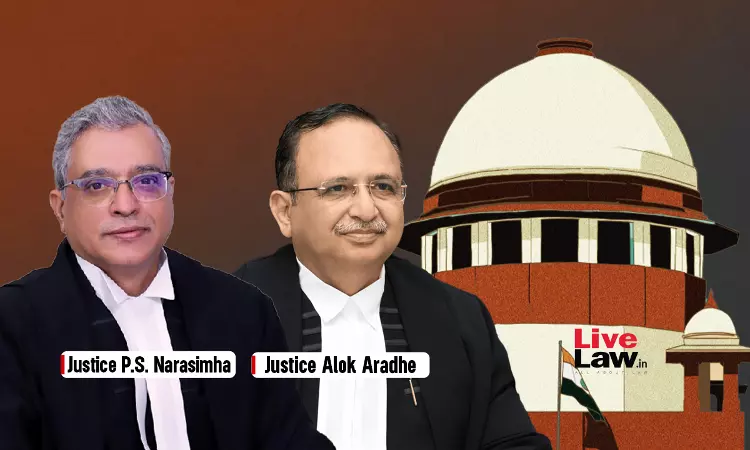
“Having taken the settlement, the relief, and the certificate, and having used that certificate to open the door to another appointment, the respondent cannot, upon being disappointed of that appointment or upon mere reconsideration, turn back and treat the resignation he himself procured as a nullity.”, observed a bench of Justice Pamidighantam Sri Narasimha and Justice Alok Aradhe.
The Court clarified that a resignation, though invalidly accepted, cannot be later revoked if it was acted upon by the parties.
“A resignation, even where accepted in the first instance by one not clothed with authority to accept it, may nonetheless become a consummated and irrevocable transaction where both sides have, by their conduct, treated it as final and altered their positions upon that footing. In such a case, an employee is precluded, not by any doctrine of curative ratification, but by the ordinary principle against approbation and reprobation, from later impugning the very transaction he brought about and from which he has already taken the entire benefit.”, the Court observed.
The Respondent tendered a resignation on May 19, 2016, with a waiver of the notice period and requested acceptance of his resignation with effect from May 31, 2016. The Professor holding the additional charge of Vice-Chancellor, in the absence of the VC, accepted the resignation on May 25, 2016. Respondent was relieved, and his no-dues certificate, last pay certificate, and experience certificate were issued and accepted by him.
Nearly four months later, on September 22, 2016, Respondent sought to withdraw his resignation, contending that it had neither been accepted nor ratified by the Board of Management (BOM), the competent authority. The BOM, in its 20th meeting held on September 26, 2016, ratified the acceptance of resignation, and his request for withdrawal was rejected on November 3, 2016.
The Single Bench as well as the Division Bench of the High Court ordered the reinstatement of the Respondent, holding the acceptance of the resignation to be vitiated, leading to an appeal before the Supreme Court by the Delhi Technological University.
The core issue before the Supreme Court was about the right of an employee to withdraw a tendered resignation, and the effect of ratification, by the competent authority, of an otherwise unauthorised acceptance of resignation.
Allowing the DTU's appeal, the judgment authored by Justice Aradhe set aside the impugned findings, observing that a ratified act is deemed valid from the date of the original, unauthorised act, and not merely from the date of ratification.
“Ratification, in its ordinary legal signification, denotes the confirmation or adoption, by a person or body possessing the requisite authority, of an act earlier done on its behalf without such authority, or done irregularly, so that the act is treated as valid from its inception.”, the Court observed.
“…a resignation tendered on the footing that formal acceptance would follow at a later date was held incapable of unilateral withdrawal, the resigner having, in Lord Halsbury's words, already “consummated” the arrangement by his own conduct before he purported to revoke. Lord Watson likewise held that a resigner who has done all that lay in his power to complete a transaction cannot later be permitted to upset it merely because formal acceptance was still awaited.”, the Court added.
One can't have the cake and eat it too
Apart from ratification, the Court emphasized that Rawat's own conduct made the resignation irrevocable.
It noted that Rawat himself requested waiver of the notice period, accepted the relieving order, received his no-dues certificate, last pay certificate and experience certificate, and later used that experience certificate to obtain appointment as Deputy Registrar at NIT Calicut.
“He cannot have his cake and eat it too, i.e. he cannot claim the benefits of a completed exit from DTU when it suited him to move on, and simultaneously claim that no exit ever legally occurred when it suits him to return. This conclusion is reinforced by the decisions cited by the appellant recognising that an employee who has acted upon, and accepted the consequences of his own resignation cannot later found a challenge on a technical infirmity in the mode of its acceptance.”, the Court observed for the Respondent.
Doctrine of ratification
The judgment also discussed the principles of ratification.
The following legal principles about the doctrine of ratification were culled out by the bench:
"(i) Ratification means making a previously invalid act valid. It is the subsequent approval of an act that was initially done without authority.
(ii) A subsequent ratification is equivalent to prior authority. Once the competent authority ratifies an act, the law treats it as though the authority had existed from the beginning. This is based on the maxim ratihabitio mandato aequiparatur.
(iii) Ratification operates retrospectively. It relates back to the date on which the original act was performed and cures the defect arising from the absence of prior authority.
(iv) Only the competent authority can ratify an invalid act. The authority which is legally empowered to perform the act must itself approve or adopt the earlier unauthorised action.
(v) Express approval of the earlier action is sufficient. It is not necessary for the competent authority to pass a fresh order. A resolution or decision approving the earlier unauthorised act amounts to valid ratification.
(vi) Ratification cures defects of authority, not acts that are inherently illegal. The doctrine applies where the act could have been validly performed by the competent authority in the first place. It cannot validate an act that is void because it is prohibited by law or beyond the power of the authority."
In terms of the aforesaid, the appeal was allowed.
Headnote
Service Law – Resignation – Withdrawal of Resignation – Unauthorised Acceptance and Subsequent Ratification – Relation-back Doctrine – Principle against Approbation and Reprobation - Effect of Ratification by Competent Authority - An acceptance of resignation originally made by an officer lacking competence or holding merely additional charge stands validated upon subsequent ratification by the competent authority - Under the maxim omnis ratihabitio retrotrahitur et mandato priori aequiparatur, a valid ratification operates retrospectively, relating back to the date of the original unauthorized acceptance and curing the defect of lack of prior authority - Once an unauthorized acceptance is ratified by the competent authority, the acceptance relates back to the original date of relieving - there remains no resignation in existence in the eyes of the law that an employee can subsequently withdraw - An employee who requests a waiver of notice period, accepts full settlement (no-dues certificate, last pay certificate, experience certificate), and utilizes the same to secure employment elsewhere is precluded from challenging the resignation's acceptance on technical grounds or alleging lack of authority under the principle against approbation and reprobation. [Para 17 - 25]
Service Law – National Institute of Technology First Statutes, 2009 – Statute 30 – Effectiveness of Resignation – Communication & Notice Period - Effective Date of Resignation: Under the proviso to Statute 30 of the NIT First Statutes, 2009, a resignation takes legal effect immediately on the date of its acceptance by the appointing authority - Its legal efficacy is neither conditional upon formal communication nor held in abeyance during the serving of the notice period - While Paragraph 3 of Office Memorandum dated 11.02.1988 permits withdrawal of an accepted resignation prior to actual relieving, the competent authority retains the discretion to reject such withdrawal request by recording rational and communicated reasons. [Relied on High Court of Judicature for Rajasthan v. P.P. Singh & Anr., (2003) 4 SCC 239; National Institute of Technology & Anr. v. Pannalal Choudhury & Anr., (2015) 11 SCC 669; Municipal Commissioner, Jamnagar Municipal Corporation & Anr. v. R.M. Doshi, (2024) 20 SCC 742; Air India Express Ltd. & Ors. v. Captain Gurdarshan Kaur Sandhu, (2019) 17 SCC 129; Paras 27-30]
Cause Title: DELHI TECHNOLOGICAL UNIVERSITY VERSUS B.S. RAWAT (with connected case)
Citation : 2026 LiveLaw (SC) 761
Click here to download judgment
Appearance:
For Appellant(s) : Mrs. Avnish Ahlawat, Adv. Mr. Uday Singh Ahlawat, Adv. Mr. Atik Gill, Adv. Mr. Mohnish Sehrawat, Adv. Mr. Ankit Roy, AOR Ms. Mrinalini Ramesh, Adv. Petitioner-in-person
For Respondent(s) : Caveator-in-person, AOR Mr. Ankit Roy , AOR Mrs. Avnish Ahlawat, Adv. Mr. Uday Singh Ahlawat, Adv. Mr. Mohnish Sehrawat, Adv. Mr. Atik Gill, Adv. Mr. Shyam Padman, Sr. Adv. Mr. Jaimon Andrews, Adv. Mr. Piyo Harold J, Adv. Ms. Ashwathy Shyam, Adv. Mr. Firdouse C P, Adv. Mr. Naresh Kumar, AOR
Tags

Yash Mittal
Yash Mittal is a Correspondent with LiveLaw, covering the Supreme Court of India

