



- Home
- /
- Supreme court
- /
- Financiers Cannot Repossess...
Financiers Cannot Repossess Vehicles By Force : Supreme Court Awards Rs 10 Lakh Compensation To Truck Owner
Saima Anjum
16 Sept 2026 7:30 PM IST
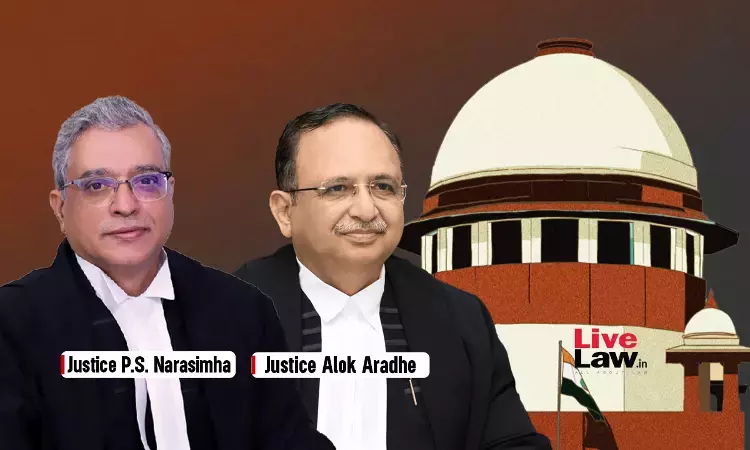
The Court urged the RBI to issue guidelines to prevent forcible possession of hypothecated vehicles.
The Supreme Court today (16.09.2026) has held that a financier's right of self-help repossession of a hypothecated vehicle cannot be exercised through force, deceit, or in violation of the terms of the loan agreement, and that recovery of loans or seizure of vehicles could only be made through legal means. It also awarded compensation to a truck owner whose vehicle was repossessed at 1 am...
This is a premium content
Available exclusively to
Our subscribers
Subscribe Premium 
INR 1099+GST
Your support helps us to bring you more content at
an affordable subscription scheme !!!
All payment options available
The Supreme Court today (16.09.2026) has held that a financier's right of self-help repossession of a hypothecated vehicle cannot be exercised through force, deceit, or in violation of the terms of the loan agreement, and that recovery of loans or seizure of vehicles could only be made through legal means.
It also awarded compensation to a truck owner whose vehicle was repossessed at 1 am by breaking open its steering lock, without any prior notice.
A bench of Justice PS Narasimha and Justice Alok Aradhe ruled so while setting aside an Allahabad High Court order, by which the appellant's writ petition was dismissed holding that as the vehicle was sold, he had belatedly approached the High Court, and had also defaulted in the payment of instalments of the loan.
The appellant had availed a commercial vehicle loan in 2019 from Cholamandalam Investment and Finance Company Limited for his truck, secured by hypothecation of the vehicle, with a supplementary loan extended in June 2021. Following defaults in repayment, the company repossessed the vehicle once in 2022, released it after part-payment, and issued further notices upon continued default. In 2023, while his vehicle was parked under CCTV surveillance, four unidentified persons broke the steering lock and drove it away. He lodged an e-FIR the same day, pursuant to which no action was taken, prompting him to file a complaint before the Superintendent of Police. Still, however, no action was taken. It was through a legal notice that he learnt that the company had repossessed and sold the vehicle and that a further amount remained due from him despite sale proceeds.
A complaint filed by the appellant under Section 156(3) of the Code of Criminal Procedure, 1973 (CrPC, now Section 175(3) of the Bharatiya Nagarik Suraksha Sanhita, 2023) before the Chief Judicial Magistrate was dismissed on the ground that the vehicle had been confiscated for default. Subsequently, a writ petition was filed before the Allahabad High Court, which was also dismissed.
Aggrieved by the High Court's finding, the appellant approached the Supreme Court.
The Supreme Court noted that Section 35A of the Banking Regulation Act, 1949 empowers the Reserve Bank of India (RBI) to issue binding directions in public interest, and traced the evolution of RBI's Fair Practices Code for Lenders 2003, the 2005 Guidelines on customer rights and debt collection practices, and the 2006 Fair Practices Code for Non-Banking Financial Company (NBFC), all of which mandated that the “lenders should not resort to undue harassment viz., persistently bothering the borrowers at odd hours, use of muscle power for recovery of loans etc.”
The Court also referred to its earlier decision in ICICI Bank Ltd. v Prakash Kaur(2007), where it had held that “ours is a country governed by rule of law and recovery of loans or seizures of vehicles could only be made through the legal means and the banks cannot employ 'goondas' to take possession of the vehicles by force. The court enumerated the suggestions to be followed by the financial institutions/banks for recovery of the amount and seizure of the vehicle and noted that even though the RBI had issued the Guidelines on 21.11.2005 which remains only on paper and is not being followed.”
Further, the bench laid down a set of guiding principles for financial institutions and courts, including that seizure of a vehicle can be effected through lawful means, that a repossession clause must be legally valid and conform to the Indian Contract Act. 1872, and that such a clause must provide for a notice period before possession, the procedure for taking possession, and a final opportunity to the borrower to repay before sale.
Article 11 of the loan agreement stipulated that on occurrence of an 'Event of Default', the borrower's rights over the vehicle would stand determined ipso facto without any notice, while also separately providing for a seven-day notice before repossession. The bench found this clause fell short of the standard required of a valid repossession clause. It, thus held that “Article 11 places the borrower entirely at the mercy of financier's unilateral discretion, both as to whether notice will be given at all and as to the manner and timing of the sale.”
The Court found this clause objectionable on four grounds as, “firstly, the stipulation that the borrower's rights over the asset stand determined “ipso facto without any notice” upon the mere occurrence of an Event of Default is directly at variance with the requirement that a repossession clause must provide for a notice period before possession is taken.
Secondly, the authorisation to recovery agents to “enter any place or places” in search of the asset is itself contrary to the RBI's Guidelines and offends the requirement of a fair, lawful procedure for taking possession.
Thirdly, the clause nowhere prescribes a procedure for taking possession or for sale and auction of the asset, leaving both wholly to the discretion of the Company.
And fourthly, the power reserved to the Company to waive the notice altogether, at its own discretion, on its own assessment of jeopardy to its interest, converts what ought to be a floor of minimum protection into an illusory promise, defeasible at the will of the very party against whom it is meant to protect the borrower.
A contractual term which permits one party unilaterally to dispense with the procedural safeguards designed to protect the other cannot be regarded as being in conformity with either the RBI Guidelines or the general contractual requirement of fairness; to that extent, Article 11 does not meet the standard the law requires of a valid repossession clause.”
Applying the framework to the facts of the present case, the bench found that no seven-day notice had been issued to the appellant prior to repossession, and therefore “the right of repossession, being conditional upon such notice, never accrued to the Company in the first place. The appellant's specific and unrebutted case is that possession was taken at about 1:00 a.m. on 09.04.2023 by breaking open the steering lock of the vehicle, a mode of taking possession that is, by no stretch, peaceful, and one which bears every mark of the very 'goondaism' that this Court, in Prakash Kaur (supra), and the RBI, in its successive Guidelines, have condemned in unambiguous terms.”
It further noted that the possession memorandum did not even bear the appellant's signature, reinforcing its conclusion that the vehicle had been taken without following due process, an aspect the High Court had failed to consider.
The bench also disagreed with the High Court's finding that the writ petition was barred by delay, noting that the appellant had lodged an FIR on the very day of the incident and filed a Section 156(3) CrPC complaint in the bona fide belief that his vehicle had been stolen. It also noted that the appellant continued receiving traffic challans in January 2024, November 2024, and February 2025 for a vehicle which the company claimed to have sold in August 2023. The bench “called for explanation and ought to have weighed with the High Court,” and held that it is “unable to sustain the finding that the writ petition was liable to be thrown out on the ground of delay alone, without an examination of its merits and in the absence of any demonstrated prejudice to the Company.”
Emphasising the balance between a financier's legitimate interest in recovery and a borrower's right to fair treatment, the Court observed as “where a financier steps outside that framework, breaks open a lock in the dead of night, takes possession without notice and without a signed memorandum, and thereafter treats the borrower merely as a source of residual liability, it forfeits the protection that the contract and the law would otherwise have afforded it, and exposes itself to the consequences in law of an unauthorised and arbitrary seizure.”
It further called the appellant as “a man of modest means,” who is solely dependent on the vehicle for his livelihood; the Company's arbitrary action in depriving him of it amounted to a violation of his right to livelihood under Articles 14 and 21 of the Constitution. He is, thus, entitled to compensation.
Observing that the RBI's Guidelines and Master Circulars have existed only on paper and no efforts have been made to implement it, the Court directed the RBI to “take effective steps to secure genuine compliance, by NBFCs and Scheduled Commercial Banks alike, with the Guidelines/Master Circulars/Clarifications, it has issued from time to time, so that incidents of the present kind, where a citizen is dispossessed of his livelihood in the dead of night, without notice and without recourse, do not recur.”
While setting aside the High Court's order, the Court declined to reverse the sale of the vehicle. It, however, directed the company to close both loan accounts of the appellant and refund Rs 4,50,000 (sale price of the vehicle) with 6% interest per annum from the date of sale till payment. The appellant was also held entitled to compensation of Rs 10,00,000 “in lieu of mental agony caused to him and loss of his livelihood for a considerable period.”
In the light of the above, the appeal was allowed with costs quantified at Rs 50,000.
Headnote
Banking Regulation Act, 1949 — Section 35-A — RBI Master Circulars / Guidelines on Fair Practices Code — Unilateral Repossession of Hypothecated Vehicles by NBFCs / Financers — Validity of Unconscionable Contractual Repossession Clauses — Use of Force and 'Goondaism' - Financiers and NBFCs cannot take forcible possession of hypothecated vehicles through brute force, deceit, or recovery agents in the dead of night in complete disregard of statutory RBI guidelines and contractual procedural safeguards - Held, directions and guidelines issued by the Reserve Bank of India under Section 35-A of the Banking Regulation Act, 1949 possess statutory force and are binding on banking institutions and NBFCs - Self-help repossession clauses under hypothecation agreements are intended to facilitate credit expansion but operate under the implicit condition that they conform strictly to the Indian Contract Act, 1872 and the procedural safeguards established by the RBI (mandatory pre-seizure notice, fair procedure, final opportunity to cure before sale, and transparent auction) - Contractual provisions such as Article 11 of the subject agreement stipulating that the borrower's rights determine ipso facto without notice, empowering recovery agents to enter any place without process, and conferring unfettered discretion on the lender to waive pre- and post-repossession notice, are unconscionable, opposed to public policy, and violate the RBI Fair Practices Code.
Banking Regulation Act, 1949 — Section 35-A — Indian Contract Act, 1872 — Constitution of India — Articles 14, 21, and 226 — Hypothecation - Where possession of a commercial vehicle was forcibly taken at 1:00 a.m. by breaking the steering lock without mandatory 7-day prior notice and without a signed inventory/possession memorandum, the action constitutes unlawful and arbitrary seizure bearing the mark of "goonda-ism" expressly condemned by the Supreme Court - Depriving a small transporter of his sole means of livelihood in such an arbitrary manner violates Articles 14 and 21 of the Constitution of India - Dismissal of the writ petition by the High Court solely on the ground of delay without examining the illegalities and subsequent traffic challans issued against the borrower was erroneous - The Supreme Court directed the financer to close both loan accounts, refund the vehicle's sale proceeds of Rs. 4,50,000/- with 6% interest per annum, and awarded compensation of Rs. 10,00,000/- to the borrower for loss of livelihood and mental agony, along with Rs. 50,000/- costs - RBI directed to take effective steps to secure genuine compliance with Fair Practices Code guidelines. [Relied on ICICI Bank Ltd. v. Prakash Kaur and Ors., (2007) 2 SCC 711; Orix Auto Finance (India) Ltd. v. Jagmander Singh and Anr., (2006) 2 SCC 598; Sundaram Finance Limited and Anr. v. T. Thankam, (2015) 14 SCC 444; Paras 15-19, 21–32]
Case: Hari Dutta Sharma v State of UP & Ors
Citation : 2026 LiveLaw (SC) 942
Appearance:
For Appellant: Mr Shashank Singh, AOR; Mr Gaurav Agarwal, Adv.; Ms Shristi Gupta, Adv.; Mr Anusthrapha Pratap Singh, Adv.
For Respondent: Ms Aishwarya Mishra, AOR; Mr Anuj Chauhan, Adv.; Mr S.surender, Adv.; Ms Akansha Singh, Adv.; Mr Shubham Garg, Adv.
Tags


