



- Home
- /
- Supreme court
- /
- Govt Data Shows COVID Vaccines Led...
Govt Data Shows COVID Vaccines Led To Some Deaths; State Cannot Shrug Off Responsibility: Supreme Court
LIVELAW NEWS NETWORK
11 March 2026 1:08 PM IST
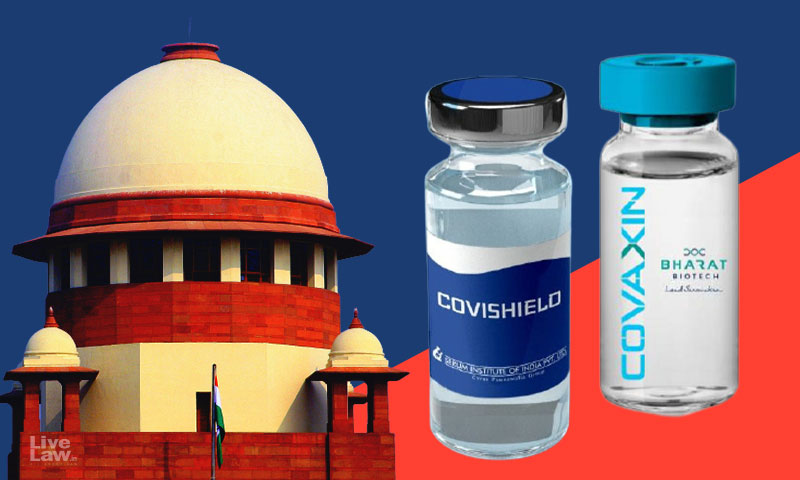
Article 21 imposes an obligation on the State to ensure that families alleging grave harm due to the State Vaccine program have a mechanism for redress.
The Supreme Court held that when a vaccination programme is undertaken as a State-led public health intervention, the government cannot evade responsibility towards families who allege deaths or serious injuries following vaccination, particularly when official data itself acknowledges that some deaths occurred after COVID-19 vaccination.Observing that the Constitution does not view the right...
This is a premium content
Available exclusively to
Our subscribers
Subscribe Premium 
INR 1099+GST
Your support helps us to bring you more content at
an affordable subscription scheme !!!
All payment options available
The Supreme Court held that when a vaccination programme is undertaken as a State-led public health intervention, the government cannot evade responsibility towards families who allege deaths or serious injuries following vaccination, particularly when official data itself acknowledges that some deaths occurred after COVID-19 vaccination.
Observing that the Constitution does not view the right to life solely through the prism of fault, the Court said that Article 21 imposes a positive obligation on the State to ensure that affected families are not left without any accessible mechanism for redress.
A bench of Justice Vikram Nath and Justice Sandeep Mehta accordingly directed the Union Government to formulate a no-fault compensation policy for serious adverse events following COVID-19 vaccination.
The directions were issued in a batch of petitions led by Rachana Gangu v Union of India, filed by families alleging deaths or severe medical conditions following COVID-19 vaccination.
The Court clarified that it was not examining the efficacy of the vaccines or reviewing the regulatory approval process. Instead, the constitutional question before it was whether the absence of a structured redress mechanism for persons allegedly harmed during a State-driven vaccination programme warranted institutional intervention.
“The Constitution does not view the right to life solely through the lens of fault. Article 21 also embodies a positive obligation of the State to ensure that where grave harm is alleged to have occurred in the course of a State-led public health intervention, affected families are not left without any accessible mechanism of redress. The absence of such an institutional framework raises constitutional concerns which warrant a calibrated response,” the Court observed.
Highlighting the nature of the vaccination drive as a State-led initiative undertaken during an unprecedented public health crisis, the Court said that the State could not distance itself from the consequences of adverse events.
"The vaccination program undertaken during the pandemic was itself an expression of these constitutional commitments. The State went above and beyond in order to create a vaccination scheme and the same undoubtedly helped save many lives. But at the same time, as the government data itself suggests, it cannot be brushed aside that the same vaccines also led to loss of life. In such a situation, it is not appropriate that the State shrugs its responsibility in coming to aid to those affected families who have lost their near and dear ones."
Background
The proceedings arose from a writ petition filed by parents of two young women who died after receiving COVID-19 vaccines. The petition sought constitution of an independent medical board to examine such deaths, formulation of protocols for identifying adverse events following immunisation (AEFI), and compensation for affected families.
Similar petitions were also filed before the Kerala High Court. In one such case, the High Court directed the Union Government and the National Disaster Management Authority to frame a policy for identifying AEFI cases and compensating families of persons who allegedly died following vaccination.
The Union Government challenged that interim direction before the Supreme Court. Several connected matters from the Kerala High Court were also transferred to the apex court for adjudication.
Petitioners' Arguments
The petitioners alleged structural deficiencies in India's vaccine governance regime, contending that the Union Government failed to ensure transparency, informed consent and effective post-vaccination surveillance.
They argued that although vaccination was formally voluntary, administrative restrictions on travel and access to public spaces effectively compelled citizens to take vaccines.
The petitioners also pointed to international scientific studies linking AstraZeneca's vaccine platform, of which Covishield is a version, with rare blood clotting disorders, alleging that the government did not adequately disclose such risks or publish causality assessments of adverse events.
They further contended that families of individuals who died following vaccination were left without any effective remedy and urged the Court to direct the formulation of a compensation framework.
Union Government's Response
The Union Government argued that COVID-19 vaccines were approved after rigorous regulatory scrutiny by statutory bodies such as the Central Drugs Standard Control Organisation and expert committees.
It also submitted that India already has a well-established AEFI surveillance system involving district, state and national committees that monitor and investigate adverse events.
According to the government, the incidence of vaccine-related complications such as thrombotic thrombocytopenia syndrome in India was extremely rare. It also contended that affected individuals could pursue civil or consumer remedies in cases involving negligence or liability.
Court's Analysis
At the outset, the Court clarified that it was not questioning vaccine efficacy, but was only examining if there was a need for an insitutional method to redress grievances of the citizens.
The grievance, the Court observed, was that families alleging serious harm in the course of a nationwide vaccination programme were left without any uniform mechanism for redress.
Reiterating that the right to health forms part of the right to life under Article 21, the Court emphasised that the State has a positive obligation to safeguard public health and provide institutional support in exceptional circumstances.
"The Court therefore approaches the present proceedings with the limited objective of examining, whether in the exceptional context of a pandemic response, the absence of any structured framework to address serious adverse events raise constitutional concerns warranting an institutional response. In doing so, we reiterate that we are neither adjudicating upon the vaccine efficacy nor sitting in scientific review over the regulatory approval process. The question is confined to whether the State's welfare obligations require the exploration of an equitable mechanism of redressal for harm arisen in the course of a national public health intervention."
The Court also noted that the vaccine approval process was upheld in the 2021 Jacob Puliyel decision.
The Supreme Court observed that although courts cannot undertake a scientific determination of causality in vaccine injury cases within writ jurisdiction, that limitation does not exhaust the Court's constitutional inquiry. Emphasising that the Constitution does not view the State as a distant spectator to human suffering, the Court held that when the government undertakes a large-scale public health intervention such as a vaccination programme, it cannot shrug off responsibility if grave adverse outcomes occur. Noting that government data itself indicates that some deaths followed vaccination, the Court said affected families cannot be left to pursue onerous negligence-based litigation as the sole remedy.
The bench noted that remedies based solely on negligence, such as civil suits or consumer complaints, may be ill-suited in the context of mass immunisation programmes where scientific attribution of harm is often complex.
Requiring affected families to prove fault in each case would impose an onerous burden and could lead to inconsistent outcomes, the Court said.
No-Fault Compensation Framework
The Court referred to similar compensation mechanisms adopted in several countries, including the United Kingdom, Australia and Japan, where no-fault vaccine injury compensation programmes provide financial assistance to individuals suffering adverse effects following vaccination.
Such mechanisms enable swift relief without requiring lengthy litigation over fault or negligence, the Court noted.
“In such a situation, the State cannot be heard to say that those who experience serious adverse consequences must fend for themselves, without any clear or accessible avenue of relief,” the Court observed.
The Court issued the following directions:
The Union Government, through the Ministry of Health and Family Welfare, must frame and publish a no-fault compensation policy for serious adverse events following COVID-19 vaccination.
Existing mechanisms for monitoring adverse events following immunisation must continue, and relevant data must be periodically placed in the public domain.
No separate court-appointed expert body is required, as the existing AEFI committees are adequate to conduct scientific assessments.
The Court clarified that the formulation of a compensation policy would not amount to an admission of liability on the part of the government or any authority, and individuals would remain free to pursue other legal remedies available under law.
Senior Advocate Colin Gonsalves and Advocate Prashant Bhushan appeared for the petitioners.
Additional Solicitor General Aishwarya Bhati represented the Union.
Headnote
Constitution of India – Article 21 – Right to Life and Health – COVID-19 Vaccination – Adverse Events Following Immunization (AEFI) – Compensation Policy – The Supreme Court directed the Union of India to formulate a "no-fault" compensation framework for serious adverse events or deaths resulting from COVID-19 vaccinations - held that while the state-led vaccination program was a vital public health intervention, the State bears a positive obligation under Article 21 to ensure that families suffering grave harm are not left without an accessible mechanism for redress.
Constitution of India – Articles 14 and 21 – Judicial Review of Executive Policy – Separation of Powers – While acknowledging the executive's competence in drafting health policies, Supreme Court maintained that the separation of powers cannot prevent judicial intervention when fundamental rights are violated due to the absence of a structured relief framework in exceptional circumstances.
No-Fault Liability – Principle and International Precedent – Supreme Court emphasized that requiring proof of negligence through civil courts or consumer fora imposes an "onerous burden" on families in complex scientific matters - Relying on the principle of no-fault liability (similar to Section 164 of the Motor Vehicles Act, 1988), Supreme Court noted that global jurisdictions, including Australia, the UK, and Japan, have implemented dedicated COVID-19 vaccine injury compensation schemes - Supreme Court declined to appoint an independent medical board, finding the existing National and State AEFI Committees adequate for scientific assessment - it reaffirmed the state's duty to maintain transparent surveillance and ensure AEFI data is accessible in the public domain. [Relied on Jacob Puliyel v. Union of India (2022 SCC OnLine SC 533); In re: Distribution of Essential Supplies and Services During Pandemic (2021 SCC OnLine SC 372); Gaurav Kumar Bansal v. Union of India (W.P.(C) No. 539/2021); Paras 27-37]
Case : Rachana Gangu v Union of India
Citation : 2026 LiveLaw (SC) 225
Click here to read the judgment


