



- Home
- /
- Supreme court
- /
- Supreme Court Issues Comprehensive...
Supreme Court Issues Comprehensive Victim Protection Plan For Human Trafficking Survivors, Calls For Legislative Reforms
Yash Mittal
29 May 2026 4:32 PM IST
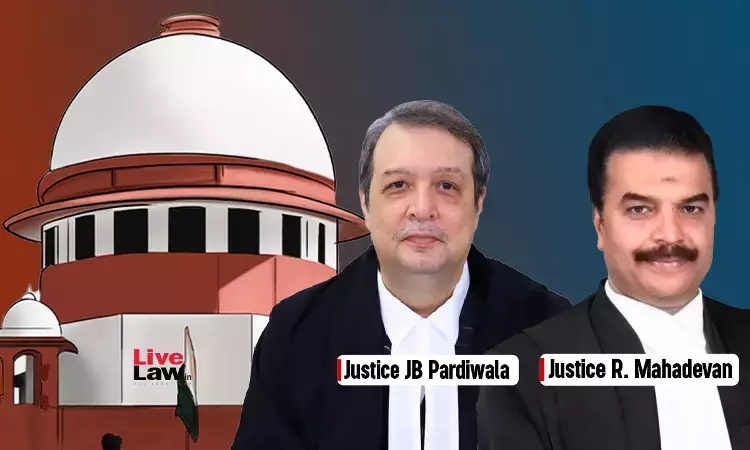
The Court suggested reforms in the Immoral Trafficking Prevention Act to ensure that victims are not treated as criminals.
In a landmark judgment addressing human trafficking for commercial sexual exploitation (CSE), the Supreme Court has issued a comprehensive Victim Protection Plan and directed all States and Union Territories to implement a series of measures aimed at protecting and rehabilitating trafficking survivors.Invoking its powers under Articles 32 and 142 of the Constitution, a bench of Justice...
This is a premium content
Available exclusively to
Our subscribers
Subscribe Premium 
INR 1099+GST
Your support helps us to bring you more content at
an affordable subscription scheme !!!
All payment options available
In a landmark judgment addressing human trafficking for commercial sexual exploitation (CSE), the Supreme Court has issued a comprehensive Victim Protection Plan and directed all States and Union Territories to implement a series of measures aimed at protecting and rehabilitating trafficking survivors.
Invoking its powers under Articles 32 and 142 of the Constitution, a bench of Justice J.B. Pardiwala and Justice R. Mahadevan issued a detailed set of binding directions constituting a nationwide "Victim Protection Plan" covering rescue operations, victim identification, rehabilitation, prosecution mechanisms, and institutional coordination.
"It took a pretty long time to prepare this judgment, but we are sure you won't have to refer to any books henceforth on the subject. This will remain very close to our hearts because it will go a long way in protecting vulnerable young girls and women," Justice Pardiwala observed at the time of pronouncement.
The Court specifically acknowledged the efforts of Legal Researchers Madhumita, Shambhavi Srivastava, Sakshi Mohan Dubey, Shankhan Reddy, Varun Hinge, and Sri Japa for their research assistance in a matter, which the Bench described as deeply significant to the protection of vulnerable women and children.
Court flags lack of comprehensive framework
The Bench observed that despite the existence of multiple laws dealing with trafficking and sexual exploitation, India lacks a comprehensive and binding framework governing the rescue, protection, rehabilitation and reintegration of trafficking victims. The Court held that this gap has resulted in arbitrary and non-uniform treatment of survivors across the country, impairing the realization of their fundamental rights under Articles 21 and 23 of the Constitution.
The Court noted that while the Union Government had earlier acknowledged the need for a Victim Protection Plan and had undertaken efforts to formulate one, no such framework had been finalized. Rejecting the contention that the existing legal framework is sufficient, the Bench found serious lacunae in the current system and exercised its powers under Articles 32 and 142 of the Constitution to formulate detailed directions governing the handling of trafficking victims.
Voluntary Adult Sex Workers Must Not Be Criminalised Unnecessarily
The Court emphasized that victims of trafficking must not be treated merely as passive objects of rescue but as individuals with agency whose wishes and choices deserve substantial weight. It observed that the existing framework under the Immoral Traffic (Prevention) Act, 1956 (ITPA), often subjects a diverse range of persons, including trafficked individuals and voluntary adult sex workers, to the same process without differentiation.
To address this concern, the Court incorporated two key principles into the Victim Protection Plan. First, authorities must conduct a threshold inquiry to identify voluntary adult sex workers at the earliest stage and avoid unnecessary intervention. Second, a victim's consent and wishes must be accorded primacy while taking decisions regarding detention, rehabilitation and reintegration, except in circumstances where safety concerns exist or where the expressed consent appears to be a product of coercion, threat or undue influence.
The Court stated that the plan also addresses several operational aspects, including the conduct of rescue operations, standards to be maintained in protective homes, provision of adequate material resources, rehabilitation measures tailored to victims' needs, and the availability of legal and social support services.
The Bench directed strict compliance with the detailed Victim Protection Plan set out in the judgment, which covers every stage from pre-rescue and rescue operations to rehabilitation, reintegration, prosecution and prevention.
In addition, the Court issued specific directions to all States and Union Territories. It ordered them to notify "recognised welfare institutions or organisations" under the ITPA, prepare district-wise panels of social welfare workers eligible to serve on advisory bodies under the Act, designate the Anti-Trafficking Bureau chief at the rank of Additional Director General of Police as the Police Nodal Officer, and appoint the Secretary of the Women and Child Development Department as the Government Nodal Officer for implementation of the Victim Protection Plan.
The Union Government has been directed to ensure compliance with these directions within three months. The Court further ordered that the matter be listed again in September 2026 for reporting compliance.
Child Protection and Rehabilitation
The Court integrated the Juvenile Justice Act and POCSO Act into the anti-trafficking regime, directing closer coordination between Child Welfare Committees, Anti-Human Trafficking Units, One Stop Centres, legal aid authorities, and state protection homes.
The Court held that the right to rehabilitation flows directly from Article 21 and forms part of the right to live with dignity. The Victim Protection Plan mandates minimum standards for shelter homes, mental health support, vocational training, compensation, legal aid, witness protection, and reintegration measures.
No Specialized Agency Ordered
The Court declined to direct the establishment of a separate Organized Crime Investigative Agency, stating: "We believe whatever statutory framework is there today should suffice."
The matter will be relisted after three months for monitoring compliance by the Union Government and all States and Union Territories.
Legislative Reforms
The judgment also contains a series of recommendations for legislative reform. The Court urged the Union Government to consider amending Sections 7, 8 and 20 of the ITPA, noting that these provisions are frequently invoked against trafficking victims themselves, thereby undermining their status as victims. It suggested introducing clarifications to ensure that persons who are, or are suspected to be, victims of human trafficking are not prosecuted under these provisions.
The Bench also recommended a re-examination of the ITPA's detention-based rehabilitation model, under which victims may be confined in protective homes for one to three years. Observing that such mandatory custody risks becoming carceral in nature, the Court urged the government to explore alternative and individualized rehabilitation options.
Highlighting the vulnerability of voluntary adult sex workers, the Court called for greater recognition and protection of their rights. It observed that the rights of sex workers can be recognized and enforced even without creating a legal right to sex work and suggested reconsideration of the existing legislative conflation between trafficking and prostitution.
The Court further recommended the introduction of specific offences targeting police misconduct in trafficking cases, including situations where police officers exploit victims in their custody. It also suggested creating a rebuttable presumption of wrongful confinement where officers delay producing rescued victims before a magistrate.
Significantly, the Court flagged a divergence between the Bharatiya Nyaya Sanhita and the Palermo Protocol on trafficking. It noted that unlike the international framework, the BNS requires proof of the "means" element even when the victim is a child. The Court described this deviation as requiring immediate legislative attention.
Finally, the Bench reiterated the need for a comprehensive anti-trafficking legislation addressing all forms of trafficking and exploitation, beyond commercial sexual exploitation alone. It also urged the Union Government to formulate measures to combat cyber-enabled human trafficking and sexual exploitation, noting that traffickers increasingly exploit technology to organize, facilitate and conceal criminal activities.
"The effort here should reflect more than just the formulation of a plan. It should reflect an endeavour to give the victim centre stage and to prioritise their needs," the Court observed, emphasizing that victims must be viewed as persons capable of making decisions about their own rehabilitation and empowerment.
Background
The proceedings originated from a public interest litigation filed in 2004 concerning the alarming rise of human trafficking and commercial sexual exploitation of women and children across India.
Over the years, the matter evolved into a continuing mandamus before the Supreme Court, with the Court monitoring rescue protocols, rehabilitation measures, institutional conditions, and gaps in anti-trafficking enforcement across multiple States.
During the pendency of the case, the Court received extensive assistance from amicus curiae, women's rights organizations, child protection bodies, legal services authorities, and government agencies. Several reports highlighted systemic failures in victim identification, poor conditions in shelter homes, re-trafficking of rescued victims, lack of coordination among authorities, and the absence of a uniform national rehabilitation framework.
The litigation also exposed persistent concerns regarding the manner in which police authorities often treated trafficked persons and adult sex workers interchangeably, resulting in arbitrary detention, wrongful institutionalization, and inadequate focus on organized trafficking networks.
Over the course of 22 years, the Court examined the functioning of Anti-Human Trafficking Units, Child Welfare Committees, shelter homes, One Stop Centres, legal aid systems, and existing statutory mechanisms under the Immoral Traffic (Prevention) Act, the Juvenile Justice Act, and the POCSO Act.
The Bench ultimately decided to formulate a comprehensive pan-India framework to address the vacuum in rehabilitation policy, victim protection standards, inter-agency coordination, and trafficking prosecutions.
Headnote
Constitution of India, 1950 — Articles 21 & 23 — Human Trafficking for Commercial Sexual Exploitation (CSE)— Right to Rehabilitation — Held, a combined reading of Articles 21 and 23 establishes that victims of trafficking for CSE possess a fundamental right to rehabilitation - The constitutional obligations owed to victims of exploitative structures extend beyond a prevention, rescue, and punishment paradigm to comprehensive rehabilitation - State's failure to provide a robust "Victim Protection Plan" and adequate rehabilitation infrastructures violates Articles 21 and 23 - Detailed guidelines issued under Articles 32 and 142 to govern pre-rescue, rescue, post-rescue, rehabilitation, and repatriation of victims until the enactment of comprehensive central legislation. [Paras 56, 277-281, 290 - 303]
Immoral Traffic (Prevention) Act, 1956 (ITPA) — Sections 15, 16, 17, 19, 21 & 23 — Bharatiya Nyaya Sanhita, 2023 (BNS) — Sections 111, 143 & 144 — Conflation between Sex Trafficking and Prostitution — Duality of thresholds under ITPA and BNS — Held, the ITPA treats all third-party involvement in prostitution as inherently exploitative without requiring a "means" element, whereas Section 143 BNS strictly requires the fulfillment of all three elements (action, means, purpose) for adults - For the purpose of the protective protocol, "victims of trafficking for CSE" collectively includes individuals identified under both the ITPA and BNS frameworks. [Paras 162, 209, 217-219]
ITPA, 1956 — Section 17 — Heterogeneity of Victims — Threshold Inquiry & Consent — Held, the mechanism under Section 17 uniformly processes all individuals produced after a raid without differentiation - Magistrates must conduct an initial threshold inquiry under Section 17 to identify adult voluntary sex workers who do not wish to be subjected to long-term safe custody, respecting the principle of non-interference - a victim's informed consent must be the driving and primary factor in passing final orders for detention in a protective home or family restoration - Forcible imposition of rehabilitation is alien to human dignity - Exceptions are permissible only when the victim's safety is at imminent risk or consent is extracted via coercion, threat, or tutoring. [Relied on People's Union for Democratic Rights v. Union of India, (1982) 3 SCC 235; Bandhua Mukti Morcha v. Union of India, (1984) 3 SCC 161; Neeraja Chaudhary v. State of M.P., (1984) 3 SCC 243; Public Union for Civil Liberties v. State of T.N., (2004) 12 SCC 381; Dr. Ashwani Kumar v. Union of India, (2020) 13 SCC 585; Budhadev Karmaskar v. State of W.B., (2022) 20 SCC 220; Paras 324, 329, 335, 336, 343, 348 352, 400-450]
Rights-Based Re-framing of Trafficking - The Supreme Court observed that human trafficking cannot be viewed solely through the prism of a criminal justice or crime-control response - Secure convictions do not address the multi layered material, physical, and psychological trauma suffered by victims - Under a human rights framework grounded in Articles 21 and 23 of the Constitution, victims must be recognized as rights-holders at the centre of the state's response - Rehabilitation is a constitutional guarantee, equal to or more important than rescue, since returning a victim to a site of vulnerability without material or psychological protection risks immediate re-trafficking. [Paras 254-256, 278-281]
Existence of Legislative Gaps & Poor State Implementation - Supreme Court noted that despite commitments made by the Union of India in 2015 to enact a comprehensive law and establish an Organised Crime Investigation Agency (OCIA), no such dedicated legislation materialized - Reviewing data across various States/UTs, Supreme Court identified severe gaps in current setups, including non-functional One-Stop Centres (OSCs), gross deficiency of referral staff, a lack of mental healthcare and vocational training inside Shakti Sadan homes, an absence of mandatory rule-formulation by several States under Section 23 of the ITPA, and an entire omission of Half-way Homes – Supreme Court concluded that the State has failed to take "reasonable measures" to progressively realize the right to rehabilitation. [Paras 298-302]
Restructuring Section 17 ITPA: Agency & Primacy of Consent – Supreme Court heavily criticized the "one-size-fits-all" approach under Section 17 of the ITPA, which indiscriminately processes involuntary trafficked victims alongside adult voluntary sex workers – Held that the i. Threshold Inquiry - Magistrates are directed to conduct a preliminary inquiry to identify voluntary adult sex workers and exempt them from intrusive custody or family restoration processes, keeping in line with the principle of non-interference; ii. Primacy of Consent - For victims of trafficking, long-term institutionalization or family restoration cannot be forcibly imposed against their volition. Forcible rehabilitation violates the intrinsic dignity of a person - A victim's informed consent must govern the final orders passed by Magistrates, with judicial exceptions restricted strictly to cases of documented coercion, tutoring, or imminent physical threat to the victim's safety. [Paras 329 – 352]
Interim Directions on the Victim Protection Plan - Invoking its powers under Articles 32 and 142, the Supreme Court laid down extensive guidelines encompassing the pre-rescue, rescue, post-rescue, rehabilitation, and repatriation stages - These include – i. Mandatory notification of Anti-Human Trafficking Units (AHTUs) as specialized police stations with multi-disciplinary composition; ii. Curbing degrading and unscientific "mass raids" as a default option; iii. Mandating the immediate production of child victims before Child Welfare Committees (CWCs) in terms of the Juvenile Justice Act, overriding ITPA court procedures; iv. Ensuring strict protection of identity, free professional legal aid, psychological de-addiction programs, and individual care plans; v. These guidelines shall operate as the binding law of the land until the Parliament steps in to fill the vacuum. [Paras 223 - 362]
Cause Title: PRAJWALA Versus UNION OF INDIA, MA 530/2022 in W.P.(C) No. 56/2004 PIL-W
Citation : 2026 LiveLaw (SC) 574
Click Here To Read/Download Judgment
Appearance:
For Petitioner(s) Ms. Aparna Bhat, Sr. Adv. Ms. Rajkumari Banju, AOR Ms. Karishma Maria, Adv.
For Respondent(s) Ms. Aishwarya Bhati, ASG Ms. Shagun Thakur, Adv. Ms. Shivika Mehra, Adv. Mr. S.A. Haseeb, Adv. Ms. Ruchi Kohli, Adv. Mr. Akshay Amritanshu, Adv. Mr. Raman Yadav, Adv. Mr. N. Visakamurthy, Adv. Mr. T. V. Ratnam, AOR Mr. Sunil Fernandes, AOR Mr. Naresh K. Sharma, AOR Mr. T. V. George, AOR Ms. Kamini Jaiswal, AOR Mr. P. V. Yogeswaran, AOR Ms. Hemantika Wahi, AOR Ms. Sumita Hazarika, AOR Mrs. Anil Katiyar, AOR Mr. Jatinder Kumar Bhatia, AOR Mr. Arun K. Sinha, AOR Mr. Rajesh Srivastava, AOR Ms. A. Subhashini, AOR M/s.Corporate Law Group, AOR Mr. Purushottam Sharma Tripathi, AOR Mr. Amit, Adv. Ms. Vani Vyas, Adv. Mr. Prakhar Singh, Adv. Mr. Sanjay Jain, AOR Ms. K. Enatoli Sema, AOR Ms. Limayinla Jamir, Adv. Mr. Amit Kumar Singh, Adv. Ms. Chubalemla Chang, Adv. Mr. Prang Newmai, Adv. Ms. Ruby Singh Ahuja, AOR Mr. V. N. Raghupathy, AOR Mr. Vishwanath P. Allannavar, Adv. Ms. Mythili S, Adv. Mr. Shiv Kumar, Adv. Ms. Vaishnavi, Adv. Mr. Gopal Prasad, AOR Mrs. B. Sunita Rao, AOR Mr. Anil Shrivastav, AOR Mr. Jogy Scaria, AOR Mr. Mukesh K. Giri, AOR Mr. Mandaar Mukesh Giri, Adv. Ms. G. Indira, AOR Mrs. D. Bharathi Reddy, AOR Mr. Ranjan Mukherjee, AOR Mr. R. Ayyam Perumal, AOR M/s. Arputham Aruna And Co, AOR Mr. Sabarish Subramanian, AOR
Tags

Yash Mittal
Yash Mittal is a Correspondent with LiveLaw, covering the Supreme Court of India

