



- Home
- /
- Supreme court
- /
- MHADA Can Enforce Developer's...
MHADA Can Enforce Developer's Promise To Rehabilitate Occupants In Redeveloped Building: Supreme Court
Yash Mittal
24 July 2026 5:45 PM IST
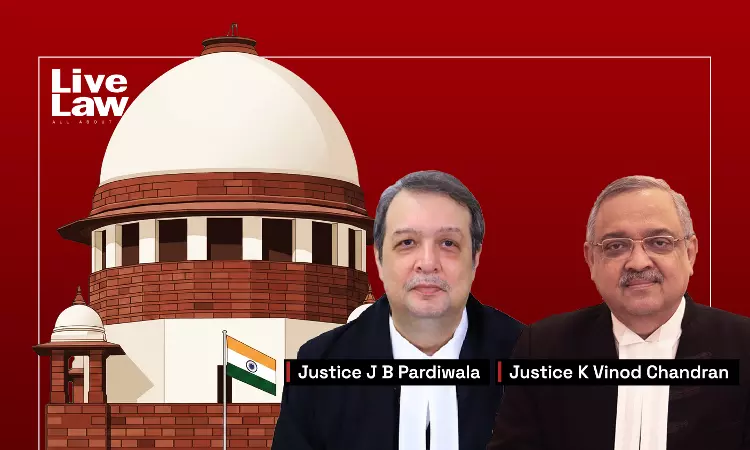
The Supreme Court has held that the Maharashtra Housing and Area Development Authority (MHADA) is empowered to enforce a developer's obligation to provide permanent alternate accommodation to occupants of cessed buildings undergoing redevelopment and directed a Mumbai developer to execute a Permanent Alternate Accommodation Agreement (PAAA) and hand over possession of three flats to the...
This is a premium content
Available exclusively to
Our subscribers
Subscribe Premium 
INR 1099+GST
Your support helps us to bring you more content at
an affordable subscription scheme !!!
All payment options available
The Supreme Court has held that the Maharashtra Housing and Area Development Authority (MHADA) is empowered to enforce a developer's obligation to provide permanent alternate accommodation to occupants of cessed buildings undergoing redevelopment and directed a Mumbai developer to execute a Permanent Alternate Accommodation Agreement (PAAA) and hand over possession of three flats to the legal heirs of an occupant within two months.
A bench of Justice JB Pardiwala and Justice K Vinod Chandran allowed the appeal filed by Mrs. Mahabanoo Contractor and another, setting aside a Bombay High Court judgment which had restrained MHADA from taking coercive steps against the developer for failing to honour the rehabilitation agreement.
The dispute arose from the redevelopment of a cessed building in Mumbai undertaken under the Maharashtra Housing and Area Development Act, 1976. The appellants claimed entitlement to permanent alternate accommodation under a PAAA executed in 2019 after they vacated the old premises for redevelopment. MHADA had subsequently directed the developer to execute and register the agreement and hand over possession of the promised flats, besides issuing a show-cause notice for non-compliance.
However, the Bombay High Court held that the PAAA was a private contractual arrangement not amenable to writ jurisdiction and left the parties to pursue civil remedies, while restraining MHADA from enforcing its directions.
Reversing that view, the Supreme Court held that the PAAA was executed under the statutory redevelopment framework governed by the MHAD Act and Development Control Regulations, making MHADA's enforcement action valid.
The Court noted that the developer itself had consistently recognised the first appellant as an occupant in contemporaneous records, including the 2010 public notice, the certified list of occupants and the redevelopment documents. It rejected the developer's subsequent contention that her status as an occupant had been recorded by mistake.
"The developer cannot casually after all these years having obtained a consent, leading to vacation of premises and possession being handed over for the purpose of redevelopment, on the promise of allotment of premises as specified in the PAAA, turn around and challenge the very claim raised by the 1st appellant as an occupant," the bench observed.
The Court also dismissed the developer's argument that it could not honour the PAAA because the final sanctioned building had fewer floors than originally proposed, resulting in lesser fungible Floor Space Index (FSI).
"The mere fact that fungible area was not fully utilised cannot be a ground to allow the developer to resile from its agreement to redevelop and allot alternate premises to the occupants of the old building as agreed upon," the Court said.
The bench was critical of the developer's reliance on an internal settlement among its partners to contend that agreements executed by former authorised partners were not binding. It said such an inter se settlement could not defeat the rights of beneficiaries under a validly executed redevelopment agreement.
The Court further found the civil suit subsequently filed by the developer challenging the validity of the PAAA to be "misconceived and mala fide", particularly because it was contrary to the undertaking given before the High Court that two flats would be kept free from encumbrances for the appellants. It directed the High Court not to proceed with the suit.
Allowing the appeal, the Supreme Court directed the developer to execute the PAAA and hand over possession of all three flats within two months. It held that in the event of default, the appellants would be entitled to recover damages equivalent to the monthly rental value of the three flats and would also be at liberty to separately sue for compensation for the delay in delivery of possession. The Court also imposed costs of ₹50,000 each before the High Court and the Supreme Court, payable by the developer.
“We are satisfied that the impugned judgment erred in restraining MHADA from taking further proceedings as per the orders issued against the developer with respect to the execution of the PAAA…The settlement of inter se disputes between the partners without the junction of the beneficiary of the PAAA, who has the right to seek a validly executed conveyance and handover of the premises, cannot absolve the developer from his obligations as per the validly executed agreement based on which vacant possession of the premises was obtained, the old premises demolished and the new building constructed wherein the earlier occupants had a clear claim for allotment of alternate premises with excess fungible area.”, the Court observed.
“We direct the 1st and 2nd respondents to execute the PAAA and handover possession of the three apartments in the new building within a period of two months from today, failing which the appellants would be entitled to the damages at the monthly rental value for the three flats in that location, which they would be entitled to recover from the 1st and 2nd respondents.”, the Court ordered.
Setting aside the impugned decision, the judgment authored by Justice Chandran agreed with the Appellant's contention that the High Court misconstrued the PAAA as a private arrangement.
The Court noted that PAAA was entered into under a statutory scheme as provided under the Maharashtra Housing and Area Development Act, 1976 to protect the interest of the occupants who vacant their possession for the redevelopment purpose.
“The developer cannot casually after all these years having obtained a consent, leading to vacation of premises and possession being handed over for the purpose of redevelopment, on the promise of allotment of premises as specified in the PAAA, turn around and challenge the very claim raised by the 1st appellant as an occupant.”, the Court observed.
Resultantly, the appeal was allowed, while also imposing a cost of Rs. 50,000/- on the Respondents No.1 and 2, to be deposited each before the High Court and Supreme Court.
Headnote
Maharashtra Housing and Area Development Act, 1976 - Sections 2(25) and 91A — Maharashtra Housing and Area Development Authority (MHADA) — Development Control Regulations for Greater Bombay, 1991, Rule 33(7) — Redevelopment of cessed buildings — Permanent Alternate Accommodation Agreement (PAAA) — Enforceability of PAAA under Writ Jurisdiction — Status of 'Occupant' versus 'Tenant' – Held - Redevelopment Scheme & Statutory Jurisdiction - A Division Bench of the High Court erred in misconstruing the Permanent Alternate Accommodation Agreement (PAAA) as a mere private arrangement not amenable to writ jurisdiction - A PAAA entered into under the statutory scheme of the MHAD Act and the Development Control Regulations (DC Regulations) is regulated by statute - The enforcement of such an agreement falls squarely within the authority conferred on the regulatory body, MHADA, under whose No Objection Certificate (NOC) the project commenced - Orders passed by MHADA to facilitate occupation and execution of a PAAA by the developer in favour of a certified eligible occupant are perfectly sustainable under the statutory scheme.
Definition and Rights of an 'Occupier' - Section 2(25) of the MHAD Act defines 'occupier' broadly to include any person liable to pay rent, an owner in occupation, a rent-free tenant, a licensee, or even a person liable to pay damages for use and occupation - an occupancy under the Act is not a statutory tenancy that continues merely at the will of the owner or on the strength of a strict tenancy agreement - A person's status as a certified occupant in the records of the developer and MHADA enables a valid claim for the reallotment of space upon redevelopment, irrespective of the death of the original tenant.
Estoppel against Developer - Abuse of Process / Conduct of Developer - A developer cannot casually turn around after several years having obtained the occupant's consent, demolished the old building, and constructed the new building to challenge the occupant's status or the validity of a PAAA executed by its erstwhile authorized partners - Internal disputes or "Consent Terms" settled inter se between the partners of a developer firm cannot absolve the developer of its validly executed statutory obligations toward the beneficiaries/occupants who were not parties to such internal settlements - Where a developer undertakes before the High Court to keep certain flats unencumbered as part of an occupant's entitlement, but subsequently files a comprehensive civil suit challenging the occupant's rights in their entirety and seeking to declare the PAAA non-est, such a civil suit is misconceived, mala fide, and an abuse of process - High Court directed not to proceed with such a suit. [Paras 12, 19-25]
Cause Title: Mrs. Mahabanoo Contractor and Anr. Versus M/s. Kalikund Developers and Ors.
Citation : 2026 LiveLaw (SC) 713
Click here to download judgment
Appearance:
For Petitioner(s) : Mr. Shyam Divan, Sr. Adv. Mr. Somiran Sharma, AOR Mr. Kalpesh Joshi, Adv. Mr. Yashvardhan Singh, Adv. Mr. Shaishir Divatia, Adv. Mr. Rishab Patel, Adv. Mr. Darshil Shah, Adv.
For Respondent(s) :Mr. Vinay Navare, Sr. Adv. Mr. Akshat Malpani, Adv. Mr. Rahul Gupta, AOR
Mr. Chirag M. Shroff, AOR For MHADA
Tags

Yash Mittal
Yash Mittal is a Correspondent with LiveLaw, covering the Supreme Court of India

