



- Home
- /
- Supreme court
- /
- Multiple Cases Per Se Not Ground To...
Multiple Cases Per Se Not Ground To Pass Externment Order : Supreme Court
Yash Mittal
31 Aug 2026 6:20 PM IST
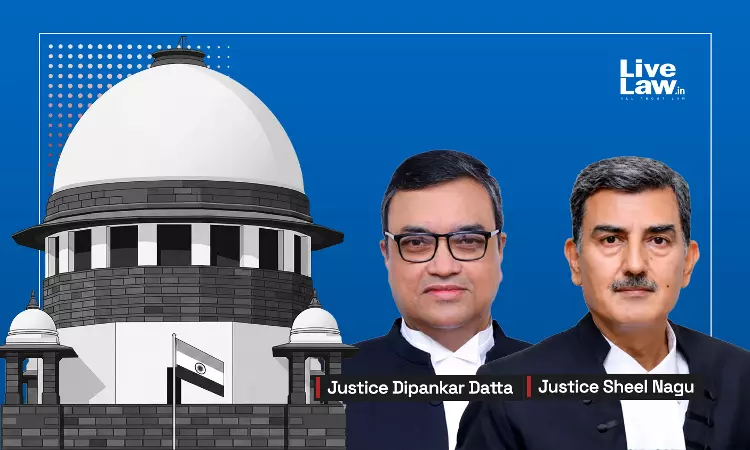
Externment is an extraordinary measure which cannot be ordered routinely, the Court said.
The mere existence of multiple cases by itself cannot be a ground to pass an externment order, the Supreme Court held, underscoring that it is an extraordinary measure.The Court on Monday (August 31) quashed the externment order passed against a man, after finding that the order was vitiated by the failure to comply with the mandatory requirement of notice and hearing under Section 8 of...
This is a premium content
Available exclusively to
Our subscribers
Subscribe Premium 
INR 1099+GST
Your support helps us to bring you more content at
an affordable subscription scheme !!!
All payment options available
The mere existence of multiple cases by itself cannot be a ground to pass an externment order, the Supreme Court held, underscoring that it is an extraordinary measure.
The Court on Monday (August 31) quashed the externment order passed against a man, after finding that the order was vitiated by the failure to comply with the mandatory requirement of notice and hearing under Section 8 of the Chhattisgarh Rajya Suraksha Adhiniyam, 1990.
“The object of the provision is to ensure that a person, against whom an externment order is proposed, is made aware of the material allegations against him and afforded an effective opportunity to tender his explanation thereto. It necessarily follows that an order passed in derogation of these mandatory requirements would stand vitiated and liable to be declared void ab initio.”, observed a bench of Justice Dipankar Datta and Justice Sheel Nagu while noting that non-compliance with Section 8 of the Adhiniyam renders externment order ex facie illegal.
The bench also criticized the approach of the Chhattisgarh High Court for declining to entertain the Appellant's writ petition, which instead relegated the Appellant-petitioner to avail an alternative remedy available under the Adhiniyam.
“Having held that the impugned externment order fails on both counts of non-adherence to the rule of a meaningful and effective hearing guaranteed by Section 8 of the Adhiniyam and the lack of jurisdiction of the District Magistrate to open a closed case, as if it were having the power of review and exercising it, we are surprised that in a case of such egregious violation of law the High Court chose to maintain a hands-off approach and relegated the appellant to the alternative statutory remedy under Section 9 thereof.”, the Court observed.
“This happens to be one such case where the High Court grossly erred in not entertaining the writ petition of the appellant. Relegation of the appellant to the statutory remedy under Section 9 of the Adhiniyam is plainly demonstrative of an abject failure to exercise a jurisdiction vested in the High Court.”, the Court added.
The case arose out of a multiple criminal case pending against the Appellant between 2009 to 2019. The District Magistrate (“DM”) closed the proceedings after noting that the Appellant had been acquitted in the cases and that no fresh police report had been submitted after 2019. He was, however, warned to refrain from criminal activities.
Subsequently, two FIRs were registered against the appellant, one of which concerned an alleged incident involving the recording and circulation of a video containing abusive remarks against Baba Guru Ghasidas, a revered figure of the Satnami community. Based on a report submitted by the Superintendent of Police (SP), the District Magistrate recalled its earlier order and, without affording the appellant an opportunity of hearing, passed an externment order restraining him from entering Raigarh and its contiguous districts for a period of one year.
Aggrieved by the Chhattisgarh High Court's decision refusing to entertain its writ petition on the ground of an availability of an alternative recourse under the Adhiniyam, prompted the Appellant to move to the Supreme Court.
Allowing the appeal, the judgment authored by Justice Datta, while criticising the High Court's approach, also faulted the District Magistrate for reviewing its earlier order in the absence of any express or implied provision under the Adhiniyam conferring such power of review upon the DM.
“It is settled law that an administrative authority enjoys no power to review his earlier order, unless the statute empowers him to do so. We have not been shown any such empowering provision and, therefore, it has to be held that the third respondent exercised a jurisdiction not vested in him by law. We also hold that breach of the warning, if any, without anything more could not have clothed the third respondent with the power to reopen the closed case. Since a fresh report from the fourth respondent was received, the third respondent was statutorily obliged to repeat the procedure envisioned in Section 8 of the Adhiniyam. There being failure/omission/neglect in this behalf on the part of the third respondent, the impugned externment order cannot sustain law.”, the Court observed.
Further, the Court found that the reasons for passing an externment order against the appellant, that the appellant's conduct had generated resentment and public outrage among members of certain communities, lacked materials supporting that conclusions.
“...the impugned externment order falls short of the statutory requirement. Apart from recording that the conduct attributed to the appellant had generated resentment and public outrage amongst members of certain communities, the said order does not indicate the material on the basis of which such conclusion was reached. No reasons are forthcoming to demonstrate why the third respondent considered the situation to be so grave as to necessitate the appellant's externment. Furthermore, no material has been placed on record to show why the offences alleged require the appellant to be externed. More importantly, as noticed earlier, the appellant was neither served with notice nor afforded an opportunity to tender his explanation before the order came to be passed.”, the Court said.
Reference was made to Deepak v. State of Maharashtra 2022 LiveLaw (SC) 93 to note that an externment is not an ordinary measure and it must be resorted to sparingly and in extraordinary circumstances. The Court stressed that objective material and a discernible nexus between that material and the conclusion reached by the authority are indispensable safeguards against an arbitrary exercise of an externment powers.
“An order of externment directly impinges upon valuable fundamental freedoms guaranteed to a citizen and, therefore, cannot be made as a matter of routine or on mere ipse dixit. Further, merely because multiple criminal cases have been registered against a person would not, ipso facto, be a ground for ordering externment. Before exercising such power, the District Magistrate is required to arrive at a bona fide and informed subjective satisfaction that the circumstances of the case warrant such an extreme measure and that externment is necessary to prevent the apprehended mischief. Although the authority is not expected to render a judgment in the manner expected of a court of law, the order must nonetheless disclose, at least in broad terms, the reasons which persuaded it to arrive at such satisfaction. The existence of objective material and a discernible nexus between such material and the conclusion reached are indispensable safeguards against arbitrary exercise of power.”, the Court said.
As a result, the appeal was allowed, thereby quashing the externment order passed against the Appellant.
“…the impugned externment order is infirm and indefensible and cannot be sustained for want of any cogent reasons in support thereof.”, the Court held.
Headnote
Chhattisgarh Rajya Suraksha Adhiniyam, 1990 — Section 5(a), Section 5(b), and Section 8 — Scope and Procedure for Externment — Mandatory Requirement of Prior Notice and Hearing — Absence of Review Jurisdiction — Quashing of Externment Order Passed Ex Parte Upon Reopening Closed Proceedings - The District Magistrate had initially closed externment proceedings initiated against the appellant with a warning, taking note of his acquittal in previous cases - upon registration of fresh FIRs (one under the Chhattisgarh Municipal Corporation Act, 1956 and another under the Bharatiya Nyaya Sanhita, 2023 / SC/ST Act) and a report by the Superintendent of Police, the District Magistrate recalled/reopened the closed proceedings and passed an ex parte order of externment banishing the appellant for one year without issuing a fresh notice or affording an opportunity of hearing while the appellant was in judicial custody – Held under Section 8(1) of the Adhiniyam, informing the proposed externee in writing of the general nature of the material allegations against him and granting a reasonable opportunity of tendering an explanation are indispensable conditions precedent for the exercise of power under Sections 3 to 6 - An order passed in derogation of these mandatory requirements stands vitiated and is void ab initio - Under Section 8(4) read with Section 8(5), an ex parte order can lawfully be passed only when the person fails to execute a security bond for attendance or fails to appear before the District Magistrate during the inquiry - Save and except these express statutory contingencies, the statute does not authorize the District Magistrate to dispense with notice or hearing and proceed ex parte - An administrative authority has no inherent power to review, recall, or reopen its earlier order unless specifically empowered by statute - The District Magistrate possessed no jurisdiction to recall the closure order; any alleged breach of a prior warning or receipt of a fresh police report could not clothe the authority with review jurisdiction, but instead statutorily mandated following the procedure prescribed under Section 8 afresh. [Paras 18 - 25]
Constitution of India — Article 226 — Alternative Statutory Remedy — Exhaustion of Remedies vs. Maintainability & Entertainability — Flagrant Violation of Natural Justice and Lack of Jurisdiction - The High Court dismissed the appellant's writ petition challenging the ex parte externment order on the ground of availability of an alternative statutory appellate remedy under Section 9 of the Adhiniyam – Held that the self-imposed restriction of exhausting an alternative statutory remedy does not bar the exercise of writ jurisdiction where the impugned order has been passed in flagrant breach of the principles of natural justice or without jurisdiction - Relegating the appellant to an appeal under Section 9 in the face of an egregious violation of mandatory statutory safeguards and total lack of review jurisdiction demonstrated an abject failure on the part of the High Court to exercise jurisdiction vested in it. [Paras 16-27]
Chhattisgarh Rajya Suraksha Adhiniyam, 1990 — Section 5(a) & 5(b) — Inapplicability of Grounds — Subjective Satisfaction Must Rest on Objective Material – Held that invocations of Section 5(b) require reasonable grounds to believe that the person is engaged or about to engage in offences involving force or violence, or specified offences under Chapters XII, XVI, or XVII of the IPC (or Sections 506/509 IPC) - Allegations of circulating offensive social media videos affecting religion (corresponding to Chapter XV IPC) do not satisfy the statutory threshold of Section 5(b) - Even under Section 5(a), an order of externment seriously infringes upon fundamental freedoms guaranteed under Article 19(1)(d) of the Constitution and cannot be passed routinely, on mere ipse dixit, or solely because criminal cases are registered - The competent authority must arrive at a bona fide subjective satisfaction based on objective materials disclosing a discernible nexus to the apprehending mischief - An order lacking demonstrable reasons or objective material cannot pass muster. [Relied on Nawabkhan Abbaskhan v. State of Gujarat, (1974) 2 SCC 121; Godrej Sara Lee Ltd. v. Excise and Taxation Officer-cum-Assessing Authority, 2023 SCC OnLine SC 95; Deepak v. State of Maharashtra, (2023) 14 SCC 707; Paras 29 - 34]
Cause Title: VIJAY KUMAR RAJPOOT ALIAS VIJJU VS. STATE OF CHHATTISGARH & ORS.
Citation : 2026 LiveLaw (SC) 872
Click here to download judgment
Appearance:
For Petitioner(s) :Mr. Pallav Mongia, AOR Ms. Ishita Nayak, Adv. Ms. Kashish Lalwani, Adv.
For Respondent(s) :Ms. Ankita Sharma, AOR Mr. Arjun D Singh, Adv. Ms. Ishika Neogi, Adv.
Tags

Yash Mittal
Yash Mittal is a Correspondent with LiveLaw, covering the Supreme Court of India

